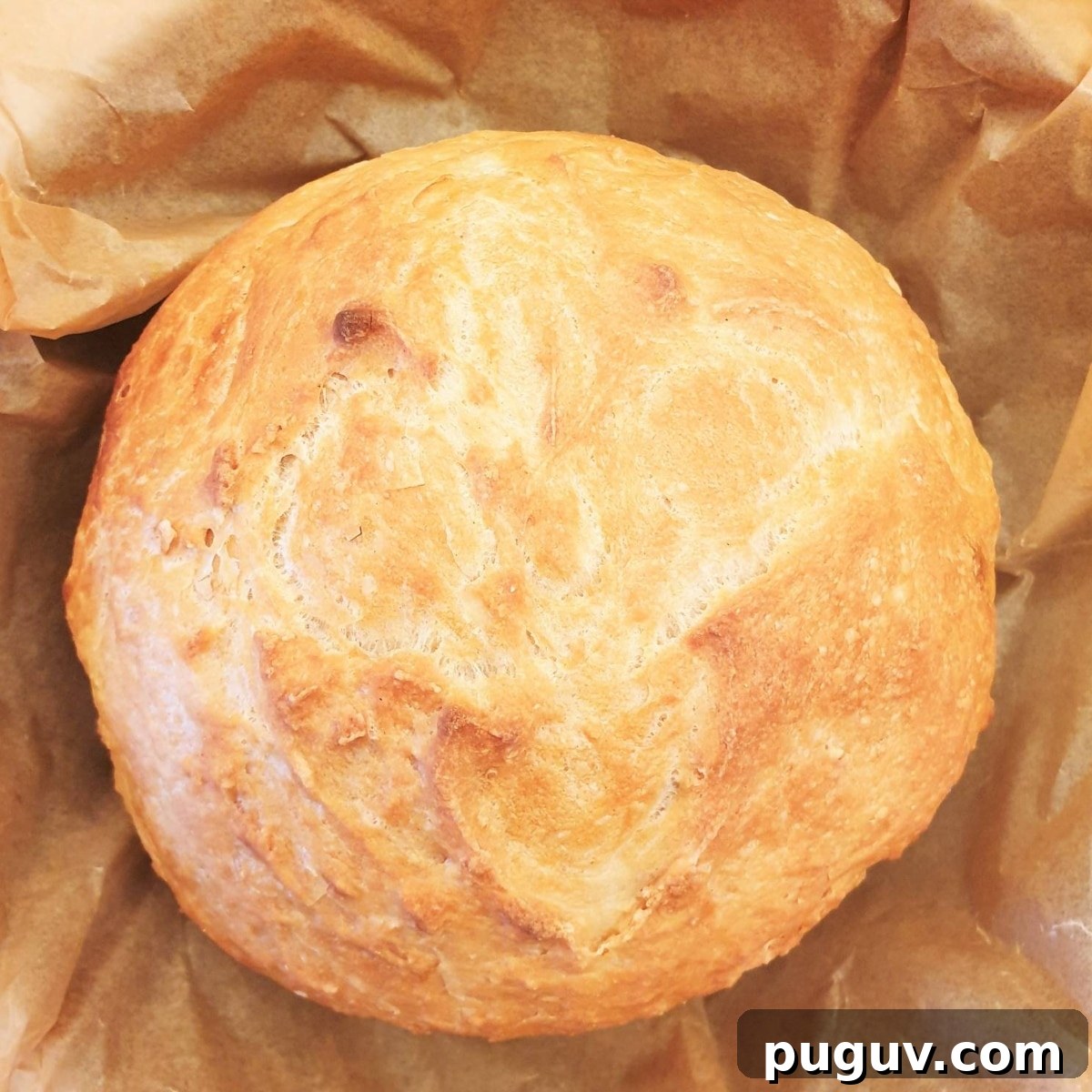
This no-knead crusty homemade bread is truly the real deal — crisp and crackly outside, soft and chewy inside. It looks like a loaf from a bakery, yet takes only about five minutes to mix and needs no kneading. It makes excellent sandwiches, soaks up soups and gravy beautifully, and freezes well.
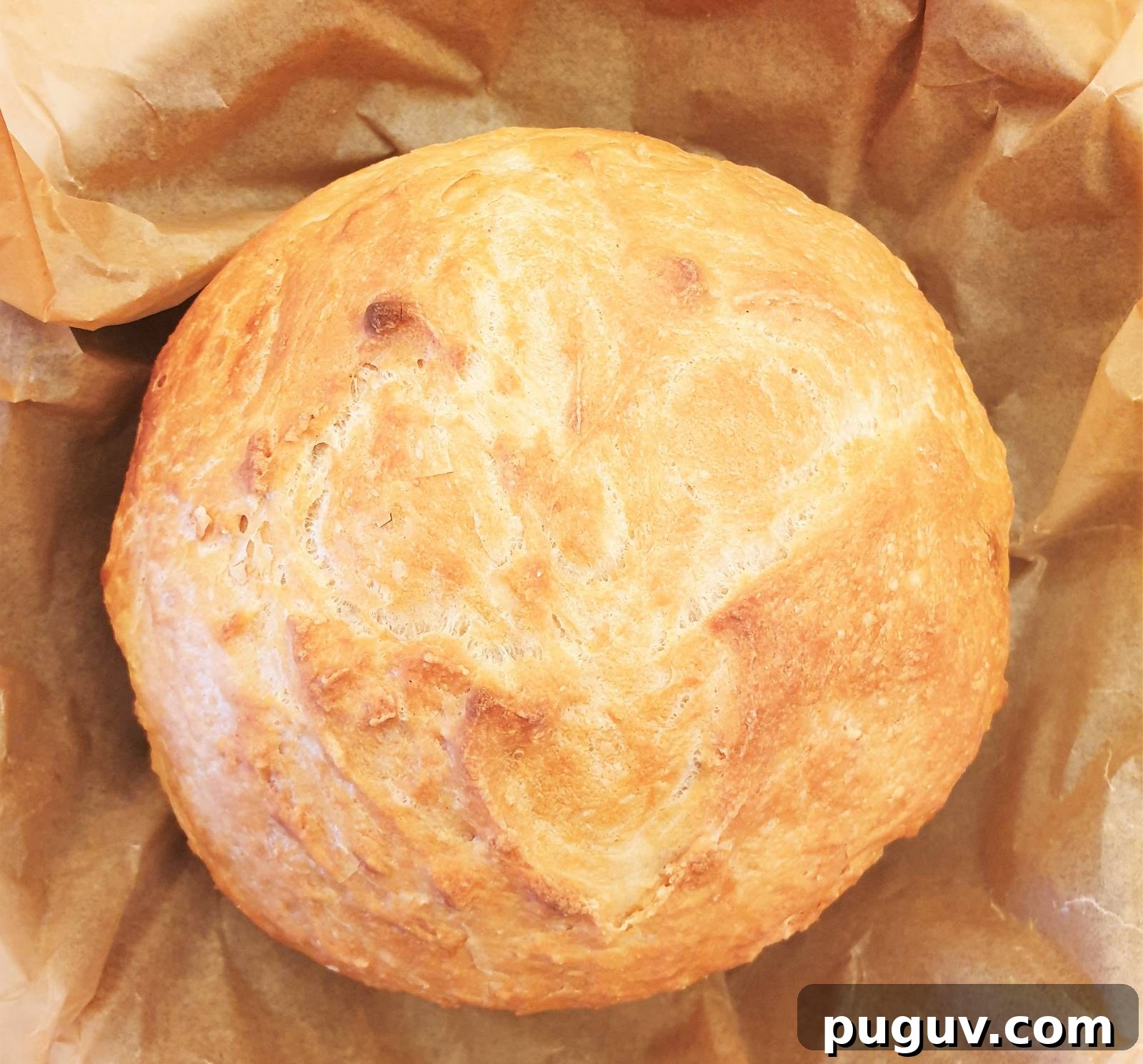
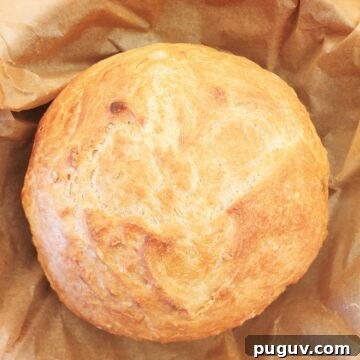
A perfectly formed loaf: crunchy on the outside and soft, fluffy inside. It’s ideal for mopping up stews and soups and delicious toasted with your favourite toppings.
I usually bake this in a Dutch oven, but if you don’t have one, I include simple oven-only instructions below.
Easy mix no-knead crusty homemade bread with yeast
It’s a long title, but an easy loaf: mix, rest and bake. I’m pleased to have refined this simple method — it’s one of the easiest yeast breads you’ll make.
Why this recipe is so easy:
- Absolutely no kneading: combine the ingredients until just mixed, then leave the dough to rest and rise.
- Bake in a preheated cast-iron Dutch oven for 30 minutes with the lid on, then 10–15 minutes with the lid off to crisp the crust.
- No Dutch oven? No problem — there are alternative oven methods below.
If you want only the recipe, jump to the printable recipe card, but reading the tips will help you get the best results.
Tips for making the perfect crusty homemade bread
Get your ingredient ratios right
Use a scale. The water-to-flour ratio is critical: too much water gives a soggy, slack dough; too little yields a dry, dense loaf.
Measuring flour by volume is inconsistent. I base my recipes on one cup of flour weighing 140 grams, which produces reliable results.
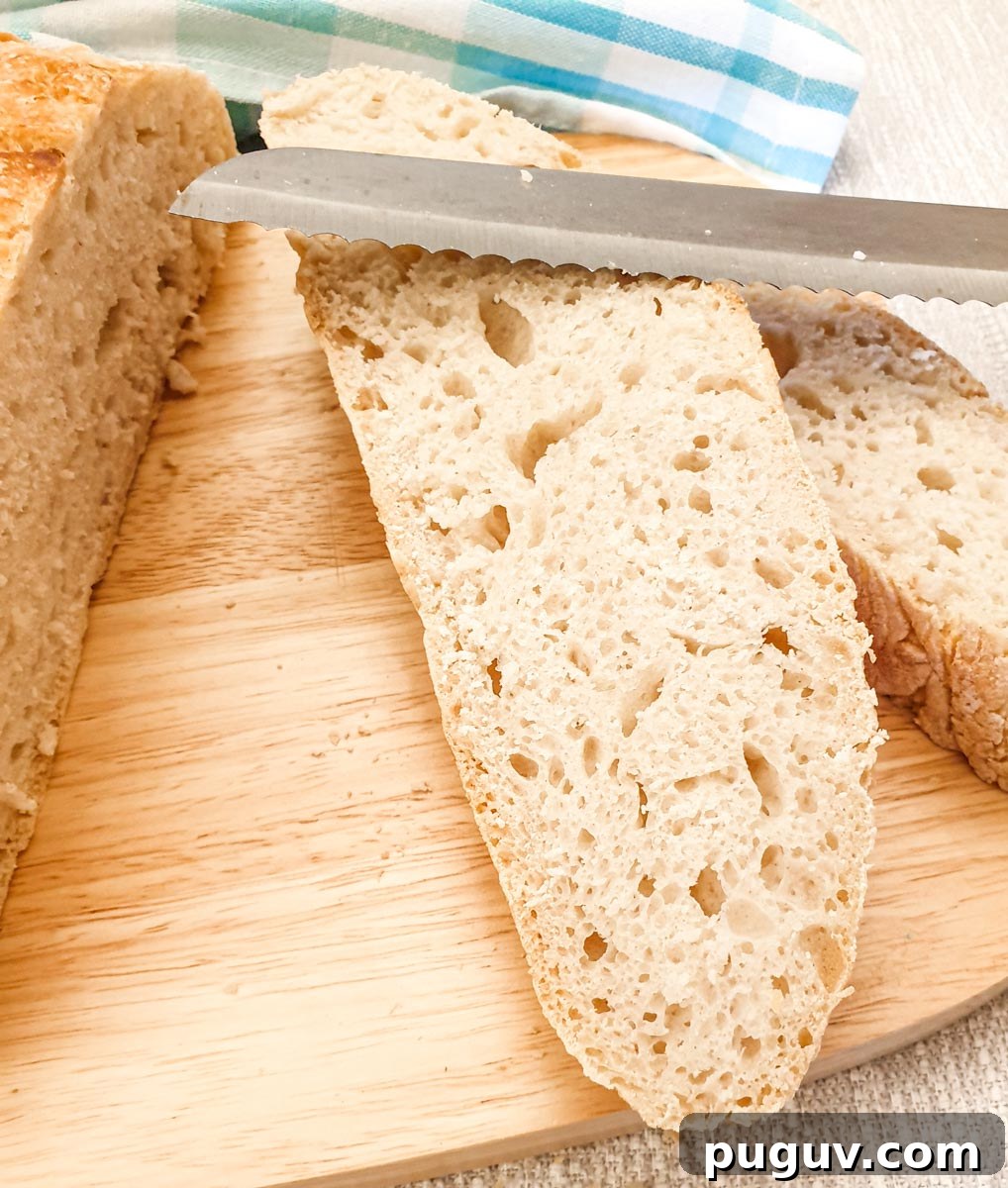
The open crumb gives a texture similar to ciabatta, with attractive holes throughout the loaf.
Let the dough rest and rise
Allow a minimum of 2 hours for the dough to rise. For better flavour and structure you can retard the rise in the refrigerator for up to 3 days.
Fermentation converts starches to sugars and creates carbon dioxide, which forms the bubbles that give the bread its airy texture.
Cover the dough as it rises
Always cover the bowl with plastic wrap or a plate to stop the surface drying and forming a skin that would negatively affect the crumb.
Use strong white bread flour
Bread flour has higher protein, which develops gluten and gives the bread structure and chew. All-purpose or cake flour will produce a softer, less chewy crumb.
Bake in a steamy environment
Steam in the oven helps the crust expand and crisp. Two effective options:
- Bake inside a covered Dutch oven so steam is trapped during the first part of baking.
- Place a tray of hot water on the bottom shelf of your oven to create steam while the bread bakes.
Be gentle with the dough
Handle the risen dough as little as possible to preserve the air bubbles you’ve waited for.
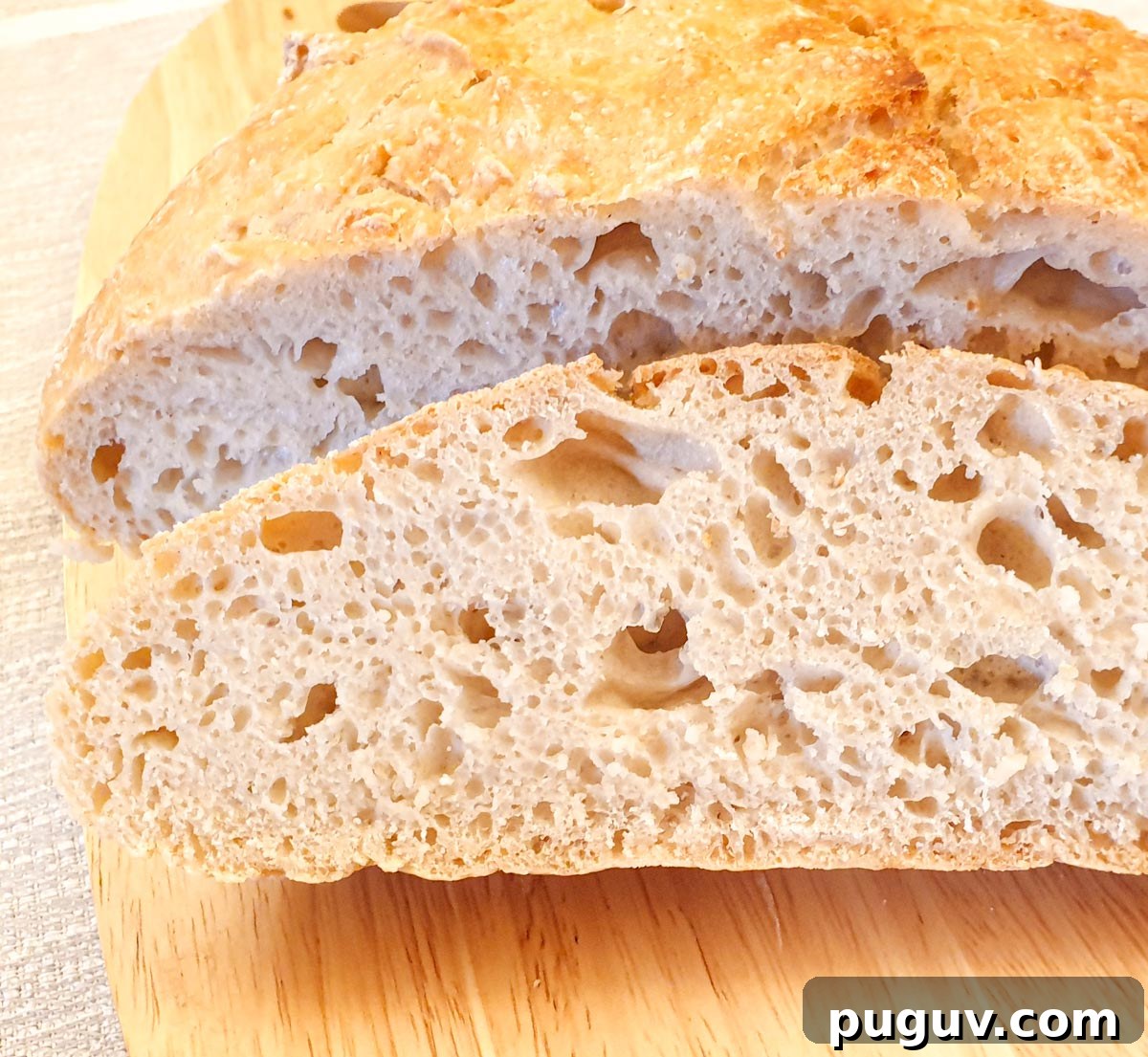
The crumb is chewy and satisfying — you can tell just by looking.
How to make crusty bread
In short: mix, let rise, shape and bake. The full recipe card below lists exact quantities and step-by-step instructions.
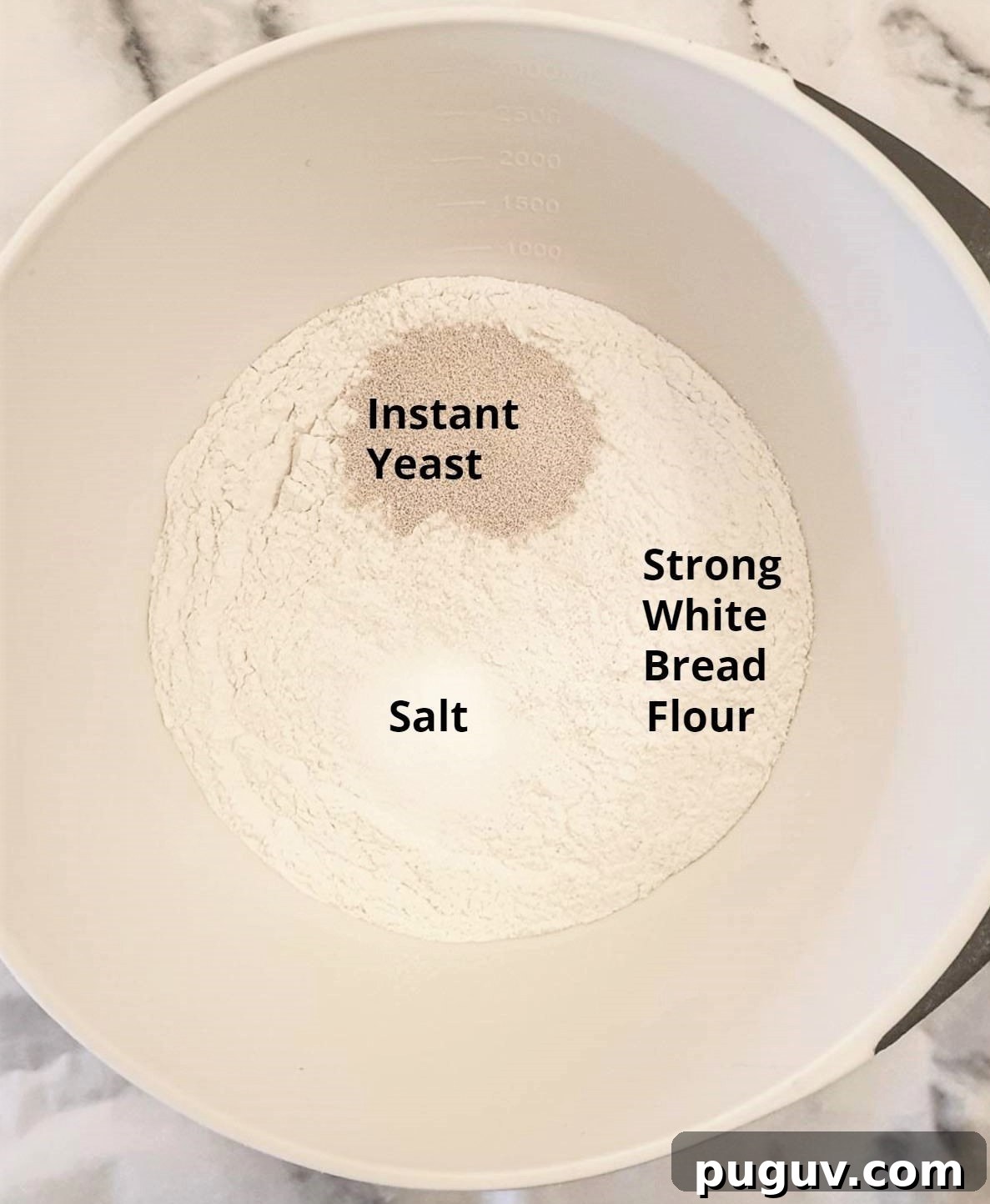
You need just four ingredients: strong white bread flour, instant yeast, salt and water.
White bread flour — use bread flour for better structure. Do not use self-raising flour.
Instant yeast — granular instant yeast can be added directly to the dry ingredients. One sachet (7 g) equals about 2 teaspoons.
Salt — improves flavour. It won’t affect the loaf’s rise much but does make the bread tastier.
Water — the recipe uses 1¼ US cups (360 ml) lukewarm water to 3 cups (420 g) flour. Measurements in the recipe card include metric units.
Mix and let rise
Measure the dry ingredients into a large mixing bowl — choose one at least four times the size of the initial dough ball to allow for rising.
Add the lukewarm water and stir with a spatula or wooden spoon until a shaggy, sticky ball forms. Don’t overmix; the ingredients should just come together.
The dough will be sticky — this is correct.
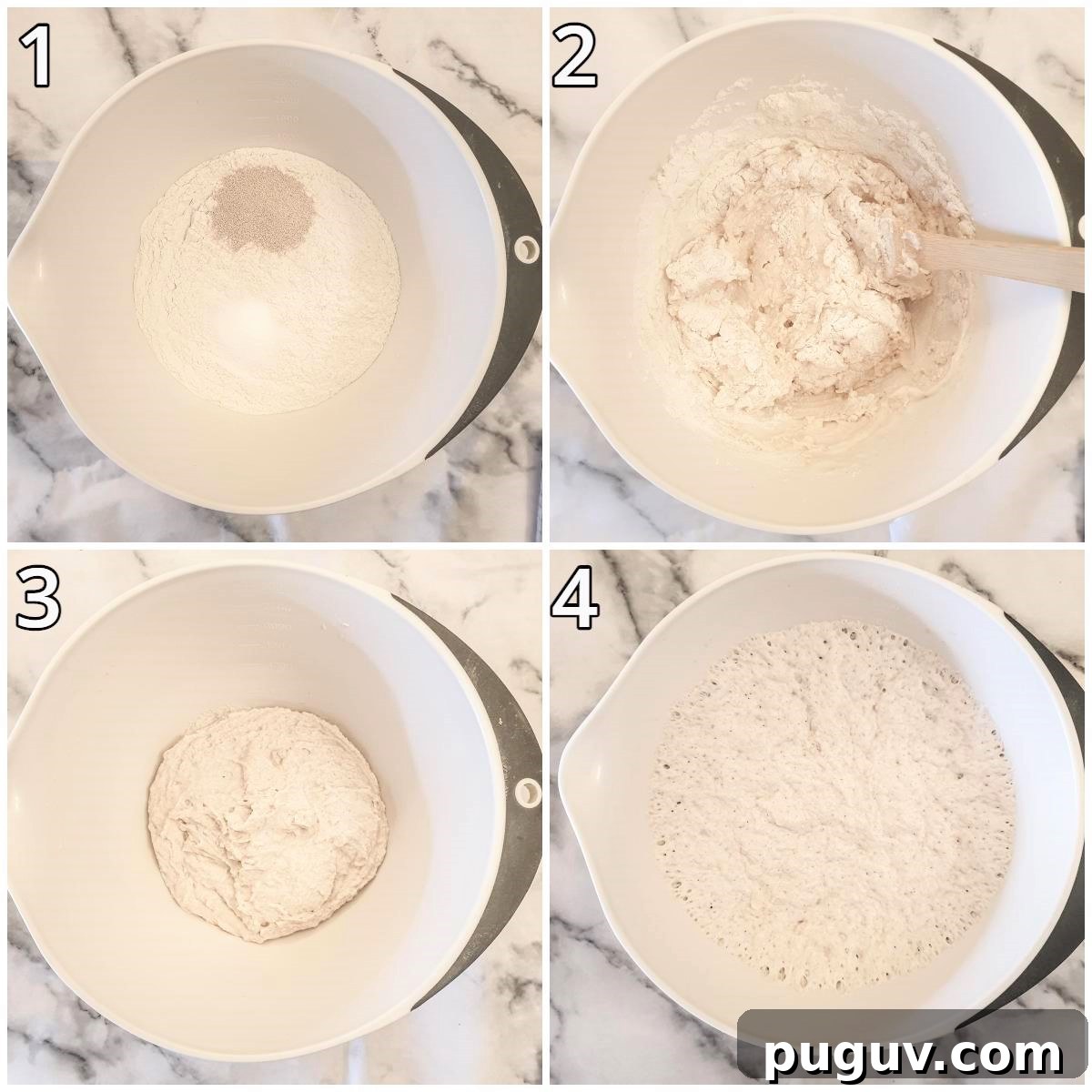
Cover with plastic wrap or a plate and leave in a warm place for at least 2 hours. The dough should jiggle slightly when the bowl is moved.
For longer, slower fermentation, refrigerate the covered bowl — the dough will proof more slowly and can be kept up to 3 days.
Bake (with a Dutch oven)
Preheat the oven and Dutch oven to 220°C / 425°F for at least 30 minutes so the pot is very hot.
Use thick oven mitts when handling the hot pot.
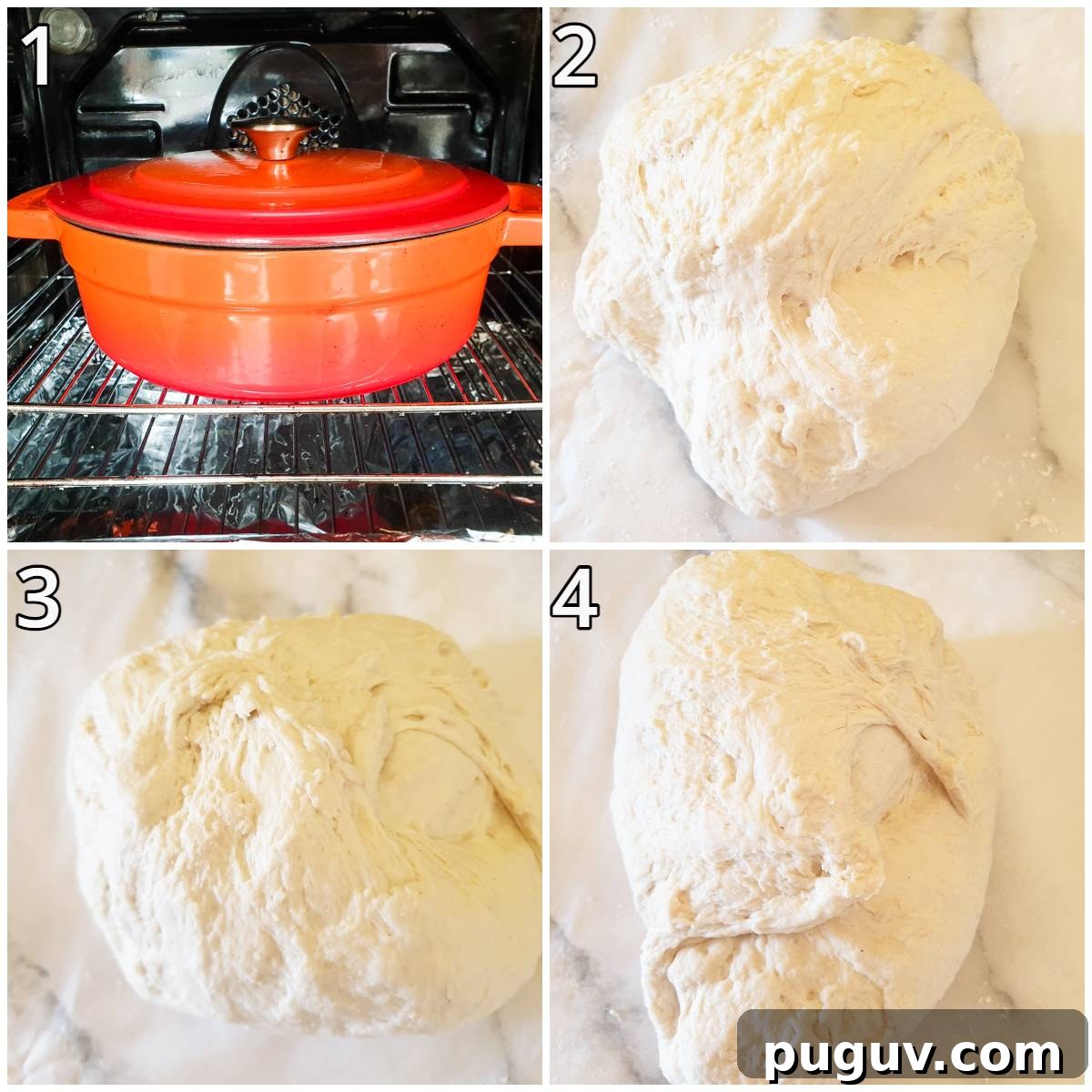
While the oven heats, form the loaf:
- Lightly flour your work surface (1–2 teaspoons). Scrape the dough onto it and dust the dough with a little extra flour if needed.
- With a dough scraper or spatula, fold the dough up and over itself and give it a quarter turn; repeat 2–3 times until you have a smoothish ball.
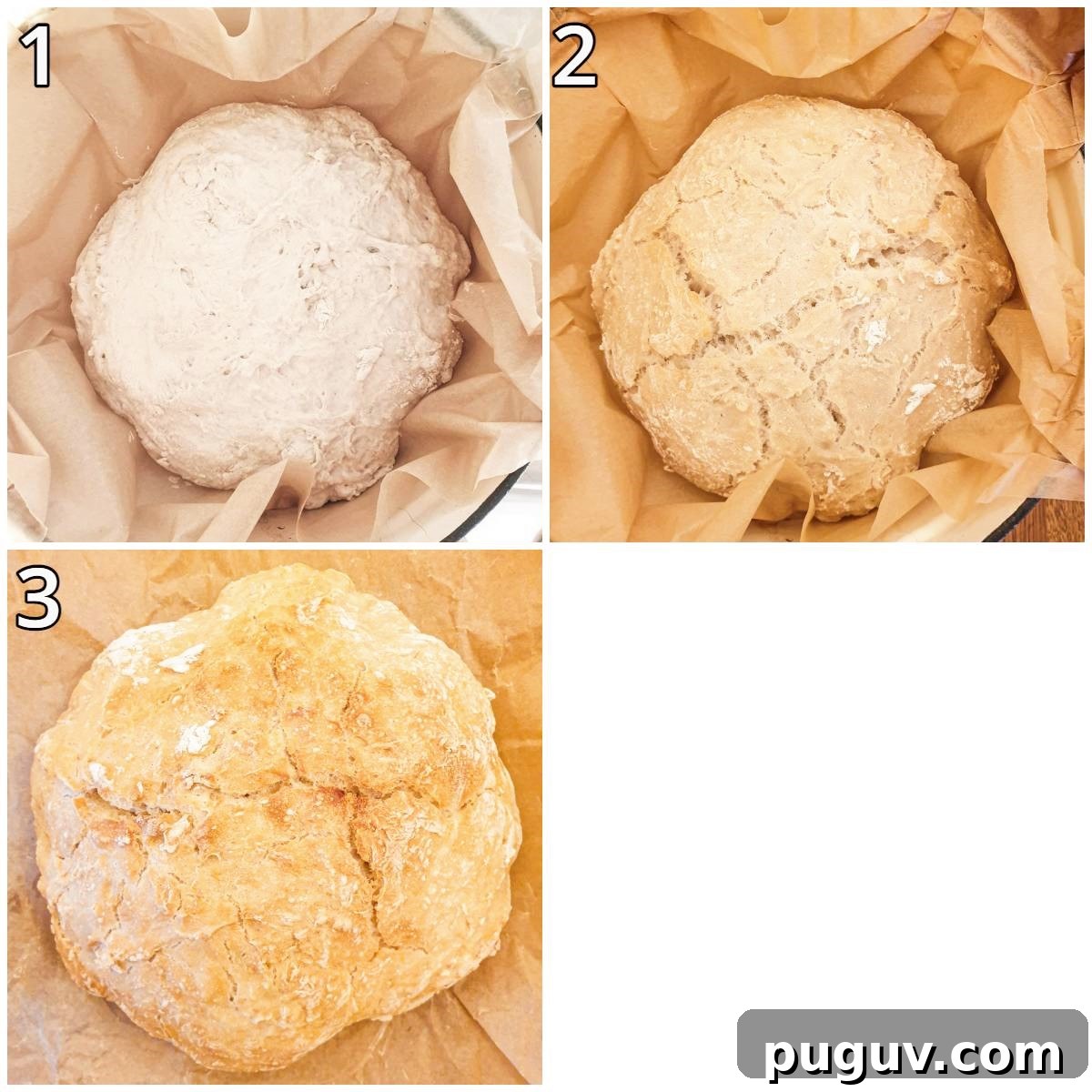
- Place the dough on a sheet of baking parchment, shape it into a rough circle, and lower the paper and dough into the hot Dutch oven.
- Cover and bake for 30 minutes, then remove the lid and bake a further 10–15 minutes until deeply golden and crusty.
- Remove and cool completely before slicing — cooling lets the interior finish setting so slices aren’t doughy.
Bake (without a Dutch oven)
Create steam by placing a tray of hot water on the bottom rack of the oven. Preheat to 220°C / 425°F.
Warning — the steam is extremely hot. Be careful when placing and removing items from the oven; open the door and let steam clear before reaching in.
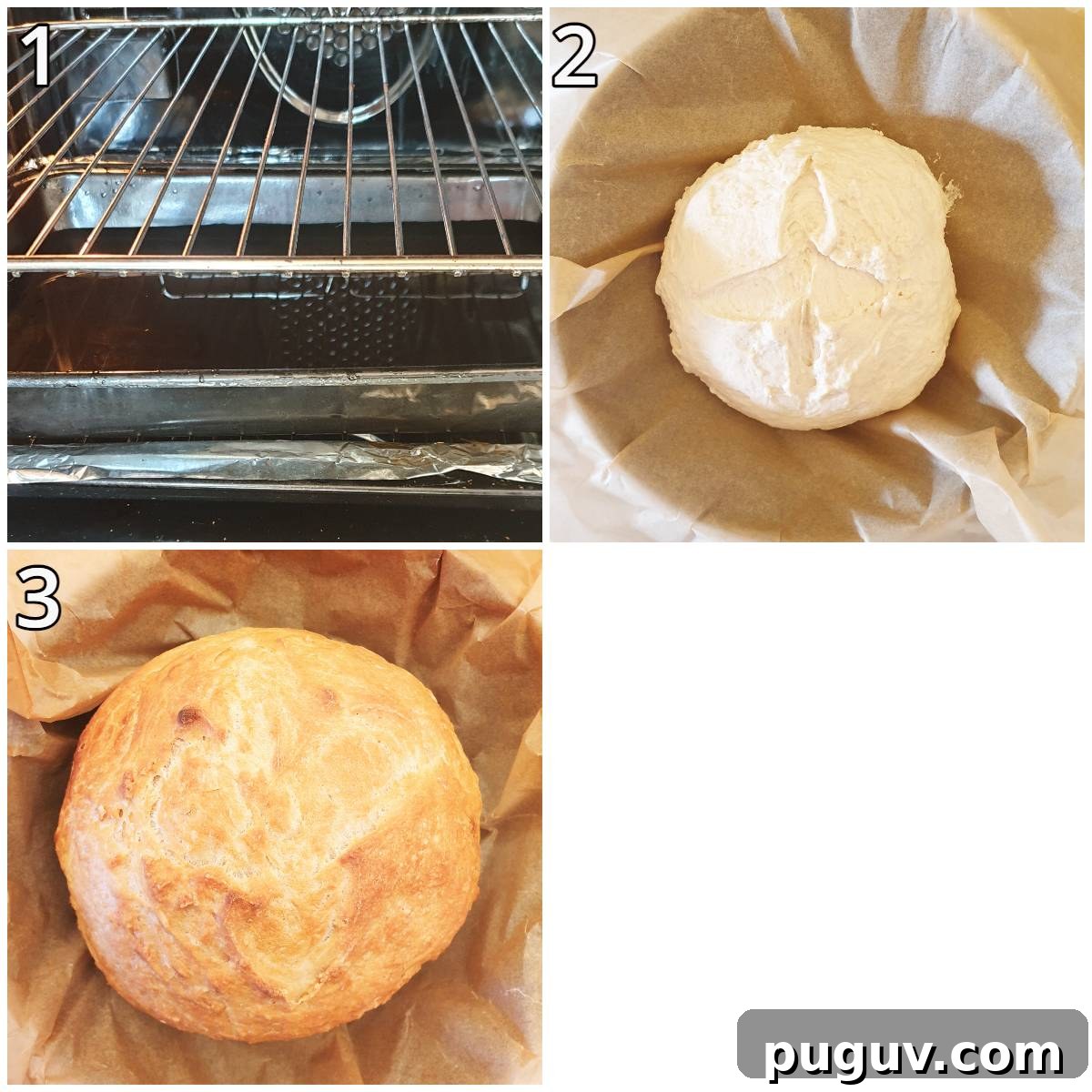
Options for shaping and baking:
- Round loaf: place the formed dough on parchment inside a 9″–10″ (23–25 cm) springform pan and bake 35–40 minutes after preheating.
- Oblong loaf: use a 5″ x 10″ (13 x 25 cm) pan and bake similarly.
- Free-form: place on a baking sheet and bake 5 minutes less — watch for a golden, crusty top.
A properly baked loaf will sound hollow when tapped on the bottom.
Questions
Yes. For best results freeze after the initial 30-minute bake (before removing the lid). Wrap the cooled loaf tightly in foil and plastic, or place in a large freezer bag. Freeze up to 6 months. To re-crisp, defrost while the oven preheats to 220°C / 425°F, then bake 15–20 minutes until browned and crusty. Slices of day-old bread also freeze well for bruschetta, garlic bread or to toast with soups.
Unbaked dough can be refrigerated, covered, for up to 3 days. Make a large batch and bake portions as needed to enjoy fresh bread more often.
Yes — this quantity will make about 12 rolls. Divide the formed dough into 12 pieces, shape into rounds or oblongs, and bake with a tray of water at 220°C / 425°F for 20–25 minutes until golden and crusty.
Choose a warm, draft-free spot. If you need a quick warm place: put a bowl of boiling water into your oven with the dough (oven off), or briefly run a tumble dryer, switch it off, and place the covered bowl inside. For slow fermentation, refrigerate and bake later.
This chewy, holey bread soaks up sauces and gravy. It’s excellent with stews, soups and rich meat dishes, or simply with butter and jam. It also makes great open sandwiches, bruschetta, garlic bread or fried-egg-and-bacon toast. The uses are endless.
Save for later
Pin the recipe to a board so you can find it easily, or save it using your browser’s bookmarking tools.
Related recipes
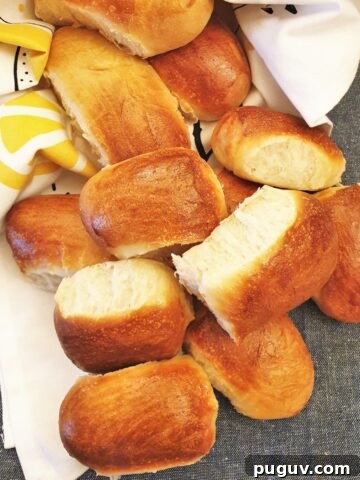
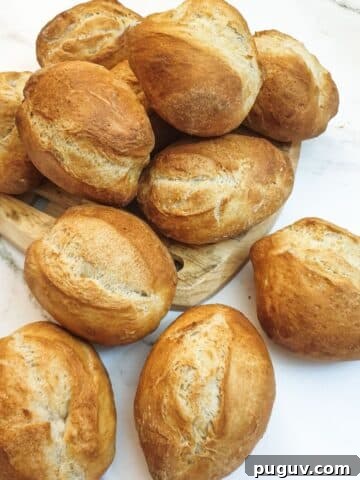
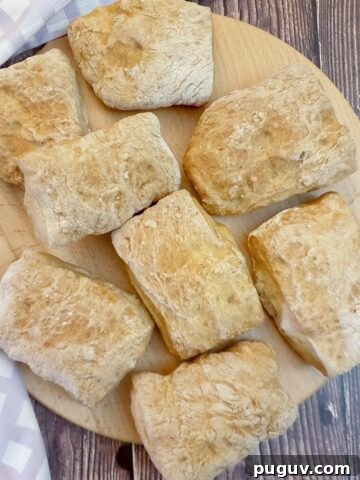
If you enjoy this loaf, try other bread recipes such as homemade hot dog rolls, German crusty rolls (Brotchen), ciabatta rolls or seeded no-knead rolls.
-
Homemade hot dog rolls (buns)
-
Crusty German bread rolls (Brotchen)
-
Easy ciabatta rolls
-
Easy no-knead seeded bread rolls
📋The recipe
No-knead crusty homemade bread (with or without a Dutch oven)
Equipment
- Mixing bowl
- Dutch oven (or baking tray and tray for boiling water)
- Pastry scraper or spatula
Ingredients
- 3 US cups / 420 grams strong white bread flour
- 2 teaspoons / 7 grams instant yeast granules
- 1 teaspoon salt
- 1¼ US cups / 360 ml lukewarm water
Instructions
- Measure the dry ingredients into a large mixing bowl.
- Add the lukewarm water and mix with a spatula until a shaggy, sticky dough forms. Do not overmix.
- Cover the bowl with plastic wrap or a plate and leave in a warm place to rise for at least 2 hours, or refrigerate up to 3 days for a slower proof.
- Half an hour before baking, preheat your oven and Dutch oven to 220°C / 425°F.
- Lightly flour your work surface (1–2 teaspoons) and tip the dough onto it. Use a spatula or dough scraper to fold the dough over itself, giving a quarter turn each time, repeating 2–3 times to form a loose ball.
- Place the dough on a sheet of baking parchment and lower it into the hot Dutch oven. Cover and bake for 30 minutes.
- Remove the lid and bake a further 10–15 minutes until the loaf is golden and crusty. A done loaf sounds hollow when tapped on the bottom.
- Cool completely before slicing.
Notes
The recipe assumes one US cup of flour equals 140 grams. This dough is sticky; use only a little extra flour to handle it. To bake without a Dutch oven, place a tray of boiling water in the oven to create steam and bake the loaf on a parchment-lined tray or in a pan for 35–40 minutes. Be cautious of hot steam when opening the oven.
Nutrition (per slice)
Calories: 155 | Carbohydrates: 32.4 g | Protein: 4.7 g | Fat: 0.5 g | Fiber: 1.3 g
If you try this recipe I’d love your feedback. You can email me at [email protected] with questions or comments.