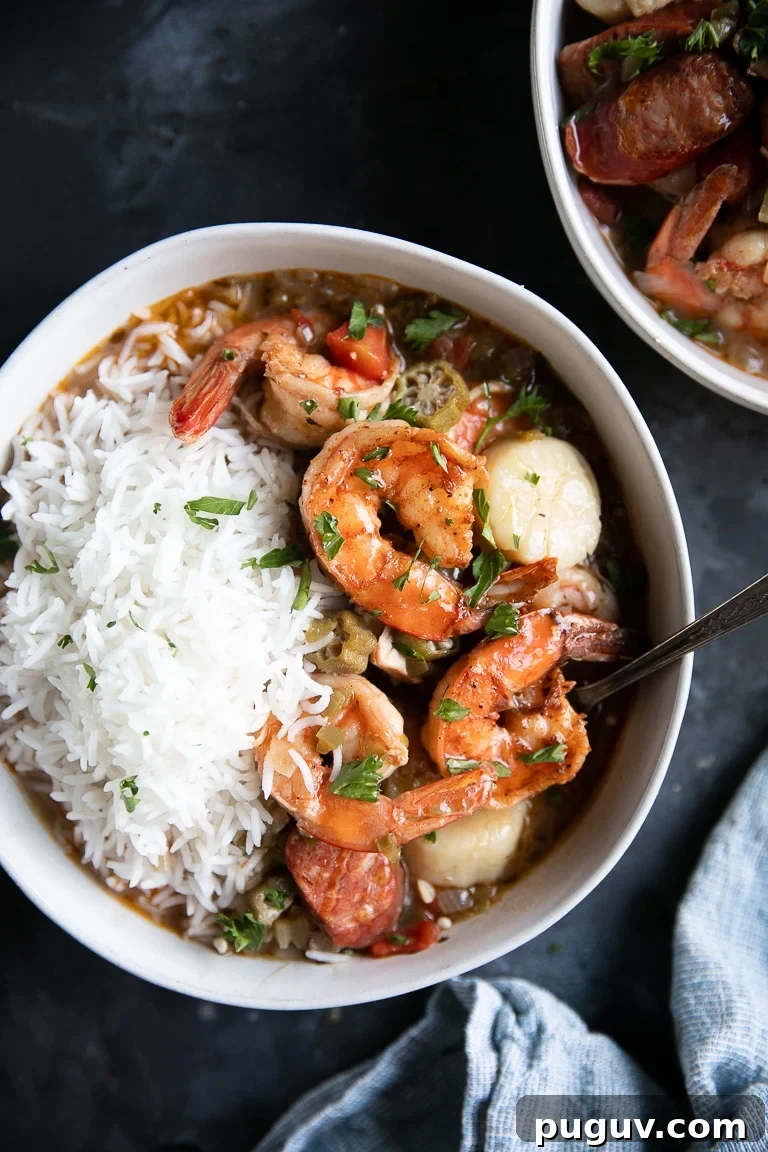
This gumbo recipe brings together bold Cajun flavors with tender chicken, smoky Andouille sausage, and fresh seafood in a rich, roux-based broth. Served over white rice, it’s a comforting, classic New Orleans dish you can enjoy year-round.
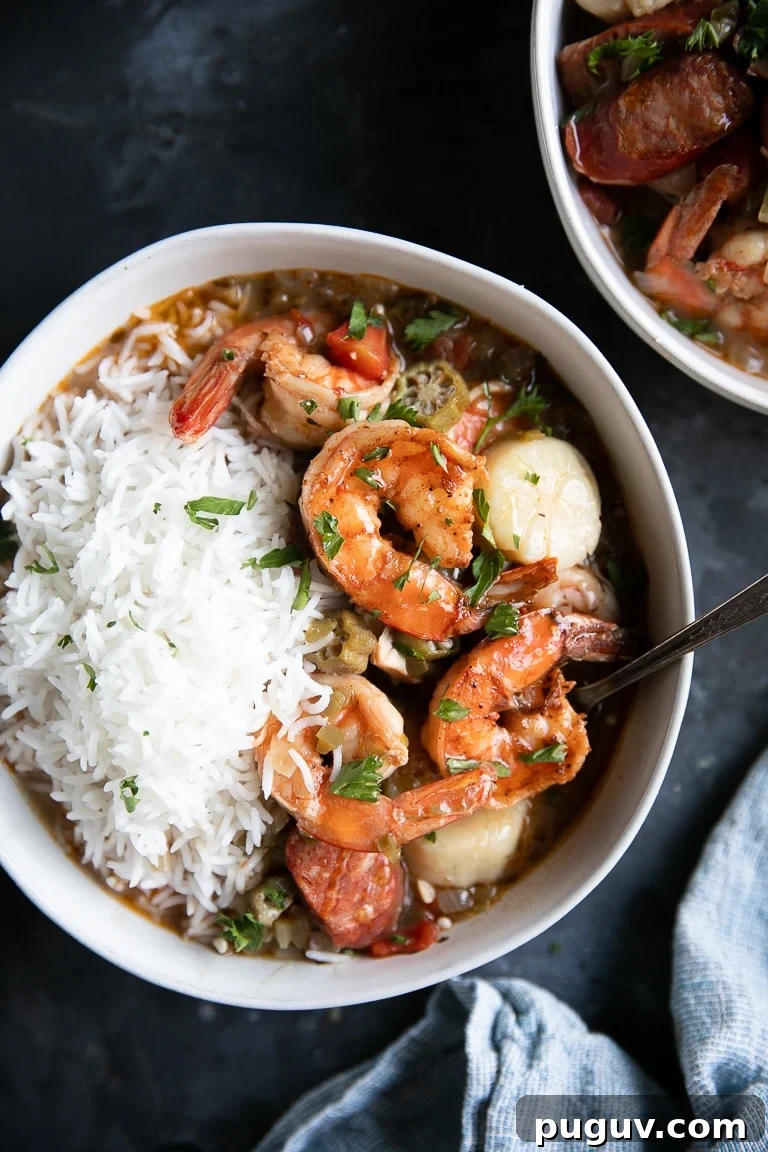
Packed with well-seasoned, hearty ingredients, this gumbo ranks among my favorite Southern recipes. In this version you’ll find the essentials: seafood, chicken, and spicy Andouille sausage, all simmered together with a deeply flavored roux to make an unforgettable gumbo.
Before getting started…
Gumbo requires time and patience — plan on 2–3 hours from start to finish. The process is worth it: the flavors deepen as the gumbo simmers. This recipe yields a large batch, ideal for feeding a family or a small gathering and for enjoying leftovers.
Table of contents
- What is Gumbo?
- What’s in Gumbo?
- Gumbo Roux
- What is Roux?
- How to Make Roux for Gumbo?
- How to Make Gumbo
- What to Serve with Gumbo?
- Gumbo Thickeners
- Gumbo vs. Jambalaya
- Cajun vs. Creole Gumbo
- Frequently Asked Questions
- Can You Freeze Gumbo?
- More Cajun Recipes
What is Gumbo?
Gumbo is a hearty stew from Louisiana that reflects a mix of cultural influences: French, Spanish, African, Native American, and others. The name can be traced to West African words for okra, and the dish is widely considered the official state dish of Louisiana. Typical gumbo combines a flavorful stock with meats or shellfish, a thickener (such as roux, filé powder, or okra), and the aromatic trio of onion, celery, and bell pepper often called the Cajun or Creole “holy trinity.”
What’s in Gumbo?
Gumbo is a savory stew built from a base of roux (flour cooked with fat), and commonly includes meat such as chicken and smoked sausage, a variety of seafood like shrimp, crab, or scallops, and vegetables including onions, celery, bell pepper, and often okra or tomatoes. Seasonings typically include paprika, Cajun seasoning, bay leaves, thyme, garlic, hot sauce, and sometimes filé powder added at the end for both flavor and thickening.
Gumbo Roux
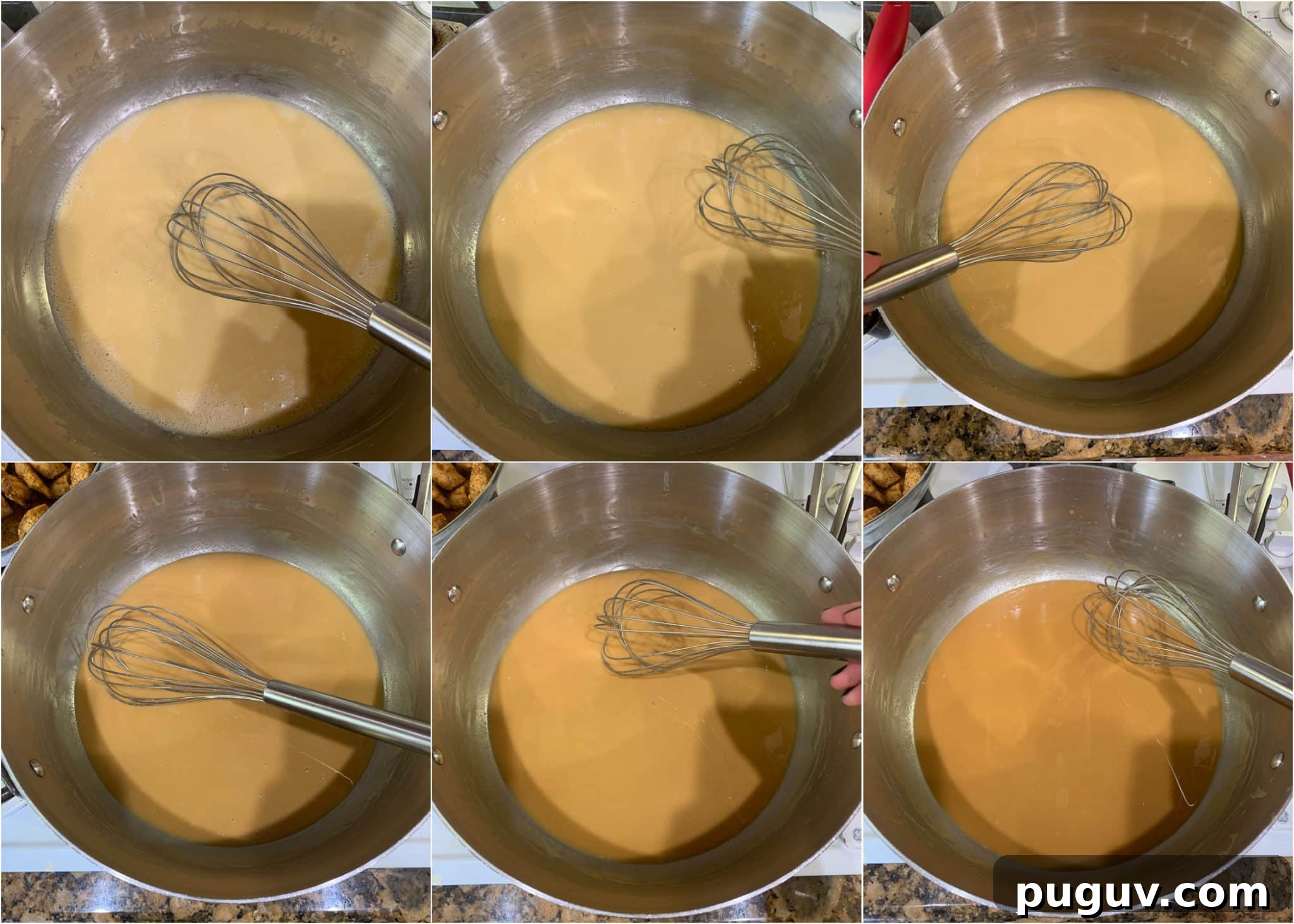
The roux is the soul of many gumbo recipes. Making it takes patience and attention, but it’s straightforward: cook equal parts flour and fat over steady heat until it reaches the desired color. For gumbo, a darker roux lends deep, nutty flavor while a lighter roux thickens more effectively.
What is Roux?
A roux is a mixture of flour and fat cooked together to thicken and flavor soups, stews, and sauces. It is typically made from equal parts flour and fat (such as butter, oil, or drippings) and cooked to different shades depending on whether you want more thickening power or more toasted flavor. For gumbo, the roux is often used primarily for flavor.
How to Make Roux for Gumbo?
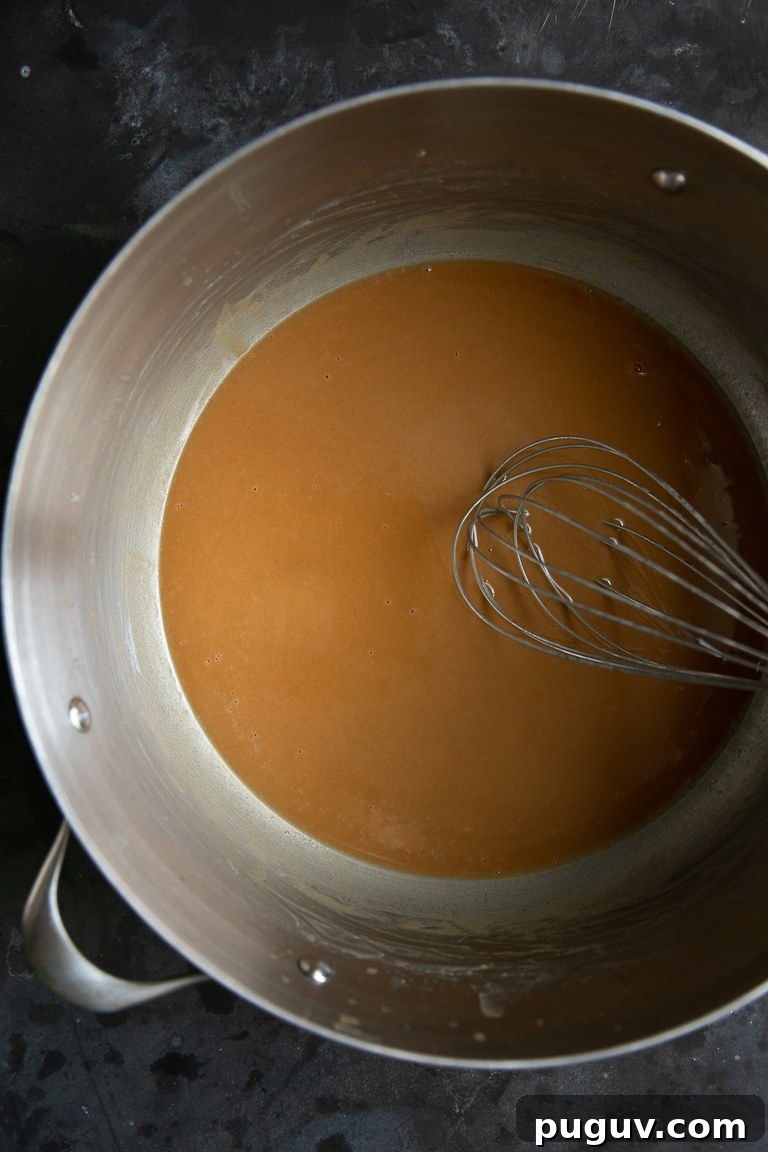
Use a heavy-bottomed pot or Dutch oven and melt your chosen fat over medium-low heat. Whisk in flour a little at a time until smooth, then continue to cook, stirring constantly, for 1–2 hours. The roux will progress from pale to caramel to mahogany and finally a deep chocolate brown. Adjust heat if the color stalls, but avoid burning — a burned roux must be discarded and started over.
How to Make Gumbo
Follow these steps for a classic chicken, sausage, and seafood gumbo:
- Make the roux: In a large heavy saucepan, cook equal parts flour and fat (bacon drippings, butter, or a mix) over medium-low heat, whisking constantly, until the roux turns a deep brown. This typically takes 1–2 hours. Remove from heat and set aside.
- Season and toss the chicken: In a bowl, coat chopped chicken with olive oil, paprika, and part of the Cajun seasoning. Set aside.
- Brown the sausage: In a large skillet, add oil and brown sliced Andouille sausage for 1–2 minutes per side. Transfer to a plate.
- Sear the chicken: In the same skillet, sear chicken pieces 1–2 minutes per side — they don’t need to be fully cooked. Remove and reserve.
- Bring the broth to a boil: In a large pot, bring the chicken broth to a boil, optionally adding bouillon cubes and a touch of sugar to round flavors. Reduce to a simmer.
- Sauté the vegetables: Using the skillet, add more oil if needed and cook the onion, celery, and green bell pepper (the “holy trinity”) until softened, then add garlic and cook briefly.
- Combine roux and vegetables: Reduce heat and stir the roux into the softened vegetables, mixing continuously for a couple of minutes, then slowly whisk that mixture into the simmering broth. Keep the pot at a gentle simmer.
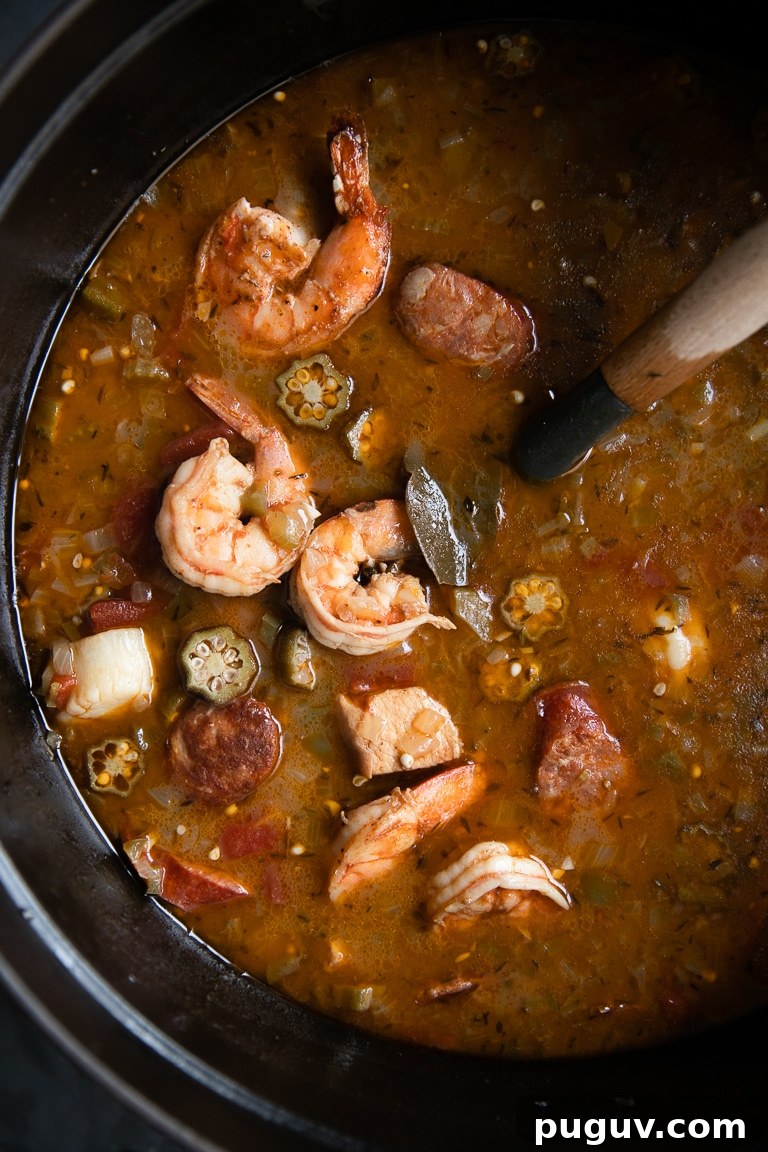
- Season and simmer: Add hot sauce, bay leaves, Cajun seasoning, thyme, diced tomatoes, and tomato sauce. Reduce to low and simmer for at least 45 minutes to develop flavor.
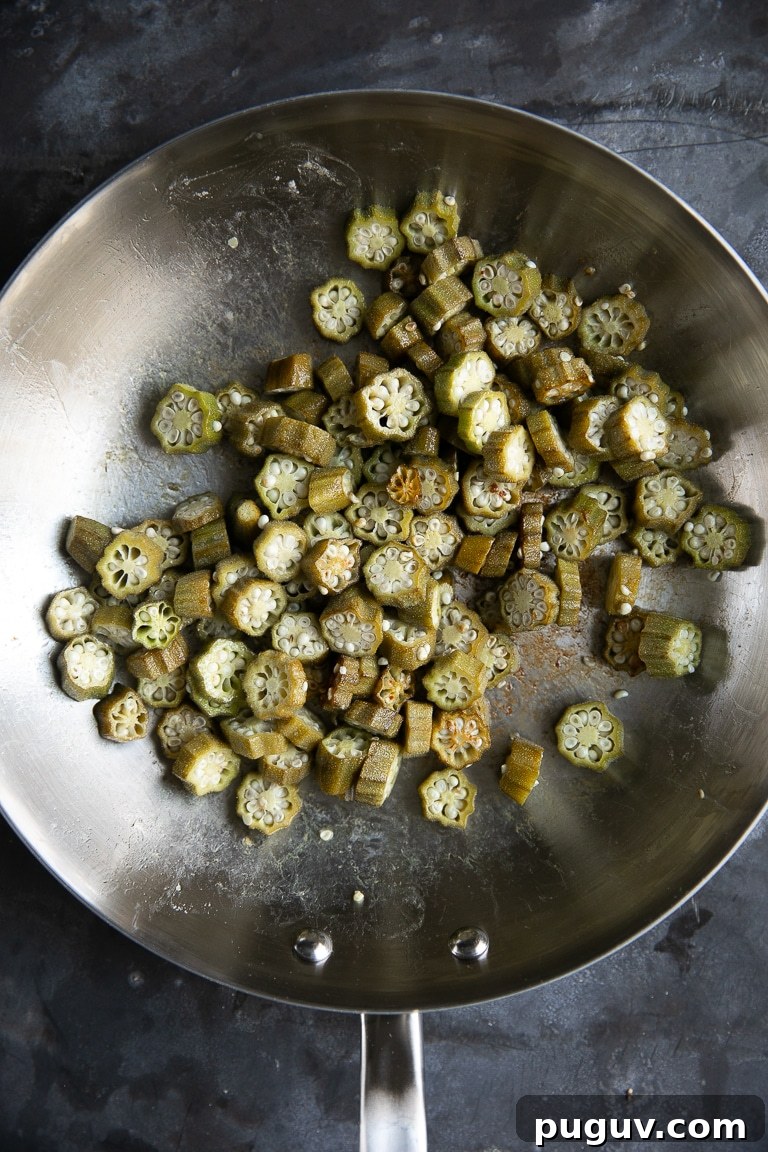
- Sauté the okra: In a skillet, melt butter, add chopped okra and a splash of distilled white vinegar, and sauté for 10–15 minutes. Add cooked okra to the gumbo.
- Add meats and seafood: After the initial simmer, add the reserved chicken and sausage. Then add Worcestershire sauce, crabmeat, and sea scallops. Simmer 20–30 minutes more.
- Finish with shrimp and filé: Five to ten minutes before serving, add the shrimp and stir in filé powder, simmering until the shrimp are cooked through. Adjust seasoning to taste.
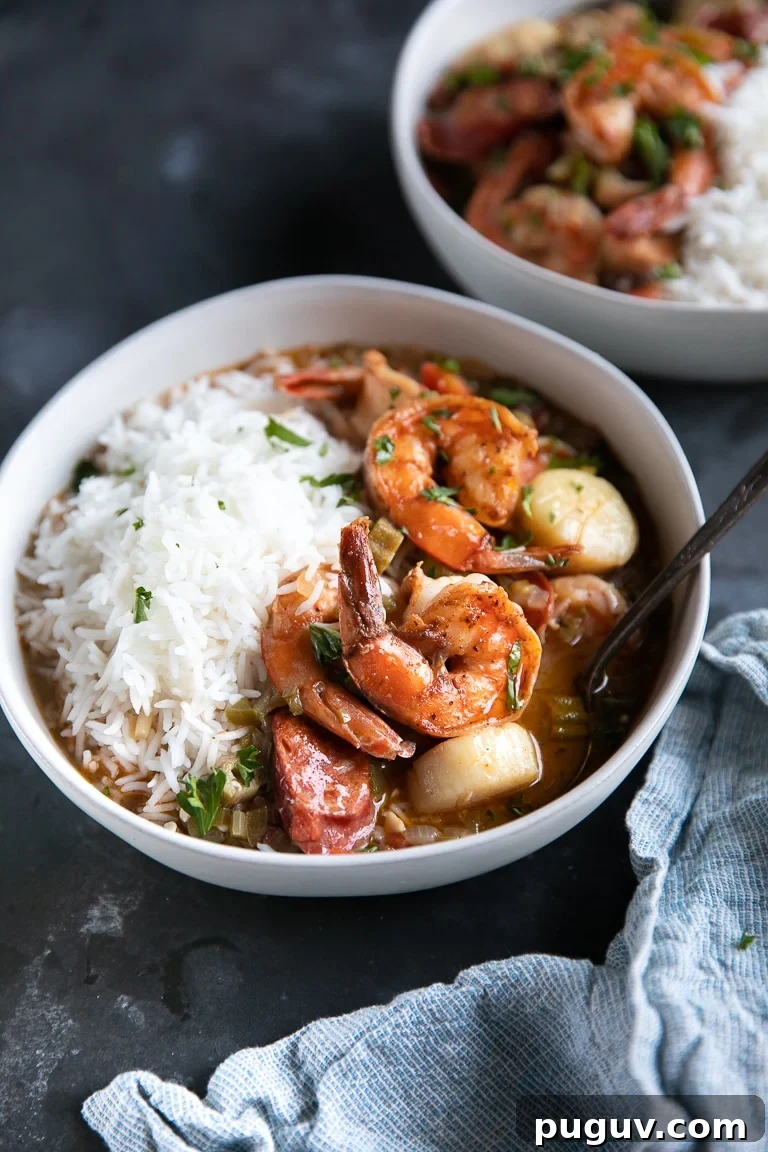
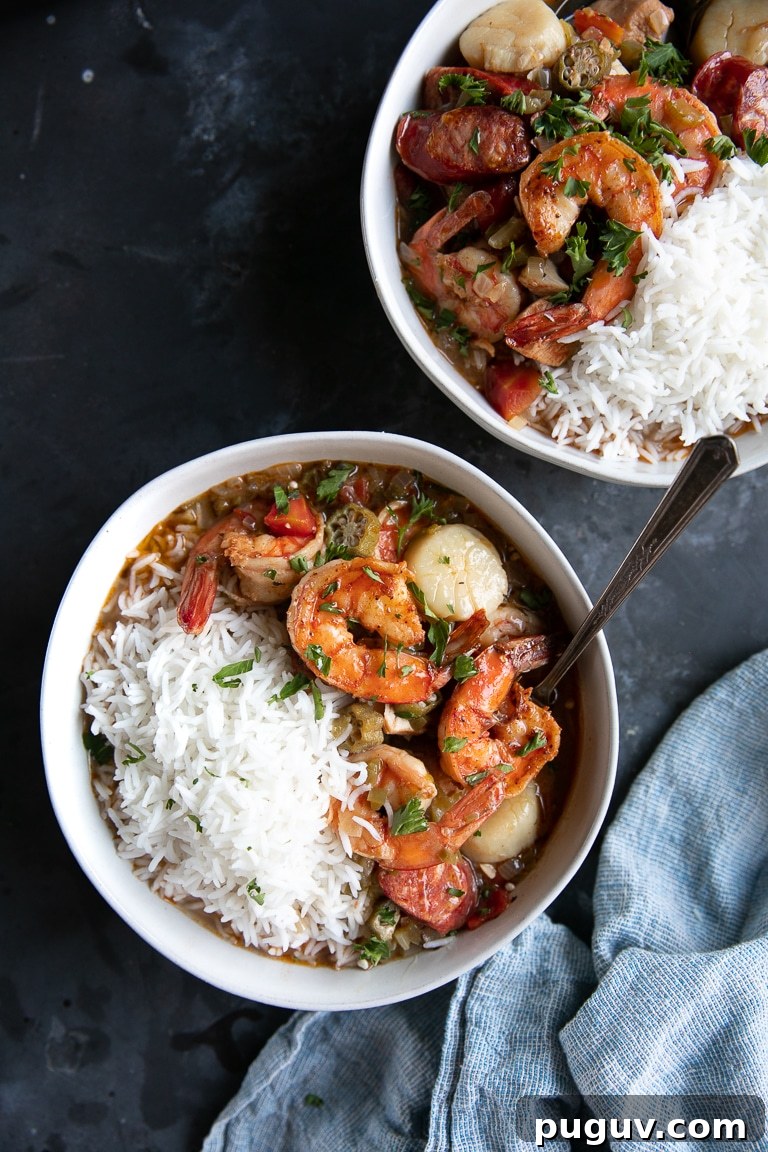
Serve hot over a scoop of cooked white rice and garnish with chopped parsley.
What to Serve with Gumbo?
Gumbo is traditionally served with white rice. Rice stretches the meal to feed more people and pairs perfectly with the rich broth. Common accompaniments include crusty French bread or, in some families, potato salad.
Gumbo Thickeners
Three common thickeners are used in gumbo: roux, filé powder, and okra. Each contributes both texture and flavor:
- Roux: A key element for flavor and some thickening depending on how long it’s cooked. Darker roux adds more flavor but less thickening power.
- Filé powder: Ground sassafras leaves added near the end of cooking for both aroma and thickening.
- Okra: Often used in seafood gumbos; fresh or thawed frozen okra is typically sautéed before adding.
This recipe incorporates roux, okra, and filé powder for a layered texture and flavor.
What’s the Difference Between Gumbo and Jambalaya?
The simplest distinction: jambalaya is a rice dish cooked with proteins and vegetables until the rice absorbs the flavors, similar to paella. Gumbo is more of a stew or soup with a separate scoop of rice served alongside. Gumbo typically starts with a roux and often includes okra or filé powder, while jambalaya cooks everything together until the rice is done.
Cajun vs. Creole Gumbo
Creole cooking developed in New Orleans with broader European and international influences and often uses tomatoes and butter. Cajun cooking comes from Acadian (Cajun) country and is traditionally simpler and more rustic, using animal fats or vegetable oil and leaning toward chicken-and-sausage combinations. Seasonings overlap, but Creole dishes may include additional herbs and a tomato base more often than Cajun dishes.
This recipe leans toward Creole gumbo because of the seafood and tomato elements, but it includes chicken and a roux made with bacon drippings, giving it a hybrid character.
Frequently Asked Questions
Okra is a green, seed-bearing vegetable sometimes called “lady’s fingers.” It adds texture and can act as a thickener in gumbo. If you dislike okra or can’t find it, substitute extra filé powder toward the end of cooking. If using frozen okra, thaw before adding.
Filé powder is made from ground, dried sassafras leaves and is used as a finishing seasoning and thickener in some gumbo preparations. It is typically added at the end of cooking.
Okra can replace filé as a thickener, or you can use a cornstarch slurry (2 teaspoons cornstarch mixed with 1 tablespoon water) if you need a neutral thickener.
The roux, combined with either okra or filé powder, plus the seasoning blend, aromatic vegetables, and simmered stock, are the main contributors to gumbo’s distinctive flavor.
Andouille is a smoked, seasoned pork sausage with a bold, slightly spicy flavor that pairs well with gumbo. If you can’t find Andouille, substitute another smoked sausage, kielbasa, or chorizo.
Yes, this version is on the spicier side. To reduce heat, omit or cut back on hot sauce and adjust Cajun seasoning to taste. To increase heat, add sliced jalapeño or extra hot sauce.
Can You Freeze Gumbo?
Yes. You can freeze components or the finished gumbo. Practical options:
- Freeze the roux alone in an airtight container for up to 6 months.
- Freeze a combination of roux, sautéed vegetables, and broth (without seafood) for 3–6 months; this saves most prep work and avoids freezing delicate seafood.
- Freeze the fully assembled gumbo, though seafood textures may change; store in airtight containers for 3–6 months.
Option 2 is often best: most work is done but seafood can be added fresh when reheating.
More Cajun Recipes
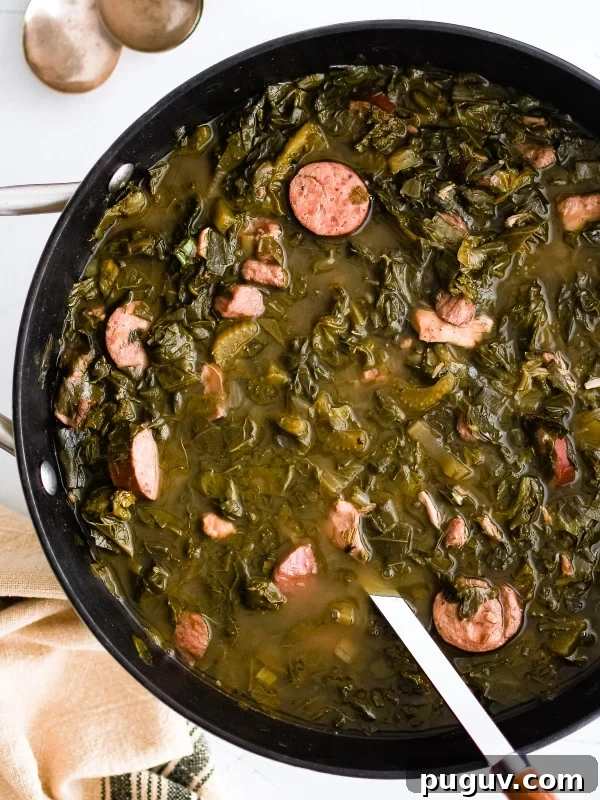
Green Gumbo Recipe (Gumbo Z’Herbes)
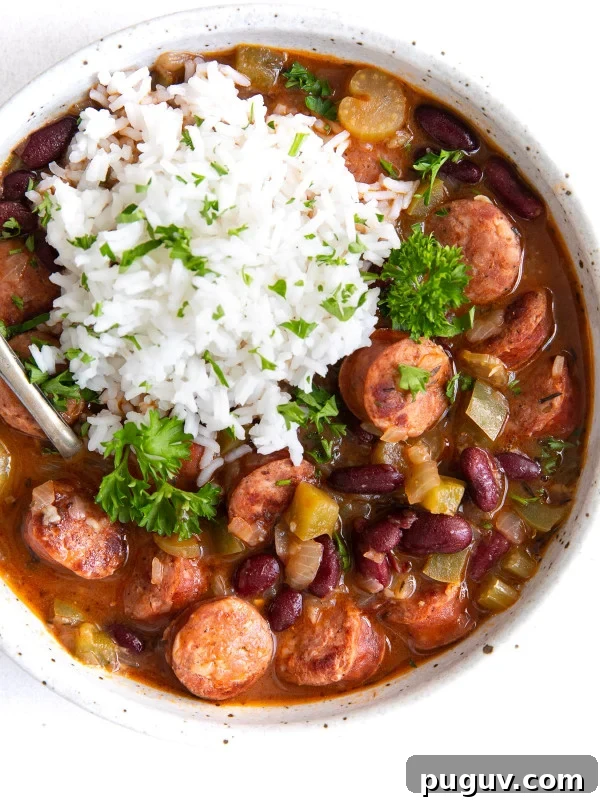
Easy Red Beans and Rice Recipe
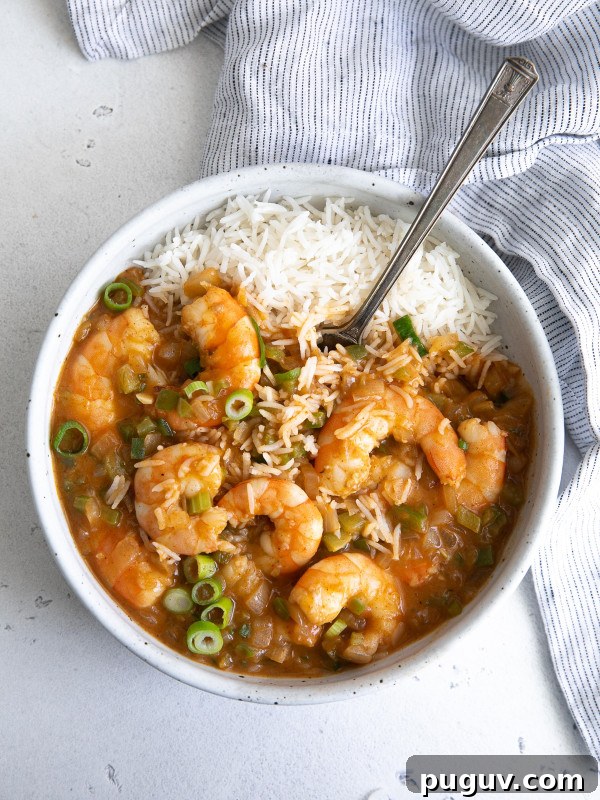
Shrimp Étouffée Recipe
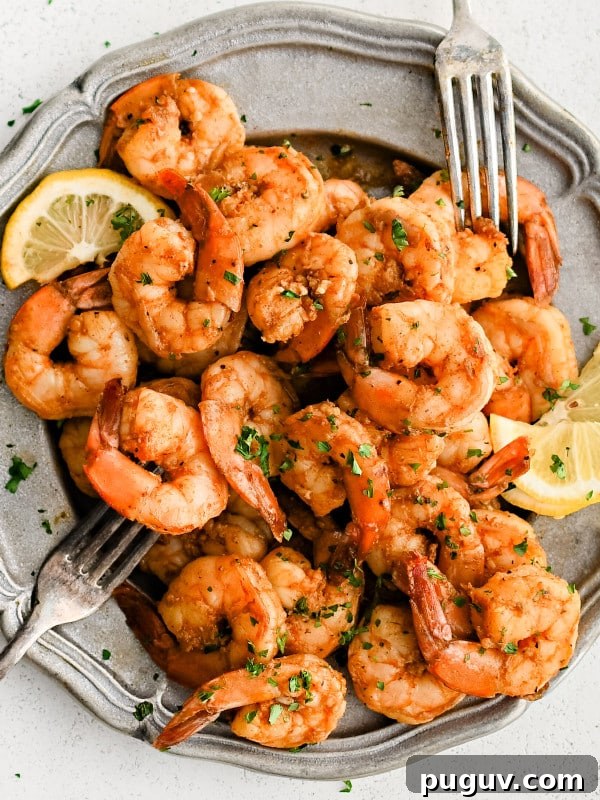
Cajun Shrimp
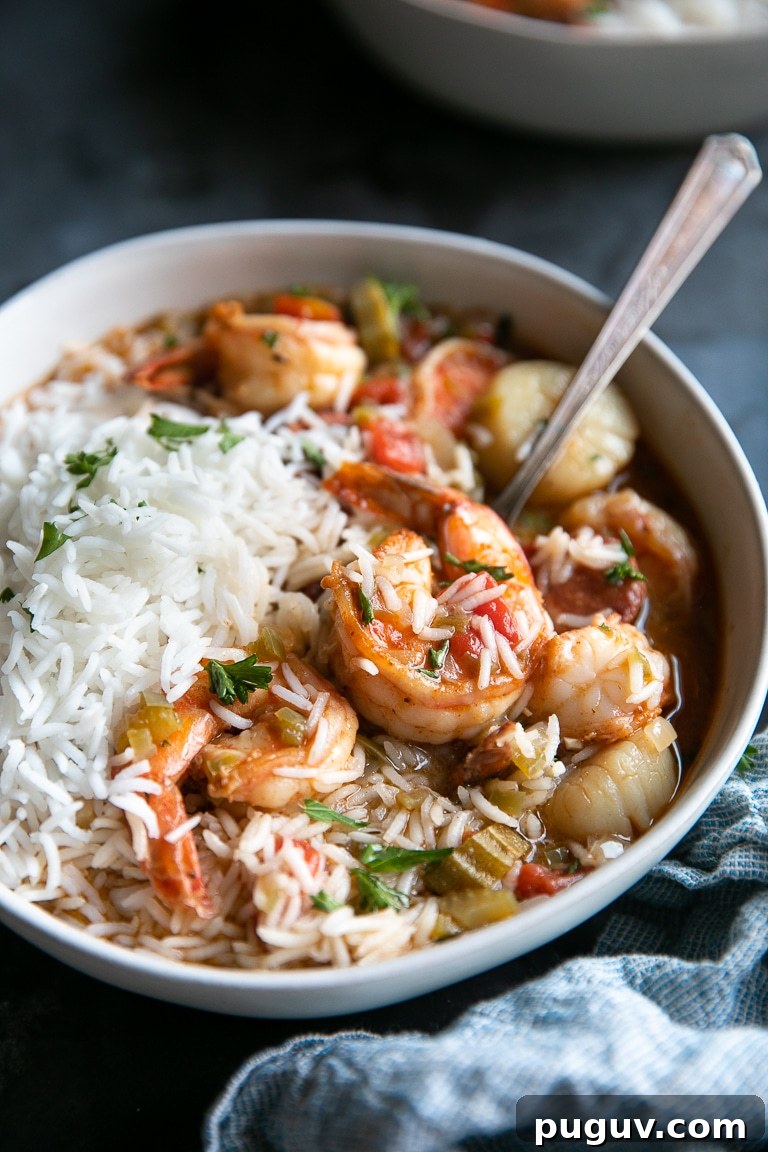
Have you tried making this gumbo? Share your experience in the comments. I love hearing how readers customize the recipe and what variations you try at home.
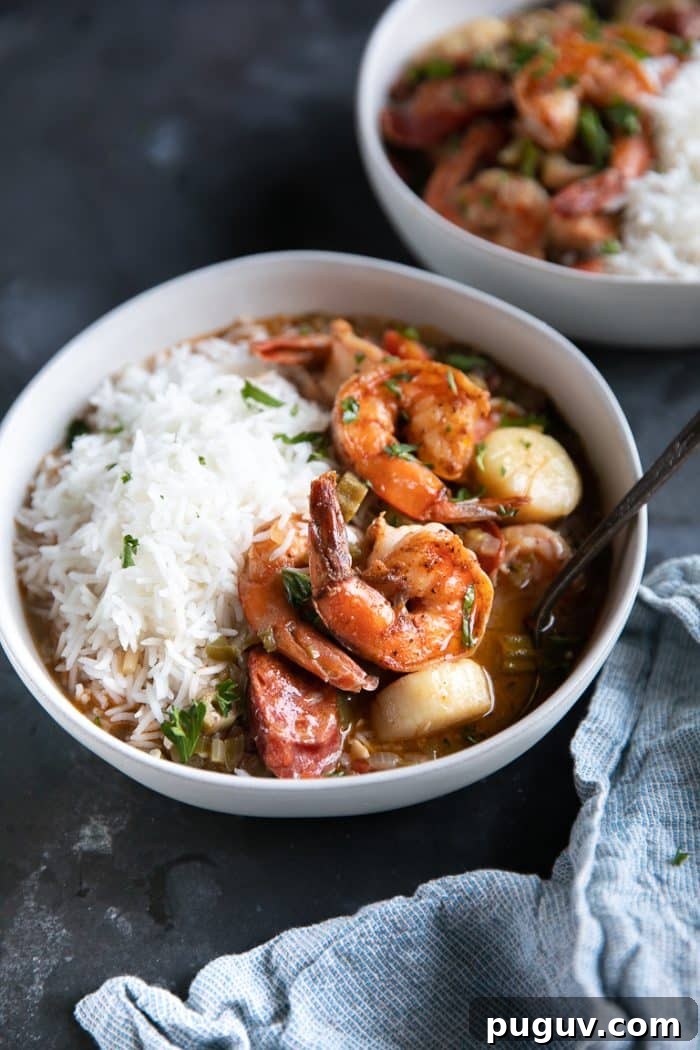
Gumbo Recipe
 Jessica Randhawa
Ingredients
- 1 cup all-purpose flour
- 3/4 cup bacon drippings or butter (or a mix)
- 3 tbsp + 1 tsp oil, divided
- 2 tsp sweet paprika
- 2 tbsp Cajun seasoning, divided
- 2 pounds chicken breast, chopped
- Salt and black pepper, to season
- 1 pound smoked Andouille sausage, sliced
- 5 stalks celery, finely chopped
- 2 large onions, chopped
- 2 green bell peppers, seeded and finely chopped
- 5 cloves garlic, minced
- 3 quarts (12 cups) low-sodium chicken broth
- 3 beef bouillon cubes (optional)
- 1 tbsp white sugar
- 1 tsp salt, plus more to taste
- 3 tbsp hot pepper sauce (such as Tabasco), adjust to taste
- 4 bay leaves
- 1/2 tsp dried thyme
- 1 (14.5 oz) can diced tomatoes
- 1 cup tomato sauce
- 2 tbsp butter
- 1 pound okra, chopped
- 2 tbsp distilled white vinegar
- 2 tbsp Worcestershire sauce
- 1 pound lump crabmeat
- 2 pounds jumbo sea scallops
- 2 pounds raw shrimp, peeled and deveined
- 4 tsp gumbo filé powder
- Fresh chopped parsley for garnish
Instructions
- Make the roux: In a large heavy saucepan over medium-low heat, combine bacon drippings (or butter) and flour. Whisk continuously until smooth and cook for 1–2 hours, stirring to prevent burning, until the roux turns a deep brown. Remove and set aside.
- Toss the chopped chicken with 1 tbsp olive oil, paprika, and 1 tsp Cajun seasoning. Set aside.
- Heat 1 tbsp olive oil in a large skillet or Dutch oven. Brown the sliced Andouille sausage 1–2 minutes per side. Remove to a plate.
- Add 1 tsp olive oil to the skillet and sear the chicken for about 2 minutes per side. It does not need to be fully cooked. Remove and reserve.
- Bring chicken broth to a boil in a large pot. Stir in bouillon (if using) and white sugar, then reduce to a simmer.
- In the skillet, add 1 tbsp oil and sauté celery and onions with salt and pepper for 4–5 minutes. Add bell peppers and cook 3–4 more minutes. Add garlic and cook 30 seconds.
- Reduce heat and stir the roux into the sautéed vegetables, stirring 1–2 minutes. Slowly whisk this mixture into the simmering broth and maintain a gentle simmer.
- Add hot sauce, bay leaves, 1 tbsp Cajun seasoning, dried thyme, diced tomatoes, and tomato sauce. Reduce heat to low and simmer for 45 minutes.
- While the gumbo simmers, melt 2 tbsp butter in a skillet, add chopped okra and 2 tbsp white vinegar, and sauté 10–15 minutes. Add okra to the gumbo.
- After 45 minutes, add the reserved chicken and sausage to the pot. Stir in Worcestershire sauce, crabmeat, and sea scallops. Simmer 20–30 minutes more.
- Five to ten minutes before serving, add shrimp and stir in filé powder. Simmer until shrimp are cooked through. Taste and adjust seasoning.
- Serve over white rice and garnish with fresh chopped parsley. Enjoy.
Notes
- Allow at least 3 hours to prepare and cook this recipe.
- You will need a large pot or Dutch oven (8–10 quarts) for this quantity.
- Roux takes time; darker roux has more flavor but less thickening power.
- This recipe is moderately spicy—adjust hot sauce and seasoning to your preference.
Nutrition (approx.)
Calories: 648 kcal | Carbohydrates: 23 g | Protein: 62 g | Fat: 33 g | Sodium: 2248 mg
Nutrition information is an approximation and will vary by ingredients and serving size.