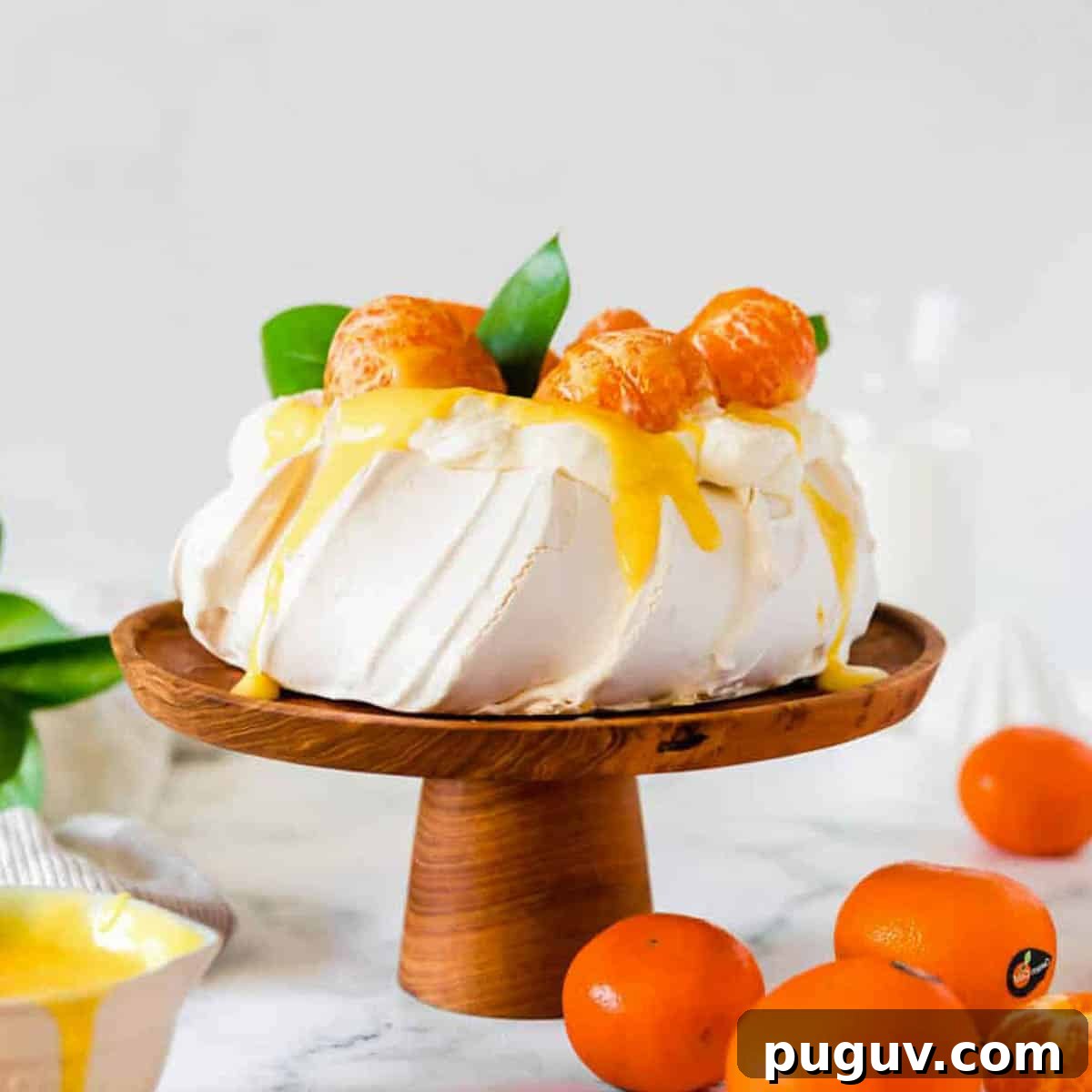
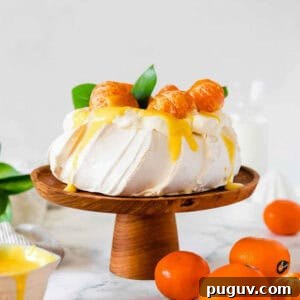
This winter citrus pavlova is a striking dessert perfect for holiday gatherings and winter celebrations. With a crisp exterior and a soft, marshmallow-like interior, a well-made pavlova looks impressive without needing perfect precision — its light, pillowy shape is part of the charm.
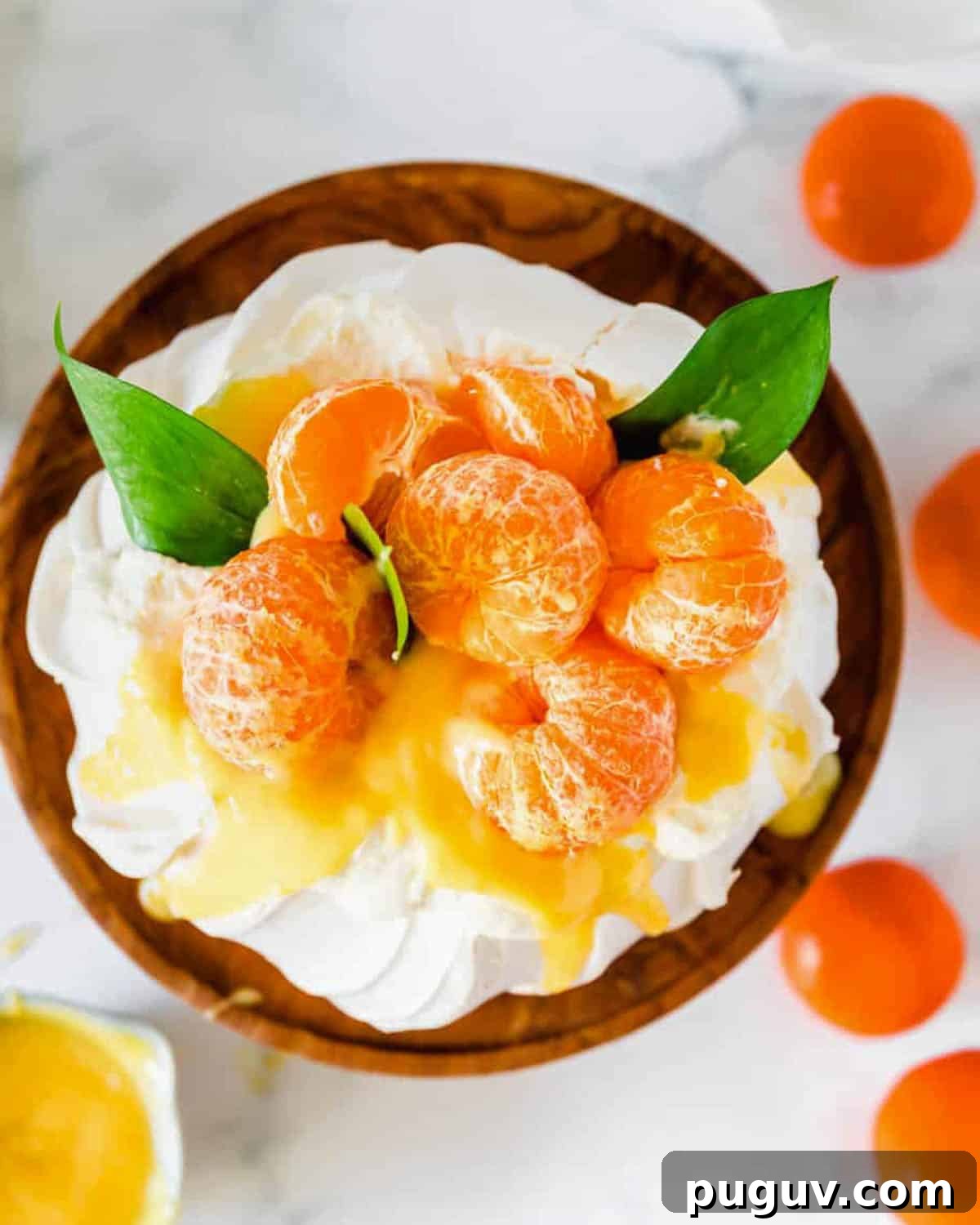
This version is finished with a vibrant, sweet-tart clementine curd, a cloud of whipped cream, and fresh citrus segments for brightness and texture. It’s naturally gluten free and can be made dairy free if you use vegan butter and non-dairy whipped cream. The result is a show-stopping dessert that feels elegant but is straightforward to prepare.
If you enjoy citrus desserts, consider other citrus-forward treats such as dairy-free key lime pie, a gluten-free lemon cake, or a blood orange pound cake for more seasonal baking ideas.
Ingredient Notes
This pavlova relies on simple pantry staples and is easy to adapt. Key points about the ingredients:
- Eggs – The pavlova uses egg whites while the clementine curd uses whole eggs and an extra yolk. Separate eggs while cold for easiest handling, then bring the whites to room temperature before whipping for better volume.
- Vinegar – A small amount of white vinegar helps stabilize the egg whites and reduce the risk of collapse.
- Castor sugar – Superfine castor sugar dissolves more readily into whipped egg whites and gives a smooth meringue. If you don’t have castor sugar, pulse granulated sugar briefly in a clean grinder or food processor until fine.
- Cornstarch – A touch of cornstarch in the meringue helps absorb moisture and keeps the outside crisp. It is also used to gently thicken the curd; tapioca starch can be substituted if preferred.
- Cream of tartar – An acid that stabilizes beaten egg whites and helps them hold shape.
- Vanilla – A small amount of vanilla extract adds depth and a touch of sweetness to the meringue.
- Clementines – You’ll need both zest and juice for the curd, plus extra clementine segments for garnish. Tangerines or satsumas can be substituted if clementines are not available.
- Lemon juice – A little lemon juice balances the sweetness in the curd and brightens the citrus flavor.
- Vegan butter and whipped cream – Use dairy versions if you do not need to keep this dairy free. Vegan butter makes the curd silky, and a non-dairy whipped cream works well for topping.
See the recipe card below for the full ingredient list and exact quantities used.
Substitutions & Variations
- Not dairy free: Use regular butter and dairy whipped cream in the same measures.
- No clementines: Substitute any similar citrus such as blood oranges, mandarins, or Meyer lemons for a different color and flavor profile.
- Skip homemade curd: Store-bought lemon, orange, or other fruit curds can be used in place of homemade clementine curd.
- Mini pavlovas: Pipe smaller nests to make individual pavlovas instead of one large cake; this is great for parties and easier to plate.
How to make Clementine Curd
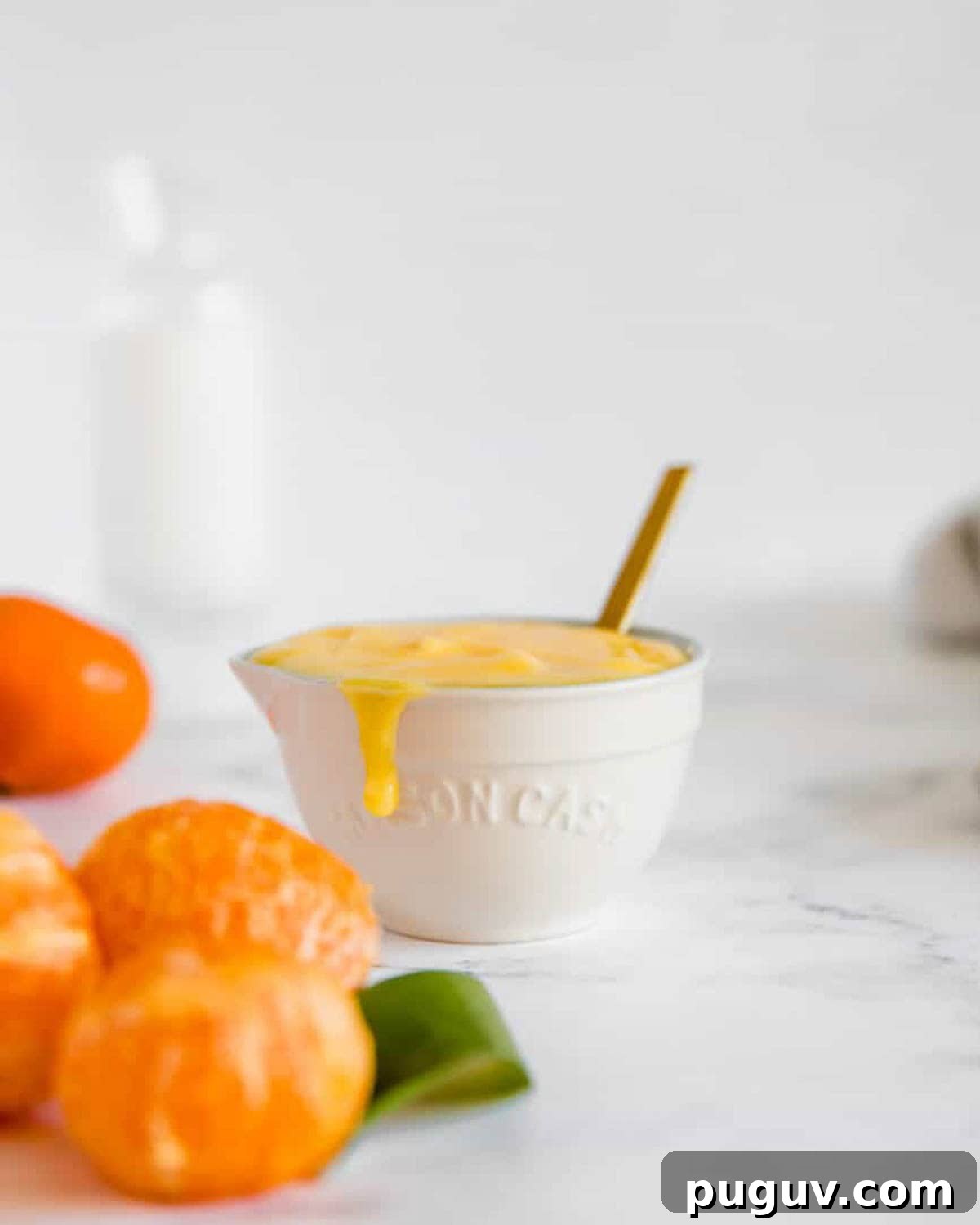
The clementine curd is cooked on the stovetop and can be made ahead and refrigerated. It becomes glossy and spreadable, perfect for topping the pavlova.
- Step 1: In a saucepan, whisk together the cornstarch, sugar, and clementine zest until evenly combined.
- Step 2: Whisk in the whole egg and extra egg yolk until the mixture is frothy and light in color.
- Step 3: Add the clementine juice and lemon juice and stir until everything is blended.
- Step 4: Add the cubed butter and cook over medium heat, whisking constantly, until the mixture thickens and just begins to bubble. The curd should reach roughly 175–180°F (79–82°C) and coat the back of a spoon.
- Step 5: Strain the curd through a fine-mesh sieve to remove any zest or cooked egg strands. Cool completely, then transfer to a sealed jar and refrigerate.
How to make a Winter Citrus Pavlova
- Step 1: Preheat the oven to 250°F (121°C). Line a baking sheet with parchment and trace an 8-inch circle on the underside to guide shaping.
- Step 2: In a stand mixer or with a hand mixer, beat room-temperature egg whites and a pinch of cream of tartar until frothy, then gradually add castor sugar, one teaspoon at a time, until dissolved.
- Step 3: Sprinkle in the cornstarch, vanilla, and white vinegar, and beat on high until the meringue is very stiff and glossy.
- Step 4: Spoon the meringue onto the prepared parchment and shape it into an 8-inch round with a shallow well in the center for the filling. Use an offset spatula or the back of a spoon to lift the sides slightly to form a nest.
- Step 5: Place the pavlova on the bottom rack, immediately reduce the oven temperature to 200°F (93°C), and bake for 1 hour. After baking, turn the oven off and leave the meringue inside with the door slightly ajar to cool slowly for about 5 hours or overnight.
- Step 6: When ready to assemble, top the cooled pavlova with whipped cream, spoon a thick layer of chilled clementine curd into the center, and finish with clementine segments. Serve within a few hours for the best texture.
Expert Tips
- Choose your shape: Pipe two flat 8″ disks for a two-layer pavlova that has better structural integrity, or make multiple mini nests for individual servings.
- Egg whites: Ensure no yolk contaminates the whites, and bring them to room temperature to whip to maximum volume.
- Slow cooling: Let the baked meringue cool slowly in the oven with the door ajar; this reduces cracking and collapsing.
- Fine sugar: Use superfine (castor) sugar for a smooth, stable meringue. If you only have granulated sugar, pulse it briefly to make it finer.
Storage
Store the undecorated pavlova in an airtight container at room temperature for up to 3 days, bearing in mind that humid conditions shorten storage life.
The clementine curd keeps in a sealed jar in the refrigerator for up to two weeks; press a piece of plastic wrap against the surface to prevent a skin from forming. You can also freeze the curd for up to one year and thaw it in the refrigerator before use.
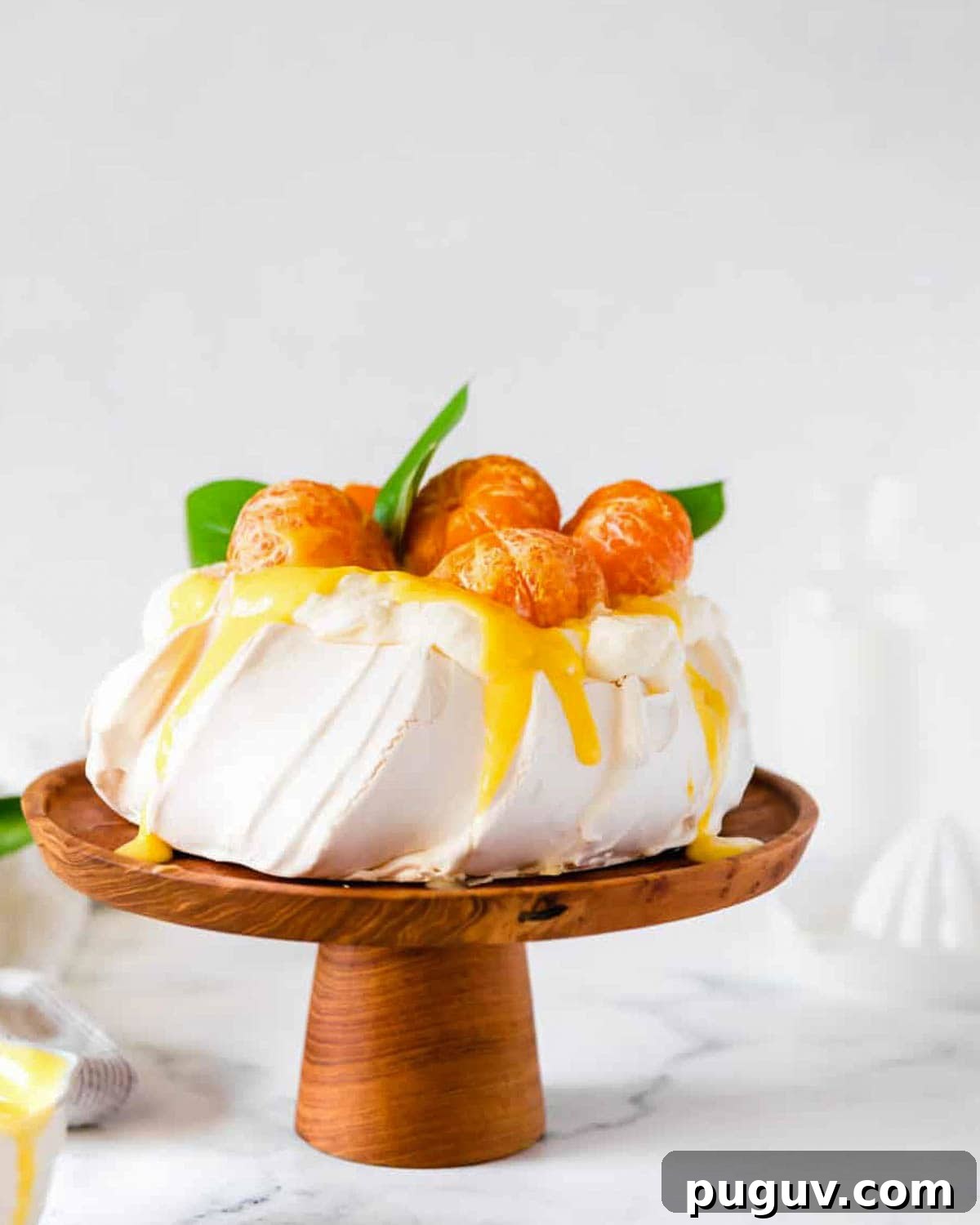
Once topped with curd, whipped cream, or fruit, the pavlova will begin to soften. Plan to serve the decorated dessert within 3–4 hours for the best texture and appearance.
More cake recipes to consider:
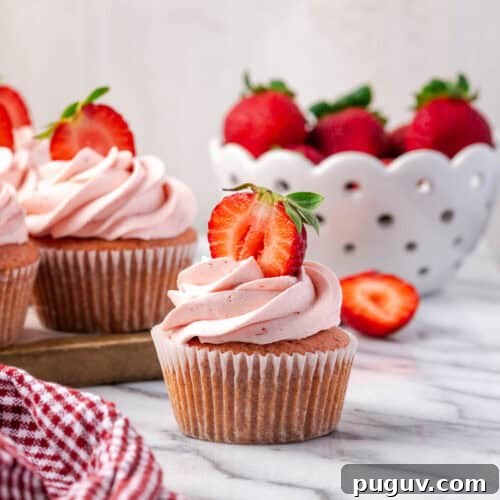
-
Gluten Free Strawberry Cupcakes

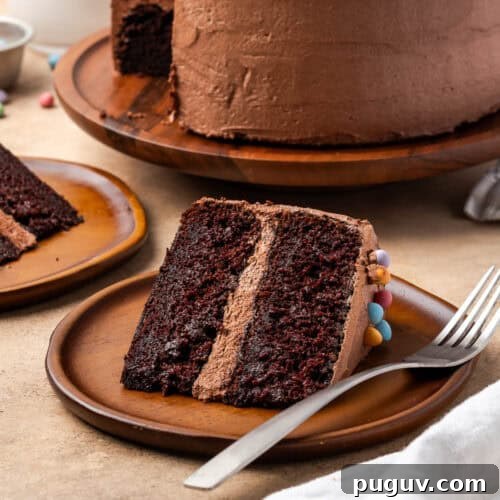
-
Gluten Free Chocolate Cake
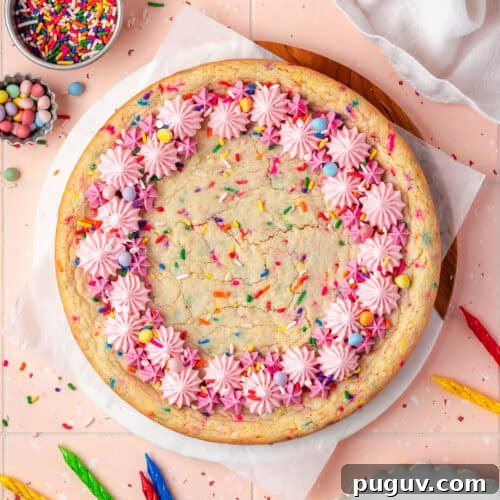
-
Funfetti Sugar Cookie Cake
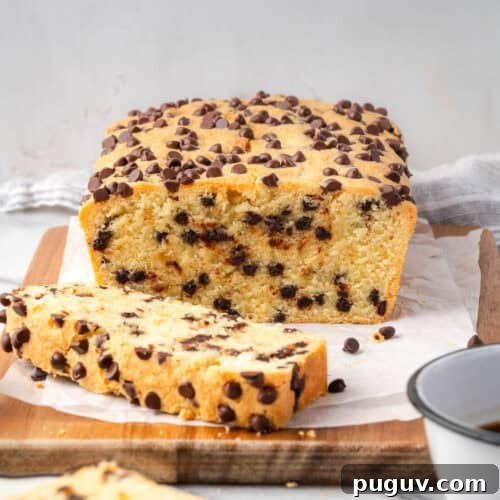
-
Sour Cream Chocolate Chip Pound Cake
If you try this recipe, please leave a 5-star rating and share your feedback in the comments — I love hearing how your pavlovas turn out!

Recipe
Winter Citrus Pavlova
Ingredients
For the pavlova
- 6 egg whites, room temperature
- 1 pinch cream of tartar
- 1 ¾ cups castor sugar, sifted
- 1 ½ teaspoons cornstarch
- 1 teaspoon vanilla extract
- ½ teaspoon white vinegar
For the clementine curd
- ¾ cup sugar
- 2 tablespoons clementine zest
- 1 teaspoon cornstarch
- 1 whole egg
- 1 egg yolk
- ¼ cup clementine juice
- ½ tablespoon lemon juice
- 3 tablespoons vegan butter, cubed
For the topping
- 1 cup vegan whipped cream (or dairy whipped cream)
- 2 clementines, peeled and divided into segments
Instructions
For the pavlova
- Preheat the oven to 250°F (121°C). Line a large baking sheet with parchment and trace an 8-inch circle on the underside to guide shaping.
- In a large bowl with a whisk attachment, beat the egg whites and cream of tartar on medium until frothy.
- Add the castor sugar one teaspoon at a time while whisking continuously until the sugar is dissolved and the mixture is glossy.
- Sprinkle in the cornstarch, vanilla, and vinegar. Beat on high for 4–5 minutes until the meringue forms very stiff, shiny peaks.
- Spoon the meringue onto the parchment and shape into an 8-inch round with a small well in the center. Use an offset spatula to lift the sides and create a nest.
- Place on the bottom oven rack, immediately reduce the temperature to 200°F (93°C), and bake for 1 hour. Turn the oven off and let the meringue cool in the oven with the door slightly open for about 5 hours or overnight.
For the clementine curd
- Combine cornstarch, sugar, and clementine zest in a medium saucepan and whisk well.
- Add the whole egg and egg yolk, whisking until the mixture is lighter in color and frothy.
- Whisk in the clementine and lemon juices until fully combined.
- Add the butter and place the pan over medium heat. Whisk constantly until the curd thickens and begins to bubble, about 7–10 minutes. It should reach about 175°F (79°C) and coat the back of a spoon.
- Remove from heat and strain the curd through a fine sieve. Cool to room temperature before transferring to a sealed jar and refrigerating.
Assembling the Winter Citrus Pavlova
- Place the whipped cream into the center of the cooled pavlova.
- Top with a generous layer of chilled clementine curd.
- Arrange clementine segments on top and serve immediately. Enjoy within 3–4 hours for best texture.
Notes
- Store the undecorated pavlova in an airtight container at room temperature for up to 3 days (shorter in humid climates).
- Refrigerate clementine curd in a sealed jar for up to 2 weeks, or freeze for up to 1 year. Thaw in the refrigerator before use.
- Once decorated, the pavlova will soften; serve within a few hours for the best texture.
Carbohydrates: 55 g |
Protein: 3 g |
Fat: 5 g |
Sugar: 53 g
Share your photos and feedback — it’s wonderful to see your versions of this winter citrus pavlova.