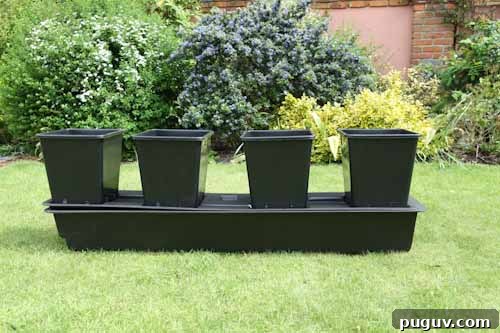
Several months ago, while eagerly waiting for spring, I wrote about my plan to build self-watering planters to use over the summer. Before I had a chance to start the build, I received an off-the-shelf solution for Christmas: the QuadGrow.
The Basic Idea
The QuadGrow consists of four square planting pots that sit on a larger base tank serving as a water reservoir. Each pot uses a wicking membrane that draws water from the reservoir up to the plant roots. The kit also includes two bottles of concentrated nutrients to add to the reservoir and support plant growth throughout the season.
Three main benefits of this self-watering system:
- Plants receive water on demand, reducing the risk of drying out in hot weather.
- You need to water far less often—simply check the reservoir level about once a week.
- Nutrients are delivered consistently to the plants.
What’s in the Box
The kit arrived in two large boxes. Contents include:
- 1 x 30-litre water reservoir with lid (L130cm x W24cm x H36cm)
- 4 x 11-litre pots
- 4 x wicks (capillary matting)
- 2 x bottles of concentrated nutrients (dilute to make solution)
- 2 x plastic nuts and bolts
- 1 x reservoir plug
Setting Up the QuadGrow
There’s a bit of confusion online about the exact setup procedure because the manufacturer’s instructions have changed over time. Below is the straightforward method I used without issues.
1. Potting up your plants
When your seedlings are large enough, repot them into the supplied pots and include the wick. The wick is a triangular piece of capillary matting long enough to extend from the pot into the reservoir below.
The wick pulls water up from the reservoir to the plant’s roots, providing a steady moisture supply. I started by adding about 10 cm of compost, then pushed the wick up through the bottom of the pot so its pointed end protruded into the compost just below the surface. Add the plant and more compost, keeping the wick vertical and centered. Firm the compost gently and water well from the top. A few centimetres of wick should protrude from the bottom of each pot.
2. Wait
The instructions recommend waiting until the compost surface is dry to the touch before placing the pots on the reservoir. The wick functions best when the compost is slightly dry and roots have begun searching for moisture. Depending on conditions, this can take from a couple of days to a few weeks.
3. Assemble the reservoir
Choose a final location for the reservoir before assembling, since it will be heavy once filled. Place the base tank on a level surface, attach the lid with the filling hole in an accessible position, and secure the lid with the supplied plastic nuts and bolts. Set the four pots on the lid and push the wicks through the lid’s holes, ensuring the wicks reach the bottom of the reservoir. I gave each wick a slight twist to prevent snagging as I pushed them through.
4. Fill and add nutrients
With the plants in place, fill the reservoir and add the diluted nutrients. The nutrient bottles are concentrated and need to be diluted—shake each bottle after adding water. The kit warns against mixing the concentrated nutrients together directly, so I alternated adding nutrient A and nutrient B to successive watering cans as I filled the reservoir. The recommended dose is 30 ml of nutrient per 5 litres of water.
Finally, insert the provided plug into the reservoir’s access hole to block light and prevent algae growth.
5. Sit back and watch them grow
With the reservoir filled and nutrients added, the system begins supplying water and food to the plants. Check the reservoir level every few days to learn how quickly your plants use the water. In my QuadGrow, both chilli and tomato plants grew much more vigorously than similar plants in manually watered pots.
Customer Service
I’d read positive comments about Green House Sensations’ customer service, and my experience confirmed that. Two of the square pots arrived damaged, so I emailed a photo to the manufacturer. They responded apologetically, arranged replacements, and reviewed their packaging process. The replacement pots arrived by courier two days later—impressive and prompt service.
Build Quality
Overall, the kit is made from robust materials. The reservoir and lid are heavy-duty black plastic and should last many seasons if not mistreated. The square pots are functional standard plastic pots with slightly larger drainage holes to accommodate the wicks. Wicks are simple pieces of capillary matting that are inexpensive and easy to replace.
The kit includes a 12-month guarantee from the manufacturer.
Ongoing Watering
The main advantage of the system is reduced daily upkeep. In my first QuadGrow, two chilli plants and two tomato plants use water relatively quickly; I top up the reservoir approximately every week and a half when it reaches about half full. Each refill should include the nutrient mix to maintain strong, consistent growth.
Summary
While you can build a DIY self-watering system cheaply with the right materials, the QuadGrow kit offers a convenient, ready-made solution that saves time and encourages vigorous plant growth. For most home growers—especially those focusing on chillies and tomatoes—this kit is good value and reduces the frequency of manual watering.
I was impressed enough to buy an additional kit as a gift. The plants I’ve grown in the QuadGrow have grown faster and produced more fruit than those in regular pots, making it a worthwhile purchase for hobby gardeners looking for a low-maintenance, productive growing system.