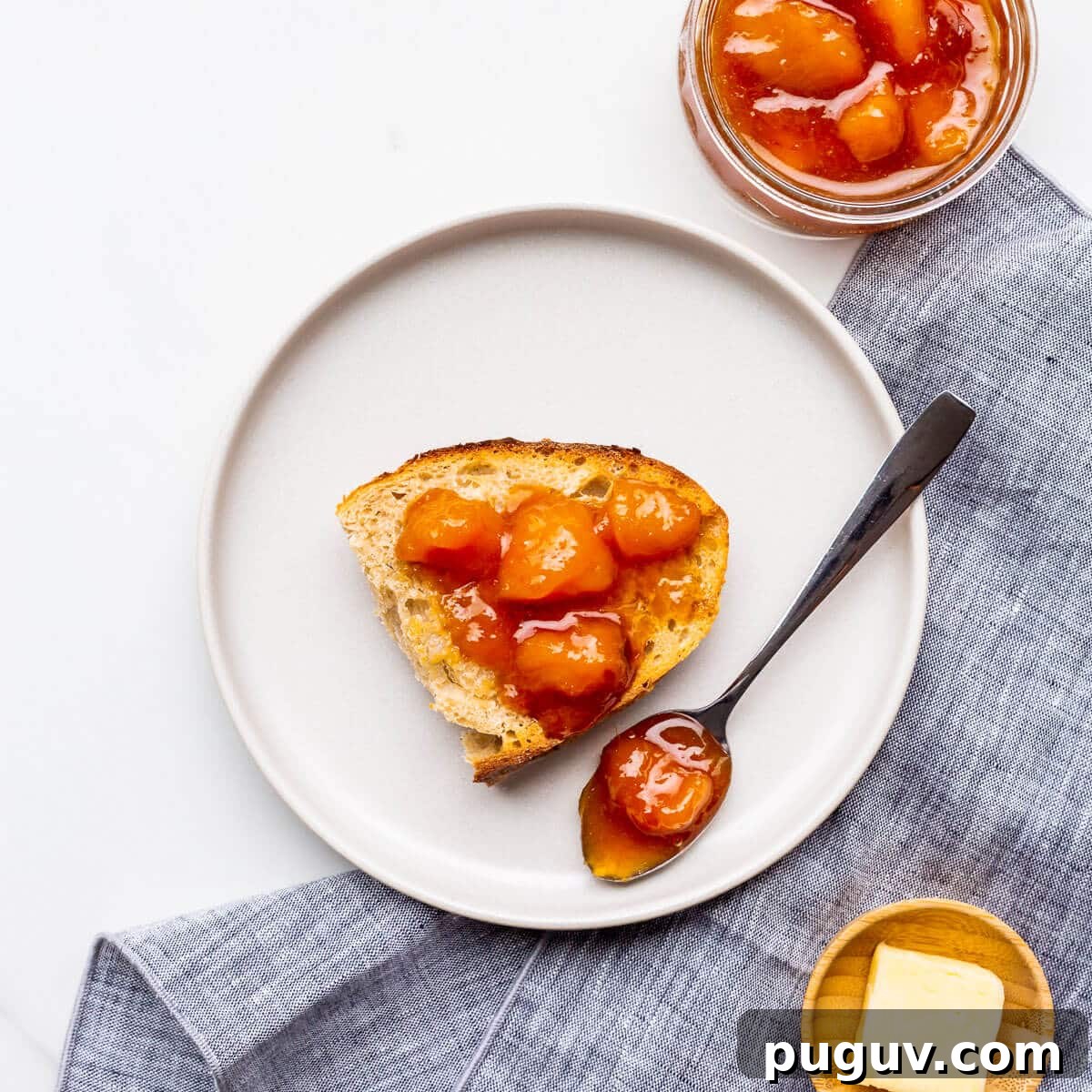
Learn how to make the best peach jam without adding commercial pectin with this simple three-ingredient recipe. By macerating the fruit and boiling to the jam setting point, you’ll achieve a thick, spreadable homemade peach jam that captures peak-season flavor.
Peach season is short in many places, so making jam is an excellent way to preserve that summer flavor. This small-batch recipe focuses on fresh peaches, sugar, and lemon juice — nothing more is required to get a reliable set when you follow the cooking temperature and technique.
Ingredients
You only need three ingredients to make this peach jam:
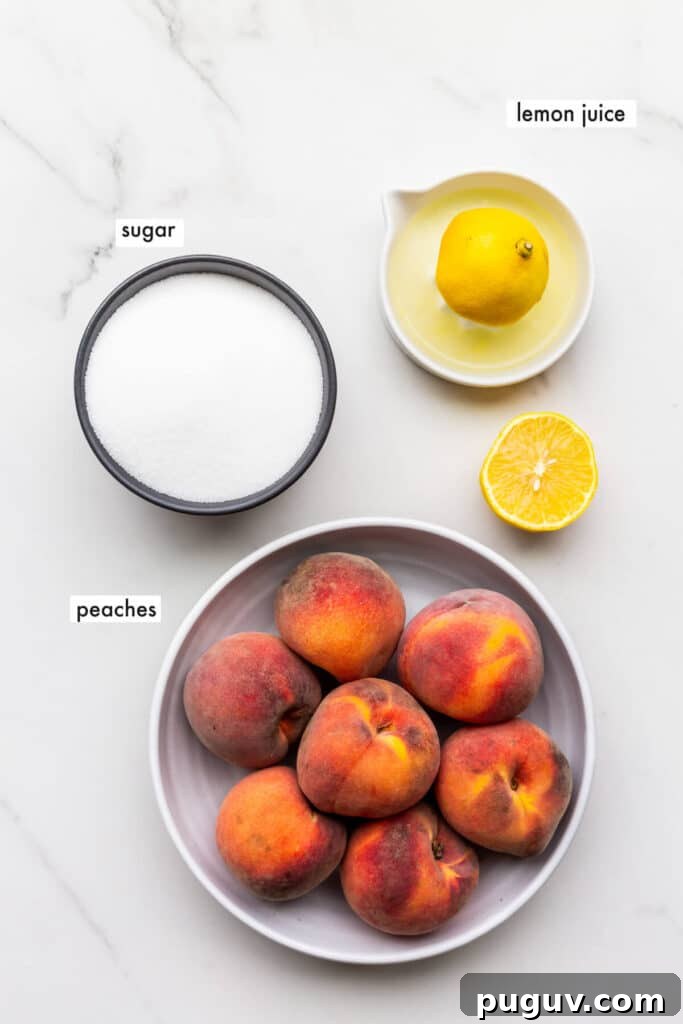
- Fresh peaches — freestone are easiest to prepare, but clingstone works too.
- Granulated sugar — adds sweetness without masking peach flavor.
- Fresh lemon juice — provides acidity for safety and helps the fruit gel.
See the recipe card below for exact quantities.
Substitutions and Variations
With just three core ingredients there are only a few sensible swaps or additions to customize the jam:
- Lemon juice — bottled lemon juice can be used if fresh isn’t available.
- Sugar — brown sugar adds caramel notes; maple sugar or syrup can be used in part for a different flavor profile.
- Vanilla — split a vanilla bean and simmer it with the fruit to infuse the jam.
- Cinnamon — a stick or two adds warm spice.
- Whiskey or bourbon — stir in a few tablespoons after reaching the setting point for a boozy note.
- Amaretto — a splash at the end highlights the natural almond notes of peaches.
Instructions
Making peach jam involves three main steps:
- Macerate the fruit with sugar and lemon juice to release natural pectin and dissolve the sugar.
- Boil the mixture to the jam setting point.
- Transfer the hot jam to sterilized jars and seal for long-term storage.
Roughly chop the peaches into even pieces — about 1-inch chunks are fine, or dice smaller for a smoother preserve. Combine the chopped fruit, sugar, and lemon juice in a large pot and let it macerate for up to an hour. The fruit will release liquid and the sugar will begin to dissolve.
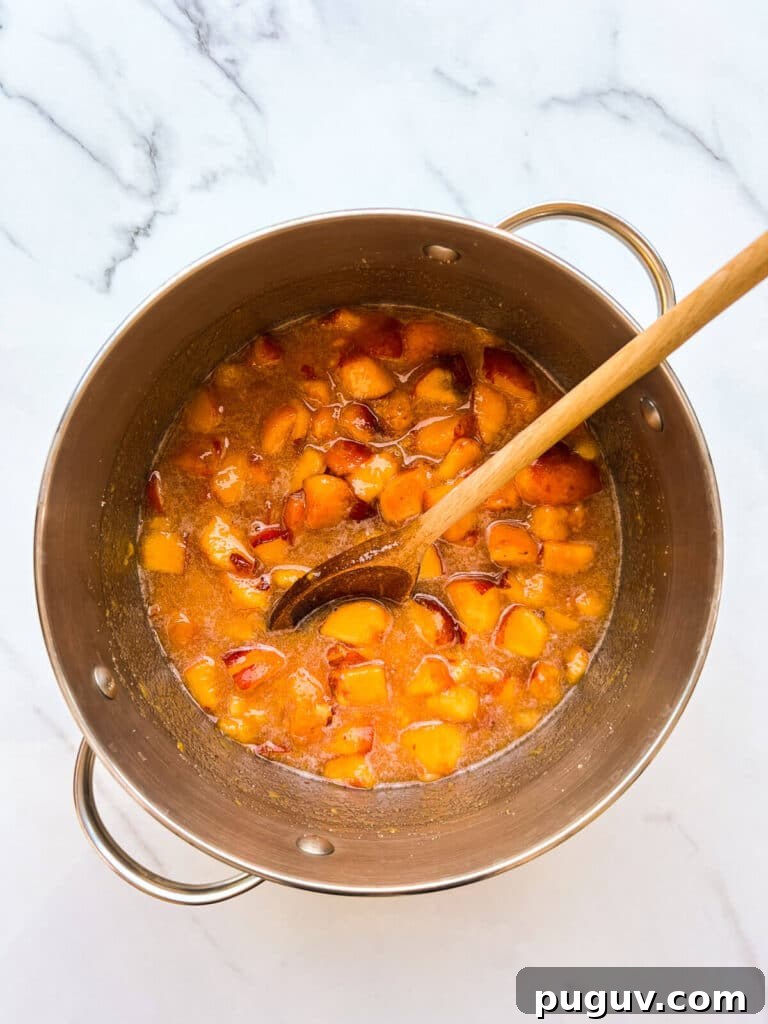
Set the pot over medium-high heat and bring the mixture to a full boil, stirring occasionally to dissolve remaining sugar. Once boiling, continue to cook until the mixture reaches the jam setting point — about 104–105 °C (220 °F). A digital thermometer is helpful to monitor temperature precisely.
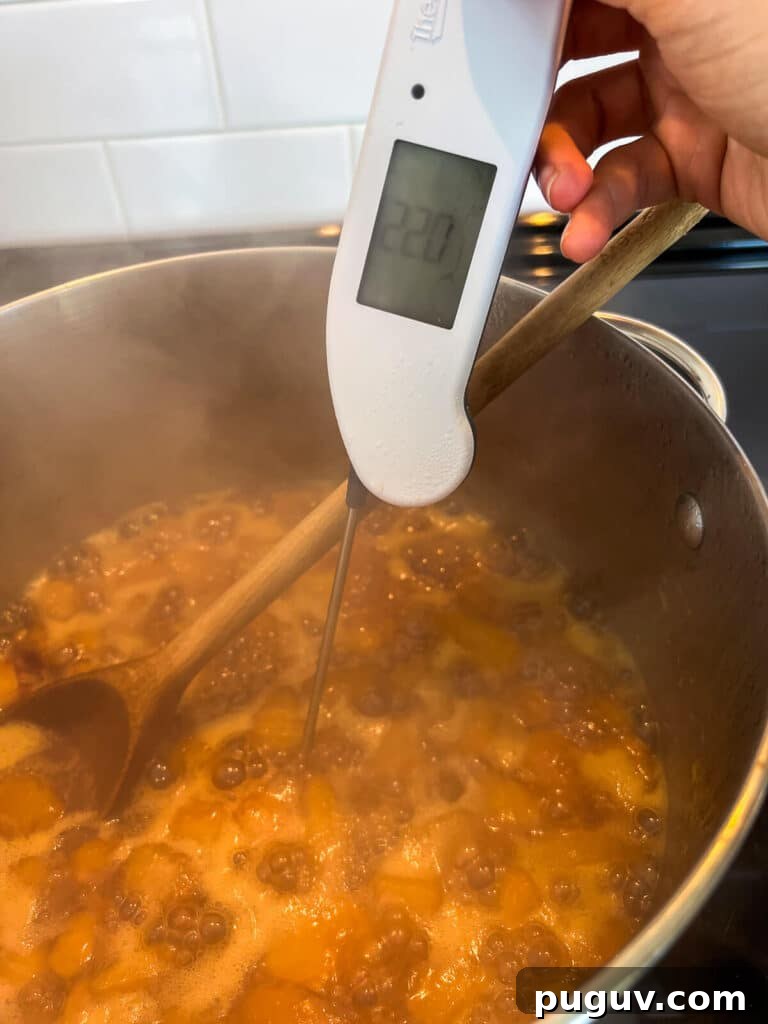
After the jam reaches temperature, remove it from the heat and let it stand for a couple of minutes; this helps it thicken slightly. Stir to distribute fruit evenly before filling jars.
Tip: Weigh peaches after pitting to calculate sugar accurately. A good ratio is two parts fruit to one part sugar by weight (for example, 1 kg fruit to 500 g sugar).
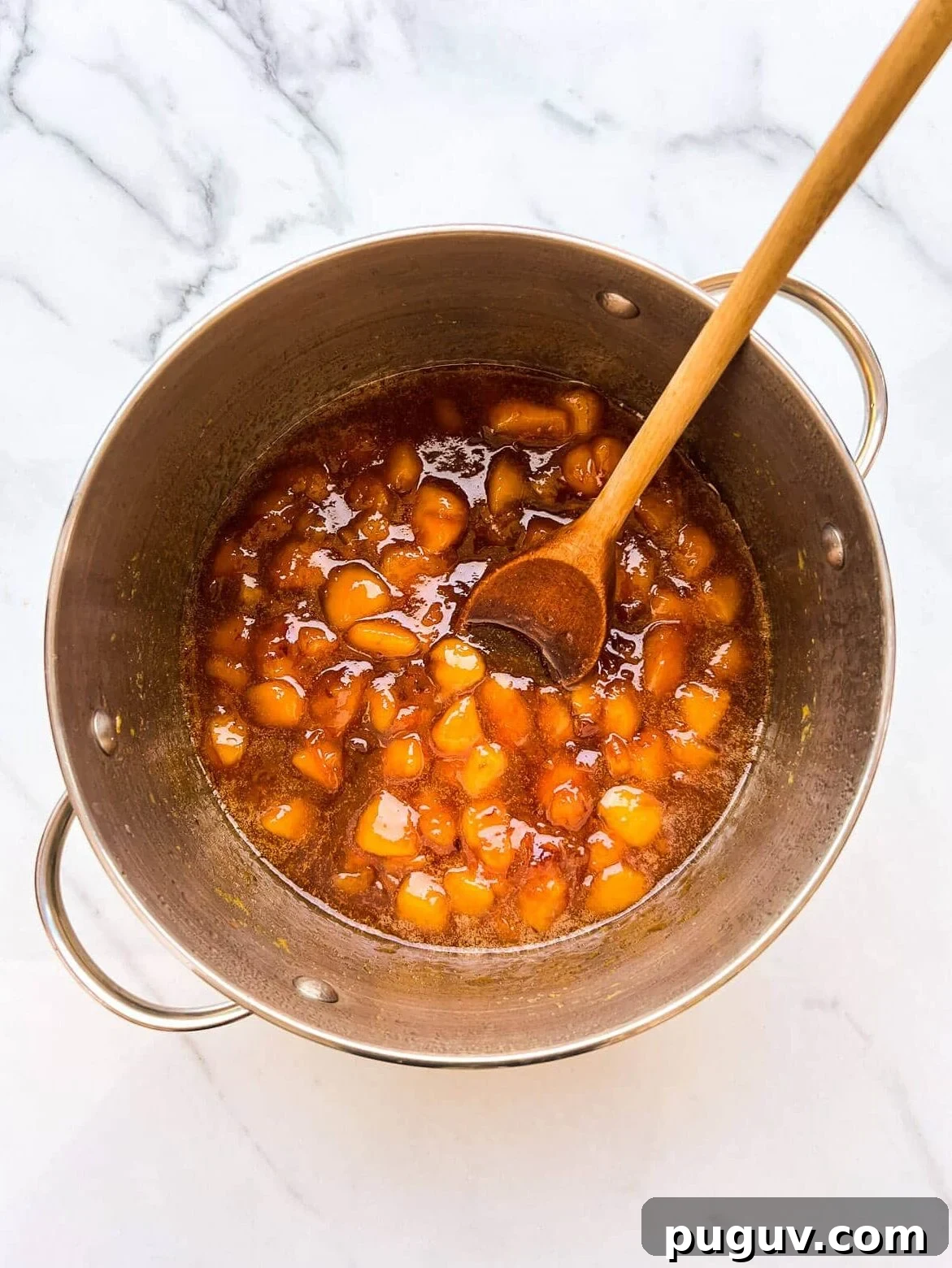
Skim any foam that forms for a clearer jam. Let the jam cool a few minutes off the heat, then stir to ensure fruit pieces are evenly suspended.
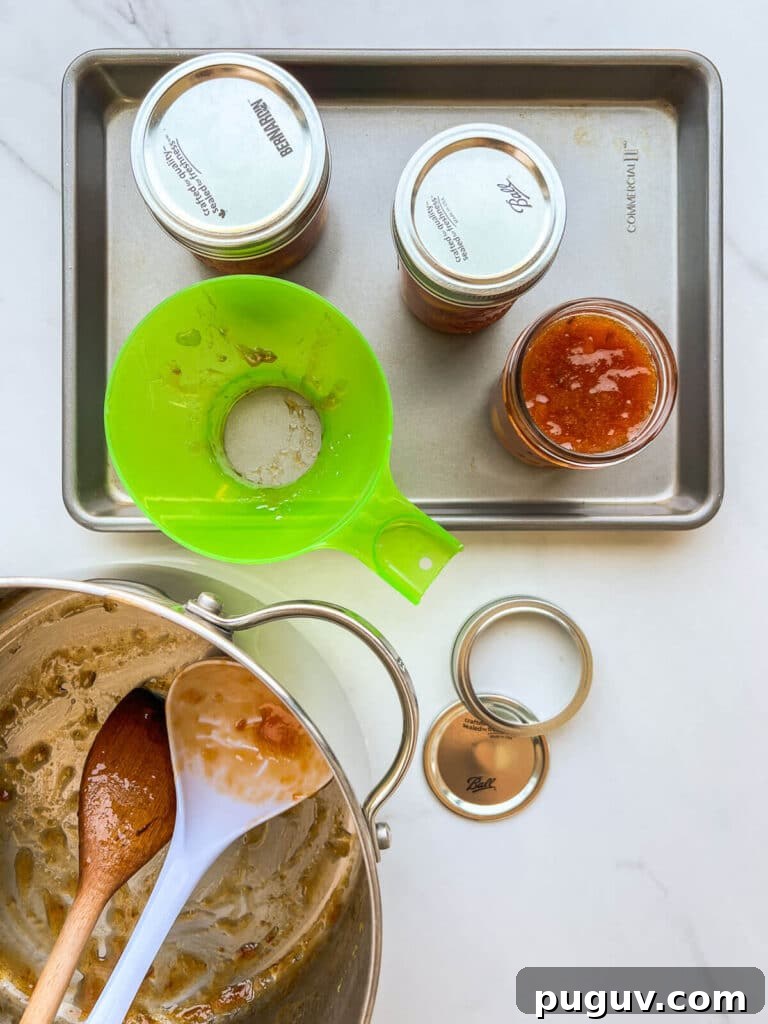
Fill clean, sterilized jars leaving ¼ inch headspace. Remove air bubbles, wipe rims, and apply lids fingertight. If jars are not full, either refrigerate and use soon or process as described below.
Hint: Check the set using two or more techniques (temperature, cold plate test, or wrinkle test). For a firmer jam, cook to the higher end of the temperature range; for a looser jam, stop slightly lower.
The final number of jars varies with how long you cook the jam: longer cooking reduces volume as more water evaporates, producing a thicker jam but fewer jars.
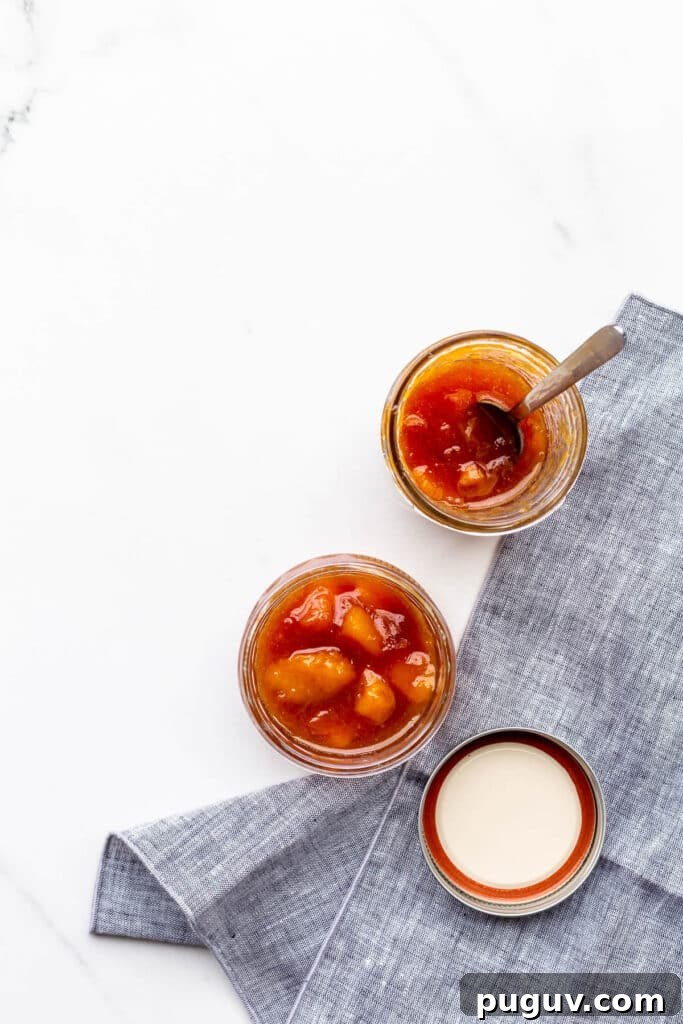
Sealing Jam Jars for Long-Term Storage
To vacuum-seal jars for pantry storage, either process them in a boiling water bath for 10 minutes or invert the hot, closed jars for 2 minutes and then return them upright. Let jars rest undisturbed for 24 hours to ensure seals form. If you skip sealing, keep the jars refrigerated.
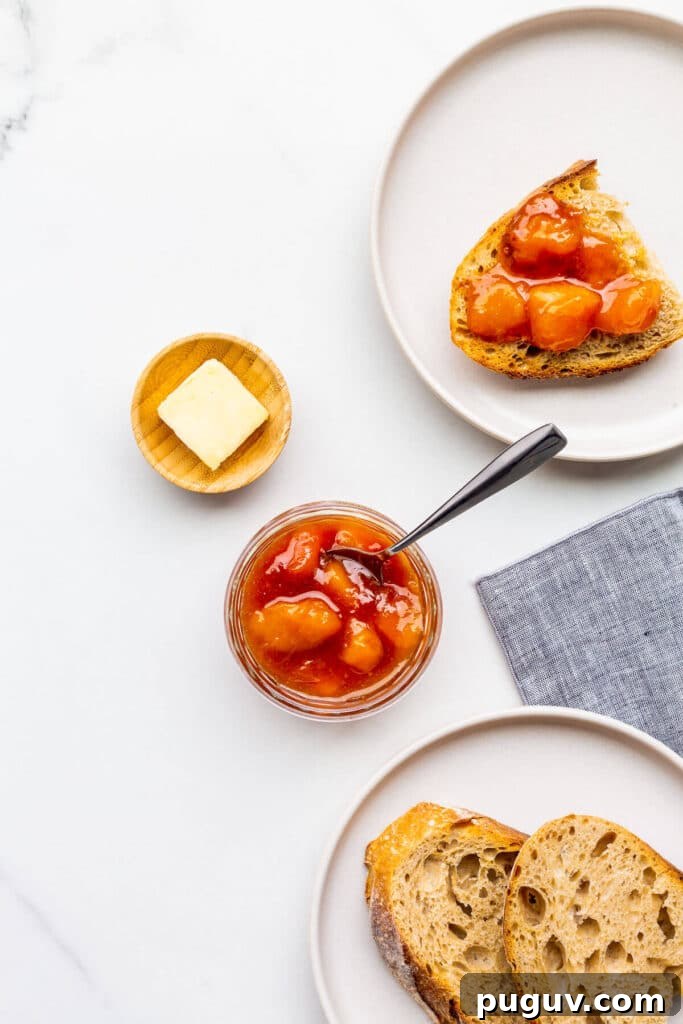
Storage and Food Safety
Properly sealed jars stored in a cool, dark place will retain quality for about a year; color and flavor may fade after that. Once opened, store jam in the refrigerator and use within about a month.
Never eat jam that shows signs of mold. Discard the entire jar, wash and sterilize the container if you plan to reuse it. Reboiling a moldy jar is not recommended.
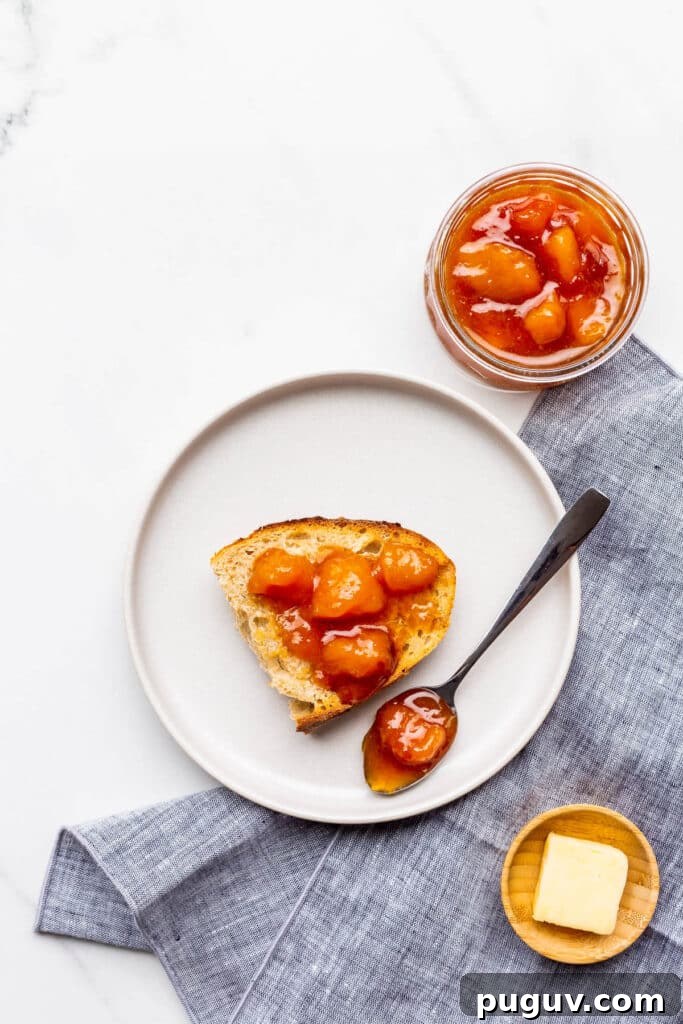
Homemade Jam FAQs
Peeling is optional. The skin softens during cooking and is usually not noticeable in the finished jam.
Yes. Lemon juice lowers the pH for safe long-term storage and helps the fruit’s pectin set into a gel.
Unopened and properly canned, peach jam keeps about a year in a cool, dark place. Open jars should be refrigerated and used within roughly a month.
Some darkening is normal with cooking. Avoid overcooking (which caramelizes sugar) and monitor temperature to prevent excessive darkening.
What to Make and Serve with Peach Jam
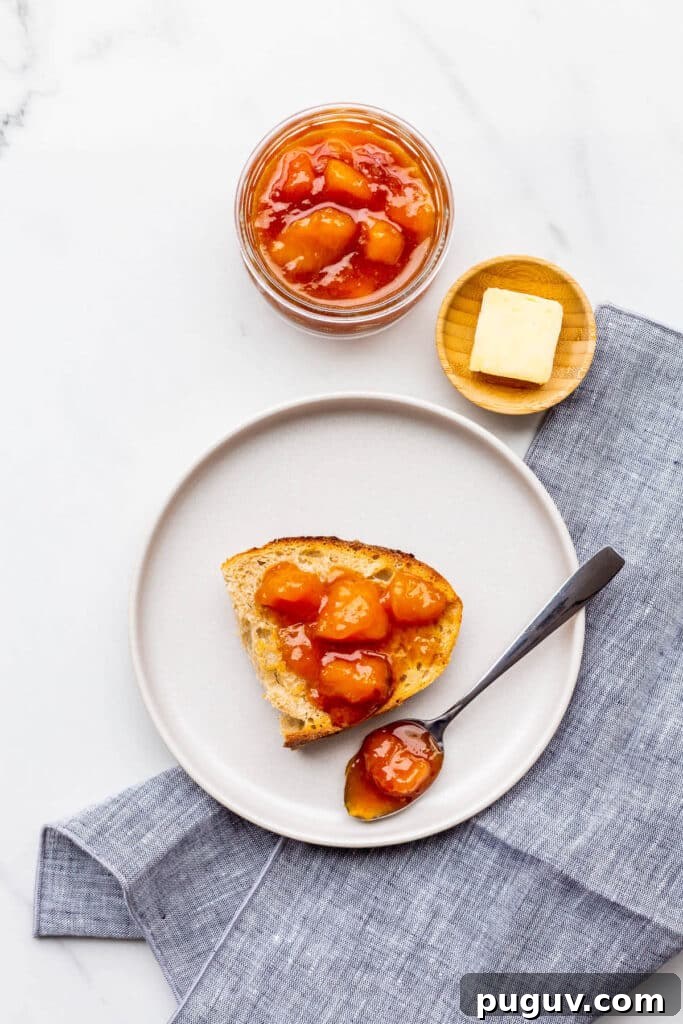
Homemade jam makes a great gift and is delicious in many recipes. Ideas to enjoy or bake with peach jam include:
- Jam-filled shortbread or thumbprint cookies
- Bostock or frangipane-topped pastries
- Scones, butter biscuits, or brioche for breakfast
Other Recipes with Fresh Peaches
If you have excess peaches, try other simple recipes like pies or roasted peaches to serve with ice cream.
If you try this peach jam recipe, please leave a star rating and share how it turned out in the comments — feedback helps others and is appreciated!
📖 Recipe
Peach Jam
Equipment
- Big pot
- Canning kit (optional, for processing jars)
- Mason jars (250 mL), funnel, jar lifter
- Wooden spoon or heatproof spatula
Ingredients
- 1 kg large peaches (weighed after washing and pitting)
- 500 grams granulated sugar
- 60 mL fresh lemon juice
Instructions
- Chop the peaches into your preferred size — chunks or slices both work.
- Combine chopped peaches, sugar, and lemon juice in a large pot.
- Cover and let macerate at room temperature for 30–60 minutes, stirring occasionally to help dissolve the sugar.
- Place the pot over medium-high heat and bring to a boil, stirring as needed.
- Continue boiling until the jam reaches about 104–105 °C (220 °F). For a slightly looser set, stop around 103 °C (217–218 °F).
- Remove from heat and let sit for 2 minutes to thicken slightly, then stir to even out the fruit.
- Spoon hot jam into sterilized jars, leaving ¼ inch headspace. Remove air bubbles, wipe rims, and apply lids fingertight.
- Seal jars by inverting for 2 minutes or process in a boiling water bath per standard canning guidelines. Let jars sit undisturbed 24 hours to ensure seals form.
Notes
This recipe yields approximately 4–5 jars of 250 mL each, depending on how long you cook the jam. To sterilize jars, wash them and heat in a 250 °F oven for at least 30 minutes. Skim foam while boiling for a clearer finish.
Nutrition
Calories: 31 kcal per tablespoon (approx.). Carbohydrates: 8 g; Protein: 0.1 g; Fat: 0.1 g. Nutrition info is an estimate.
📚 Further Reading on Jams and Jellies
- Learn more about the jam setting point and different ways to test when jam is set.
- Follow reputable home-canning guidance for safe processing and storage practices.