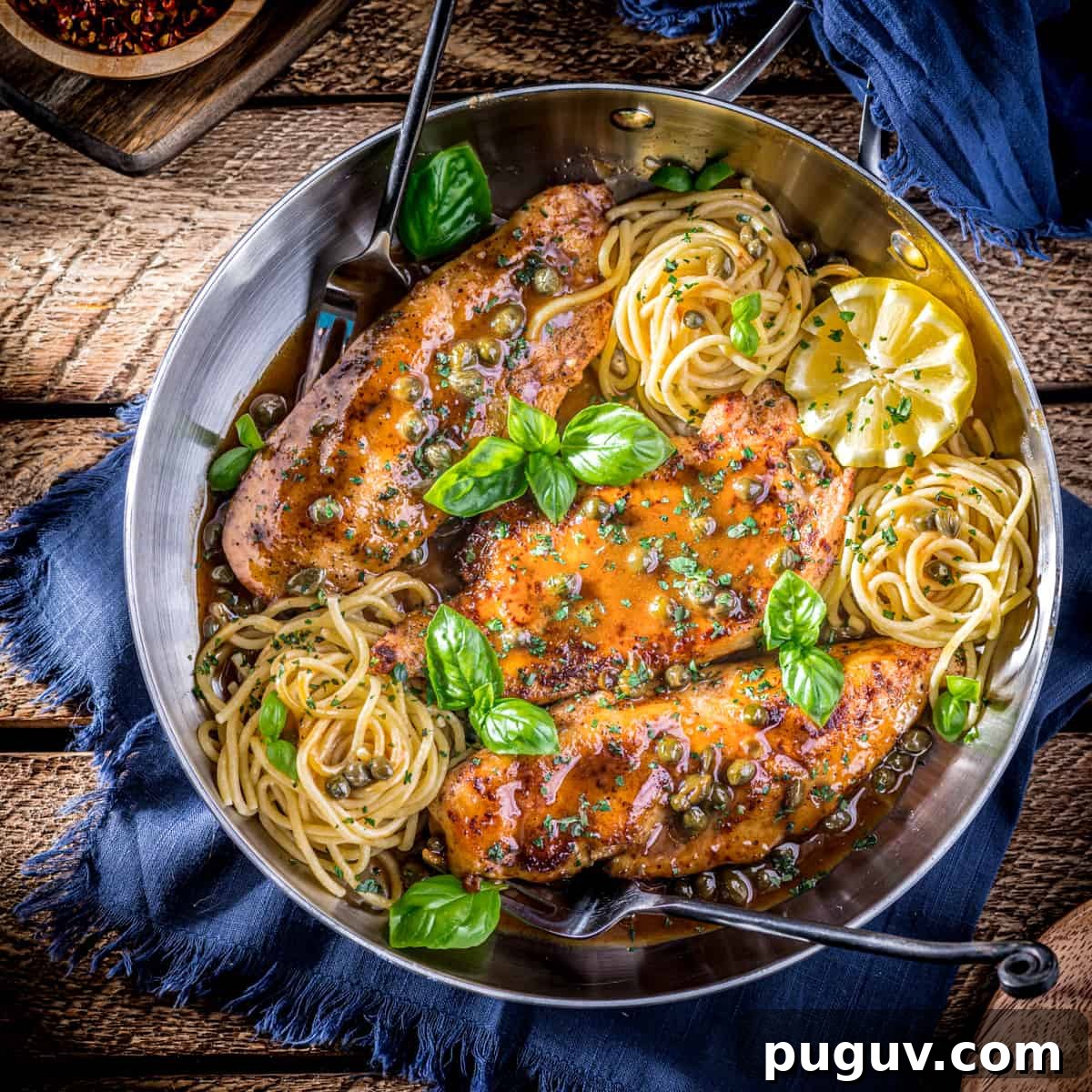
Piccata is one of our all-time favorite dishes. Mark’s Italian heritage, time spent cooking from his grandparents’ recipes, and our travels in Italy have made Italian food the cuisine we most enjoy preparing and sharing. This Chicken Piccata with caper lemon butter sauce, served with fresh pasta, captures bright, classic Italian flavors and will transport you straight to the table in Italy.
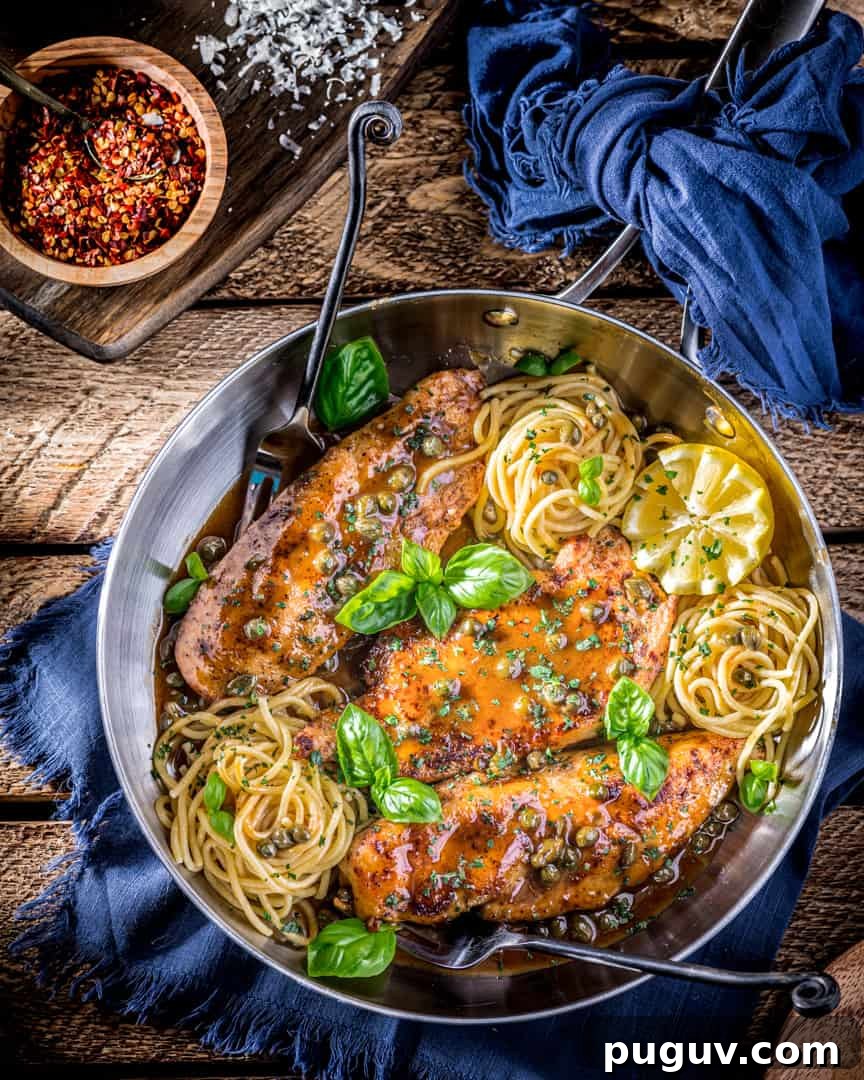
What you need to make amazing Chicken Piccata
The magic of piccata comes from a few good ingredients and the cooking process. This dish uses relatively few components, so the quality of each one matters. In particular, choose a good chicken stock and a drinkable white wine — these form the base of the sauce and will be reduced, concentrating their flavors.
Piccata works well with chicken, veal, or pork cutlets. With chicken breasts you don’t always need to pound them thin; we prefer slicing the breasts horizontally to get the thickness we like, but thin cutlets or even tenders can also be used. Use enough salt and pepper to season the meat before dredging it in flour.
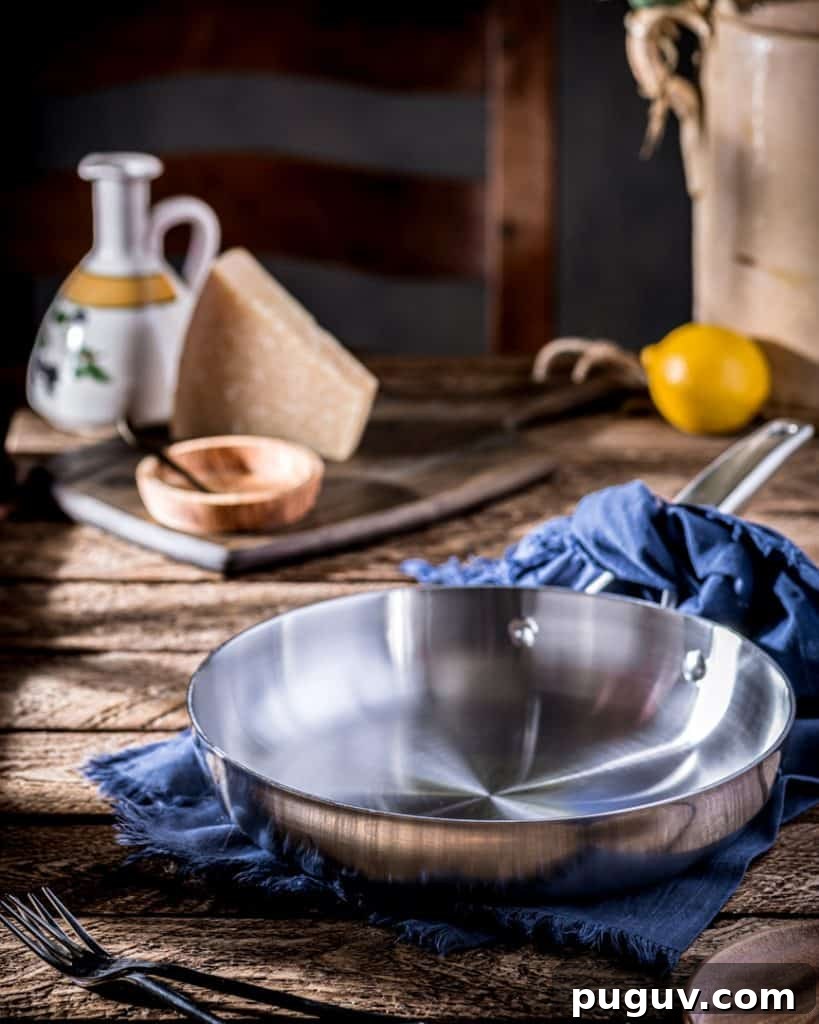
For cooking, a stainless steel skillet is ideal. Browning the chicken in a stainless pan leaves caramelized bits (fond) on the bottom; deglazing these with wine unlocks a lot of flavor for the sauce. A heavy, even-heating fry pan helps the chicken cook consistently without burning the flour coating.
The other core ingredients are lemon juice, capers, chicken stock, and white wine. Each plays a clear role in the final sauce, so choose versions you enjoy.
Chicken Stock
Homemade stock will always give the best depth of flavor, but a high-quality low-sodium store-bought stock works well too. Avoid stocks with added salt so you can control the seasoning of the finished dish. Taste the stock on its own: if it’s weak and watery, it won’t contribute much when reduced; if it tastes clean and savory, it will elevate the sauce.
The Wine
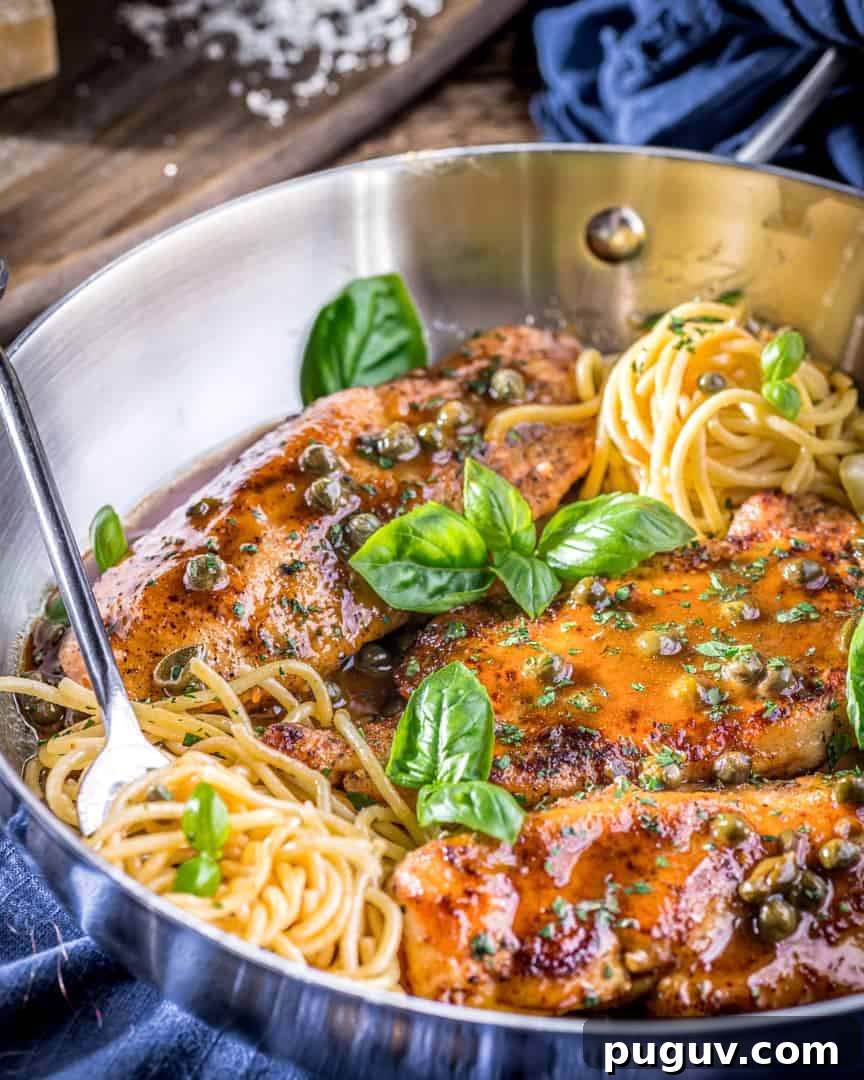
Use a white wine you would happily sip. Because the wine is reduced, any unpleasant flavors are intensified, so avoid bottles that taste off on their own. A dry white—such as sauvignon blanc, pinot grigio, or an unoaked chardonnay—works well. Dry wines lose their alcoholic edge as they reduce and leave clean acidic and aromatic notes; sweet wines will become cloying and are not recommended for piccata.
Capers
Capers bring a bright, briny counterpoint that makes the sauce sing. Choose capers that taste subtly briny rather than overly pickled, and rinse them before adding to the sauce. Rinsing removes excess brine so capers enhance the dish without overpowering it.
The Cooking Method for Chicken Piccata
Cooking technique matters as much as ingredients. Use a stainless pan to allow fond to develop and then deglaze it with wine. Do not sear on excessively high heat to create a thick, burnt crust; this will scorch the flour coating and lead to bitterness in the sauce. Cook the chicken over medium heat so a light, golden crust forms and the meat cooks through evenly.
After browning, transfer the chicken to a warm oven while you make the sauce in the same pan. Deglaze with white wine, scraping the pan to release those flavorful browned bits, then add lemon juice, lemon zest, and chicken stock and reduce until the liquid thickens to a sauce consistency.
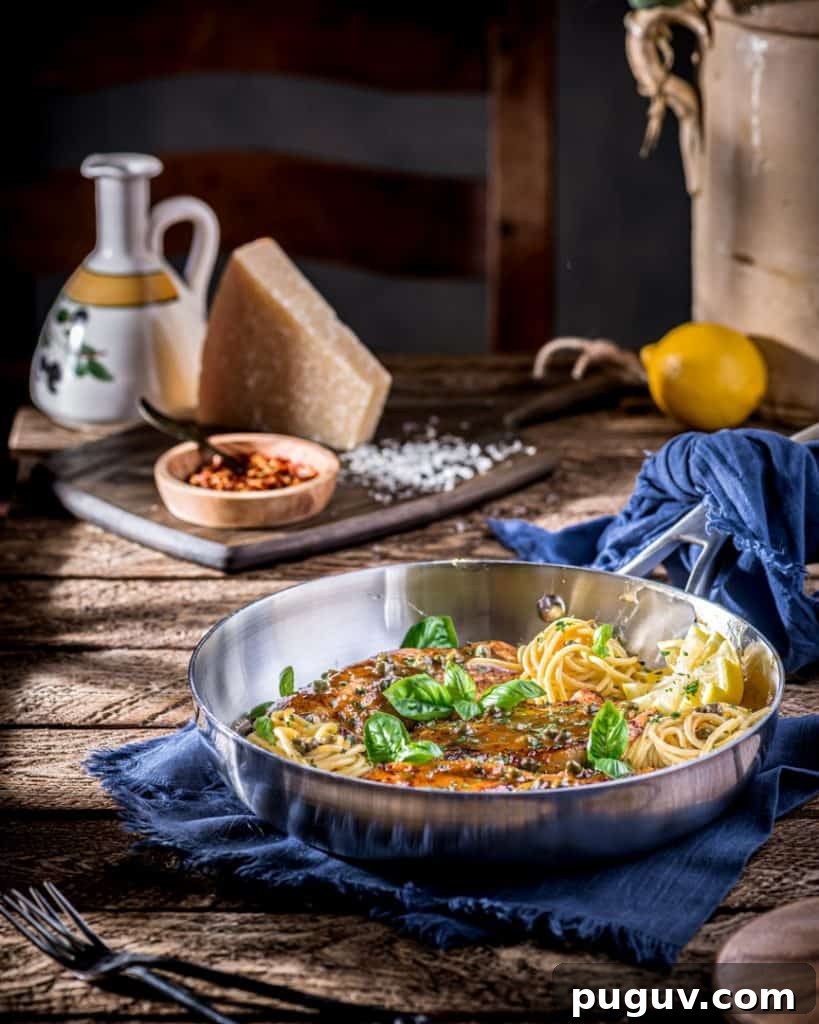
Finishing the Caper Lemon Butter Sauce
Once the sauce has reduced, remove the pan from the heat before whisking in cold butter a tablespoon at a time. This gentle technique builds an emulsified sauce and prevents the butter from breaking. Adding butter too quickly or reheating aggressively can cause the sauce to separate; if it happens, recovery is possible but delicate.
After whisking in the butter, add the rinsed capers and return the chicken with any accumulated juices to the pan. Briefly warm the chicken in the sauce for a minute or two to marry the flavors. Taste and adjust only with salt, pepper, or a touch more lemon juice as needed.
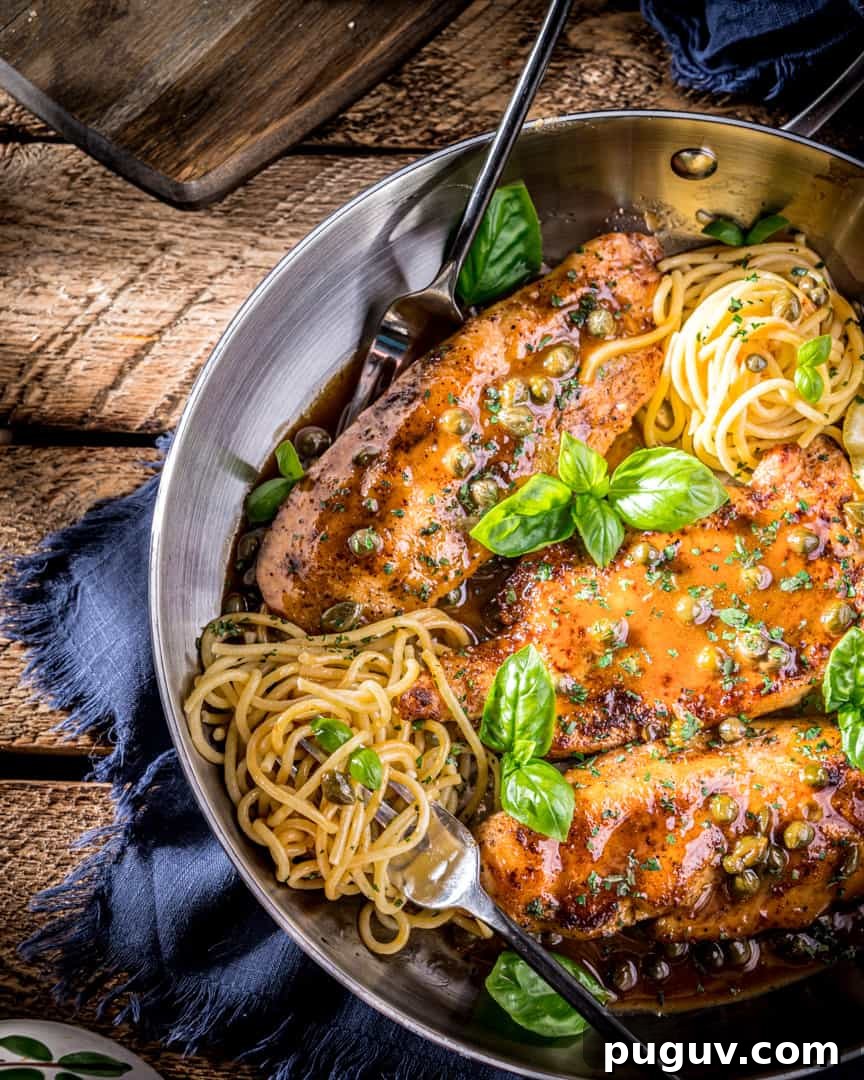
What to Serve with Chicken Piccata
In Italy the main course with sauce is often served alongside a separate pasta course, but at home we typically serve the chicken over fresh pasta such as fettuccine or spaghetti. Piccata also pairs beautifully with risotto, orzo, or creamy polenta. Vegetables or a simple green salad provide a fresh contrast and round out the meal. The sauce is versatile and delicious over many sides, so choose what you and your guests enjoy most.
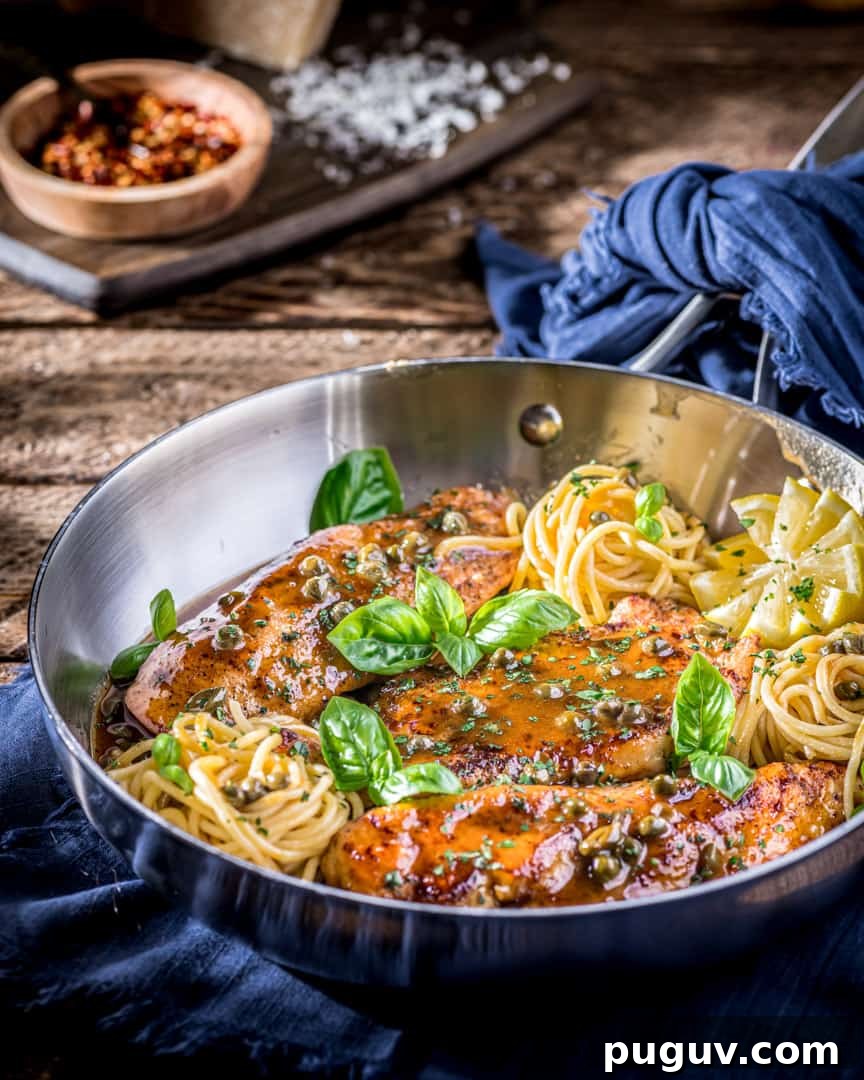
Enjoy!
We hope this guide helps you make an incredible Chicken Piccata with caper lemon butter sauce at home. If you try it, we’d love to hear how it turned out. The combination of bright lemon, briny capers, and a silky butter sauce makes this a reliably impressive and satisfying weeknight or dinner-party main.
Recipe
Chicken Piccata with Caper Lemon Butter Sauce
Ingredients
- 2 large chicken breasts, sliced in half across (or 4 thin chicken breasts)
- 1 tablespoon kosher salt
- 2 teaspoons black pepper
- ½ cup all-purpose flour, as needed
- 10 tablespoons unsalted butter, divided
- 2 tablespoons olive oil
- ⅔ cup dry white wine
- Zest of 1 lemon (about 1 teaspoon)
- Juice of 1 lemon (about 2–3 tablespoons)
- 1 cup chicken stock, low sodium
- ½ cup capers, rinsed
Instructions
Cook the Chicken
- Heat the oven to 170°F to keep cooked chicken warm.
- Season the chicken with salt and pepper, then dredge in flour or shake in a bag to coat evenly.
- Melt 2 tablespoons of butter in a large stainless skillet over medium heat until it stops foaming, then add the olive oil. Add the chicken and cook about 3–4 minutes per side until golden and nearly cooked through. If cooking in batches, add a little more oil as needed.
- Transfer the chicken to an oven-proof dish and keep warm in the oven while you make the sauce in the same pan.
Make the Sauce
- Deglaze the pan with the white wine, scraping the stuck bits with a wooden spoon, and reduce the wine by about two-thirds (roughly 5 minutes).
- Add the lemon juice, lemon zest, and chicken stock. Reduce until the liquid thickens into a sauce consistency (about 10 minutes).
- Remove the pan from the heat and whisk in the remaining 8 tablespoons of butter, a tablespoon at a time, to form an emulsion.
- Stir in the rinsed capers, add the chicken and any accumulated juices back into the pan, and turn the chicken once to coat. Warm briefly in the sauce for 1–2 minutes. Serve over pasta, risotto, or polenta.