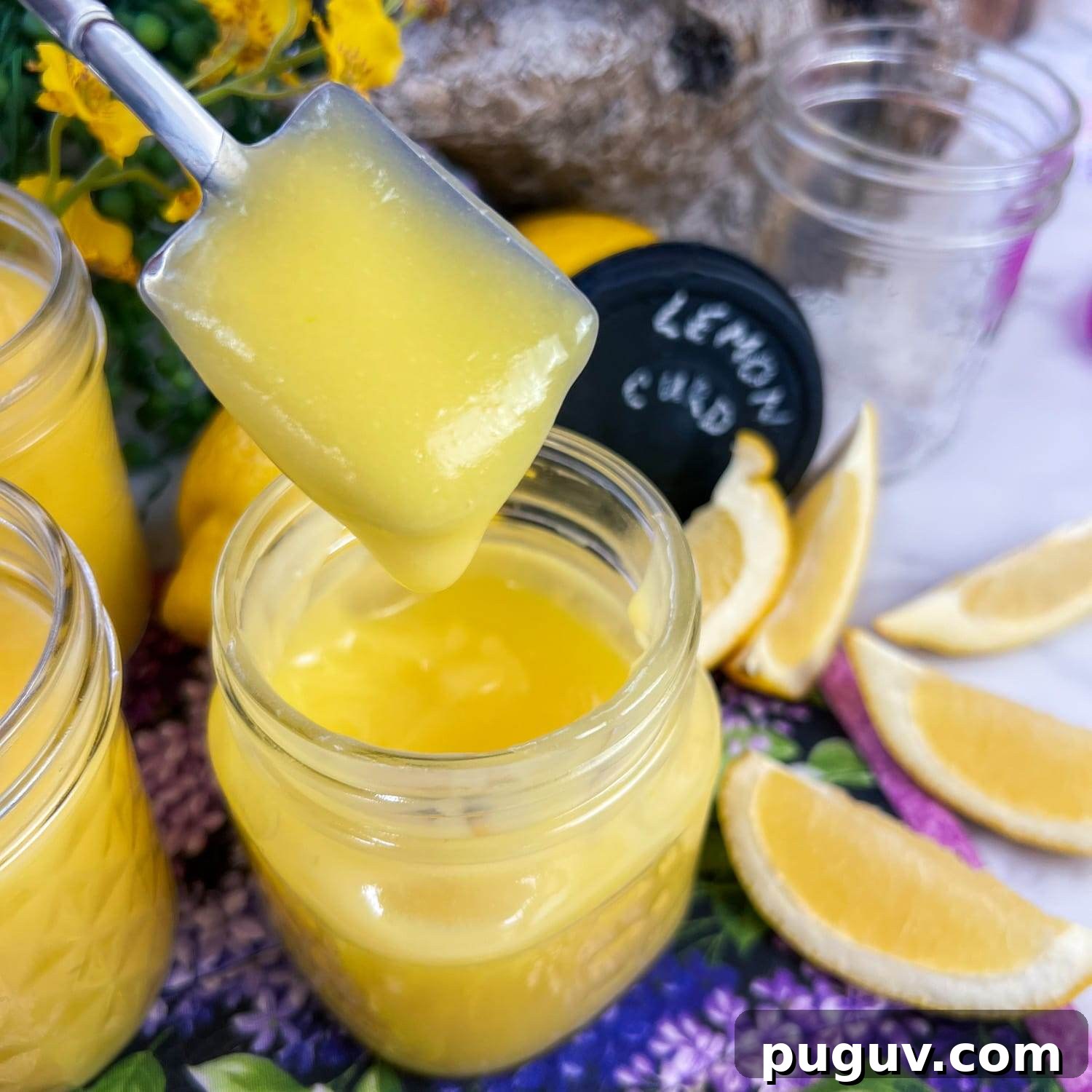
This lemon curd made with whole eggs is silky, tangy and sweet all at once. If you love lemon, you’ll love this curd. The updated method below makes it easier than ever: it uses whole eggs, freshly squeezed lemon juice and lemon zest. Fresh lemons give the best flavor.
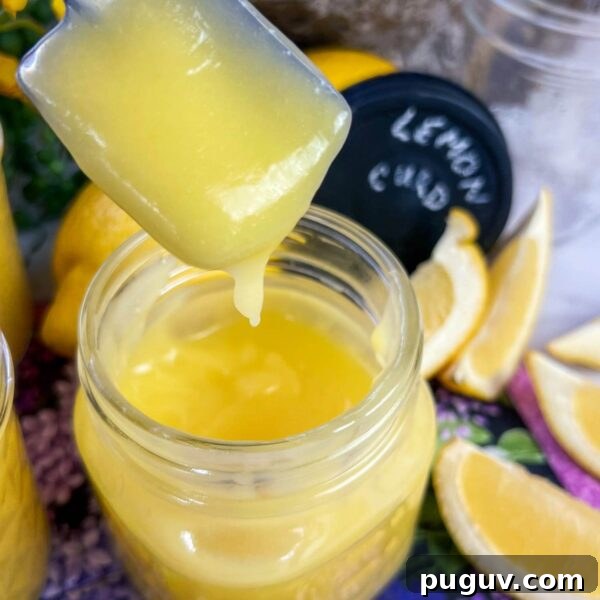
This recipe combines techniques from classic cookbooks and years of testing. I first posted a lemon curd recipe in 2015 and have refined the method and sugar levels since then. I make curd every citrus season (January–March) when lemons are at their best. The recipe below is versatile—try different citrus, scale it up or down, and freeze any extras for later.
Frequently Asked Questions When Making Lemon Curd with Whole Eggs
1. Can I use whole eggs instead of just egg yolks for lemon curd?
Yes. Whole eggs simplify the process and avoid wasting whites. The curd will still be creamy and flavorful; any stringy bits of white are removed when you strain the finished curd.
2. Will using whole eggs change the texture or flavor of the lemon curd?
Whole eggs produce a slightly lighter texture and color than yolks alone, but the flavor remains rich, tangy and smooth.
3. Can I adjust the amount of sugar in lemon curd?
Yes. Sugar adds some structure, so don’t omit it entirely. For this recipe you can safely increase or decrease the sugar by about ½ cup to suit your taste, keeping at least ½ cup total.
4. Can I adjust the amount of butter in lemon curd?
Yes. More butter yields a richer, creamier curd; less butter produces a lighter texture. If you use unsalted butter, add a pinch of salt to balance the sweetness.
5. How do I prevent lemon curd from curdling or having lumps?
Cook over low heat and stir constantly. Do not boil. Make sure sugar and eggs are well combined before adding juice. If you see small white bits, lower the heat—these are usually egg white or chalazae. Straining at the end removes any remaining bits for a smooth finish.
6. Can I use lime or other citrus instead of lemons to make curd?
Absolutely. Substitute lime, orange, grapefruit or other citrus for the lemon juice and zest. Each fruit gives a distinctive flavor—blood orange curd is particularly lovely.
7. Can I double or halve the recipe for lemon curd with whole eggs?
Yes. Scale the ingredients up or down and adjust cooking time and pan size accordingly.
8. How can I get more lemon flavor in my lemon curd?
Increase the lemon zest and massage it into the sugar to release the oils. You can also add a small amount of lemon extract or citric acid if you need an extra boost, though fresh zest is usually sufficient.
9. Do I need a double boiler?
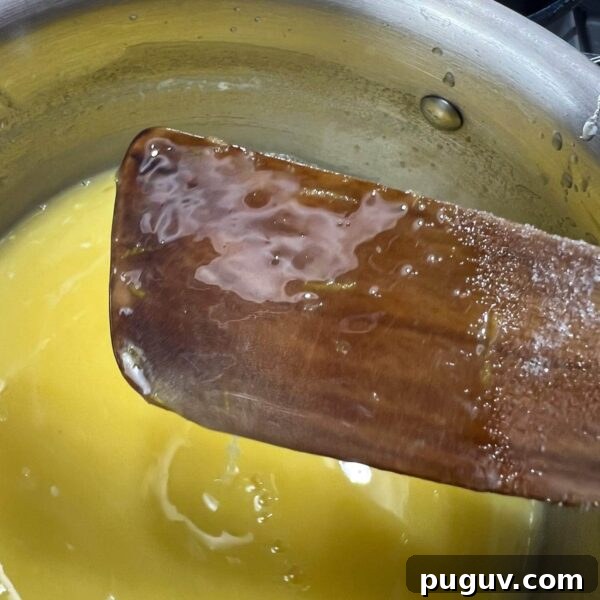
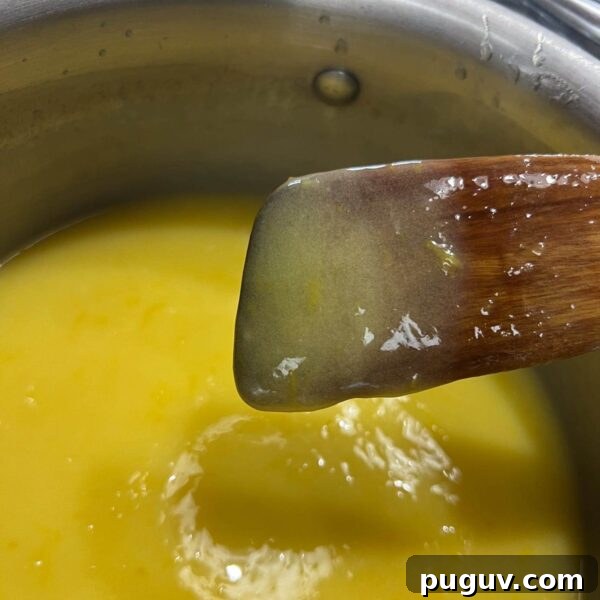
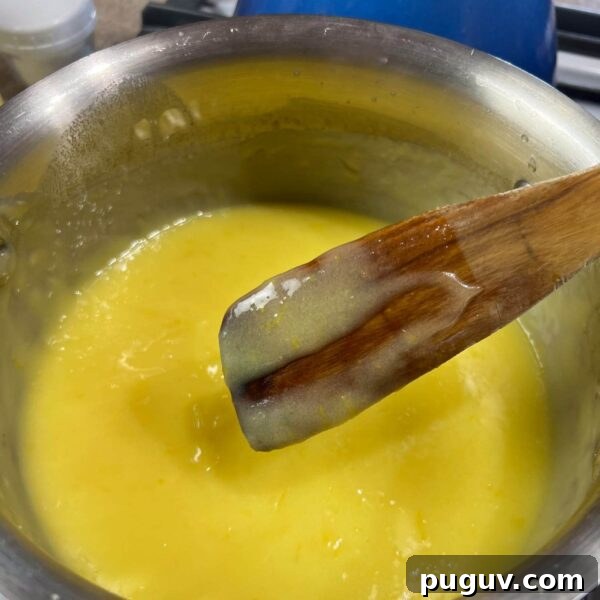
A double boiler is helpful for gentle cooking, but you can cook directly in a heavy-bottomed saucepan over low heat. Stir constantly and watch closely. The curd should reach 170–180°F (77–82°C) to thicken; you can test by drawing a line across the back of a wooden spoon—the line should stay visible when the curd is done.
10. Do I have to strain the lemon curd when it’s done?
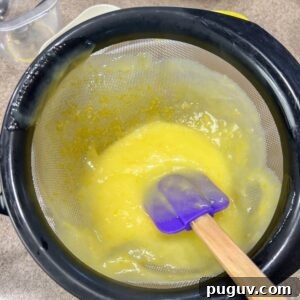
Straining is optional but recommended to remove any cooked egg bits or large pieces of zest, producing a silky-smooth curd.
11. How do you store lemon curd and how long will lemon curd last?
Cool completely, then store in an airtight container in the refrigerator for up to four weeks. You can freeze lemon curd (see instructions below) or follow tested canning guidelines from trusted sources if you plan to can it.
12. How much zest and juice comes from an average-size lemon?
One medium lemon yields roughly 1 tablespoon zest and 2 tablespoons juice, though size and juiciness vary.
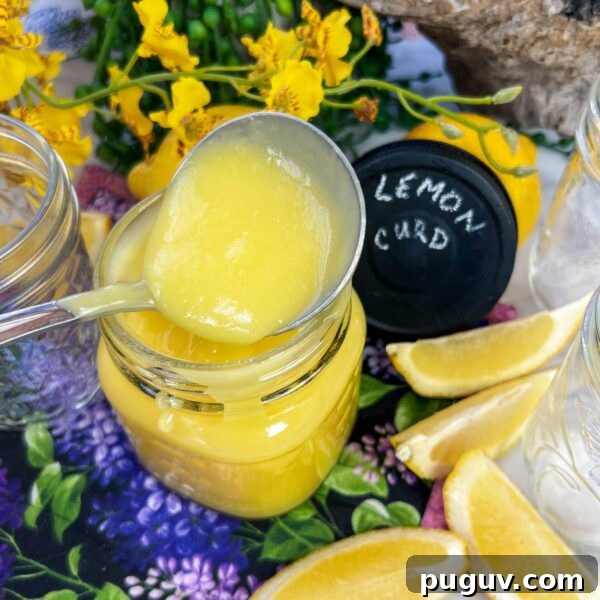
Recipe for Lemon Curd Using Whole Eggs
Lemon Curd with Whole Eggs
Ingredients
- 4 Tbsp lemon zest* 3–4 lemons
- 3/4 cup sugar*
- 4 large eggs
- 1/2 cup lemon juice 2–3 lemons
- 1/4 cup butter, cubed room temperature
Instructions
-
In a medium saucepan off the heat, combine lemon zest and sugar. Press or rub the zest into the sugar with your fingers or the back of a spoon to release the oils.
-
Whisk in the eggs one at a time until fully incorporated.
-
Add the lemon juice and mix until smooth.
-
Place the pot over LOW heat and stir constantly until the mixture thickens. Do not boil. It usually takes about 10 minutes to reach 170–180°F (77–82°C). You can also test by dragging a wooden spoon through the curd; if the line stays, it’s ready.
-
Remove from heat and stir in the butter cubes until melted. Press the curd through a fine sieve with the back of a spoon or spatula for a smooth finish.
-
Let cool, stirring occasionally. The curd will thicken further as it cools.
-
Store in the refrigerator for up to 4 weeks, or freeze or can according to tested guidelines.
-
Yield: about 2 cups.
Video
Notes
Adjust sugar to taste, but keep at least 1/2 cup for structure.
How to Freeze Lemon Curd Using Whole Eggs
Lemon curd freezes very well. Follow these steps for best results.
- Cool the curd completely before freezing.
- Portion into usable sizes and transfer to freezer-grade bags, plastic containers or glass jars. Half-pint jars (8 oz / 1 cup) work well for single-use portions.
- Leave headspace in rigid containers—about ½ inch (2 cm)—to allow for expansion.
- Freeze and use within one year for best quality.
- After thawing, store in the refrigerator and use within four weeks.
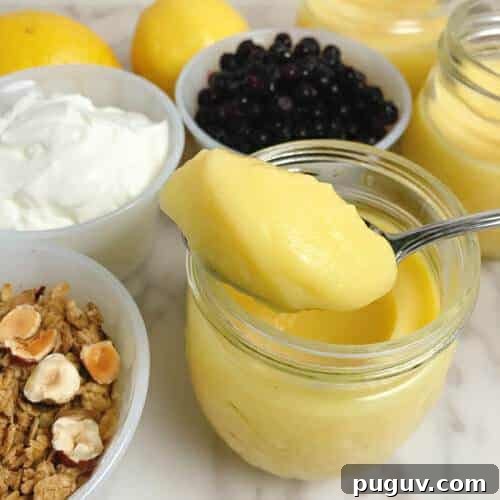
How to Use Lemon Curd
Lemon curd is versatile and keeps well frozen, so making a big batch is worthwhile. The flavor and texture hold up after freezing and thawing.
More Ways to Use Lemon Curd
- Stirred into plain yogurt and topped with granola and berries
- Served with pancakes, French toast, crepes or waffles
- Smeared on toast or fresh-baked scones
- Mixed with cream cheese or yogurt for a fruit dip
- Used as a filling for tarts, pies, sandwich cookies or cakes
- Folded into whipped cream for cake rolls or Swiss rolls
- As a topping for ice cream
- As a filling for cheesecakes
- Served alongside shortbread or muffins
- Layered in parfaits or trifles
- Used as a filling for meringues or pavlovas
Do you have a favorite way to enjoy lemon curd?
Cook with the seasons, effortlessly! I’m Getty, a food educator and Professional Home Economist, helping you select, store and serve seasonal ingredients in simple, delicious meals. Sign up for seasonal tips and recipes, and explore books, guides and video content for more ideas.