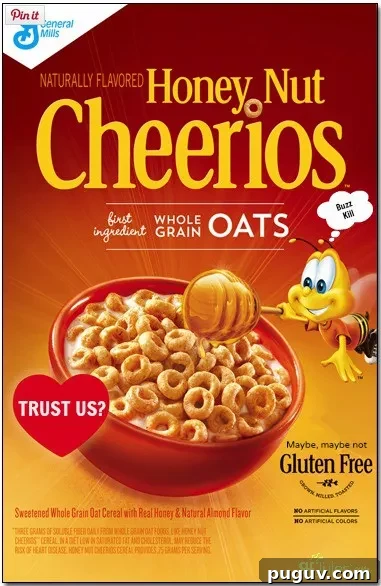
Is There Gluten In Cheerios?!
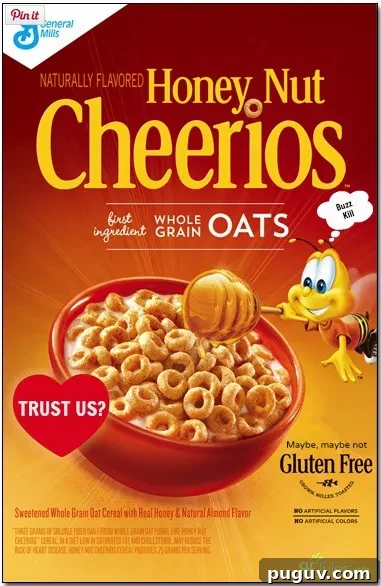 General Mills’ decision to label some Cheerios varieties as “gluten free” has been controversial. Reports of consumer illness and subsequent testing revealed contamination in certain lots of Cheerios, prompting concern from the celiac and gluten-sensitive communities. The timeline below summarizes what happened, why people remain cautious, and what testing practices contributed to the issue.
Gluten in Cheerios 2015
In 2015 General Mills announced that select Cheerios varieties would be produced using oats that had been mechanically or optically separated to reduce contamination from gluten-containing grains. Instead of sourcing oats grown, harvested and handled under a strict “purity protocol,” the company relied on post-harvest sorting and in-house testing.
The testing approach combined samples from multiple boxes into composite samples, producing a “lot mean” value rather than testing individual boxes. That method can mask uneven contamination in a production run because localized higher-contamination “hot spots” may be diluted when averaged with cleaner samples.
Bloggers, advocacy groups and consumers raised alarms about those testing methods and the choice not to use purity-protocol oats. Concerns intensified after reports of consumers becoming ill. Independent testing and FDA samples found gluten levels above allowed thresholds in some cases; one tested sample measured 43 parts per million (ppm), a level higher than the gluten-free standard.
In October 2015 General Mills disclosed that its Lodi, California plant had not tested any lots labeled gluten-free for a 13-day period. During that time, oats were reportedly transported in containers previously used for wheat, increasing the risk of contamination. The company later recalled approximately 1.8 million boxes produced during that window after the contamination and customer complaints were brought to light.
Gluten in Cheerios 2016
When General Mills announced the Canadian launch of Cheerios labeled gluten-free, the Canadian Celiac Association (CCA) publicly advised people with celiac disease not to consume those products. The CCA noted several relevant points:
- Oats are high-risk for gluten contamination, and even oats marketed as gluten-free can be contaminated.
- Optical and mechanical sorting are imperfect because wheat and barley kernels can closely resemble oats in size, shape and color, and broken kernels make separation harder.
- Contamination in an oat batch is not always evenly distributed; hot spots can exist.
- The testing procedures described by General Mills did not convince the CCA’s scientific advisors that hot spots would reliably be detected.
Because of these concerns and consumer reports of illness, the CCA recommended that people with celiac disease or severe gluten sensitivity avoid Cheerios made from mechanically or optically sorted oats until more robust evidence supported their safety.
Gluten in Cheerios 2017
Complaints continued into 2017. Media outlets obtained records showing ongoing reports of illness, and clinicians advising celiac patients often recommended avoiding products made with mechanically or optically separated oats. The Canadian Food Inspection Agency later announced that the wording “gluten-free” would be removed from Cheerios packaging sold in Canada by January 1, 2018. General Mills stated it would not relabel boxes already on shelves but indicated that future stock would not carry the gluten-free claim.
Canadian celiac advocates emphasized that, given the available evidence and reported consumer reactions, removing the gluten-free claim was a prudent precaution for people with celiac disease.
Gluten in Cheerios 2021
General Mills has continued to use composite sampling—mixing subsamples from 12 to 18 boxes to create a single composite for testing to determine whether a lot (a 24-hour production run) meets gluten-free criteria. This method calculates a mean result for the lot and does not identify which individual boxes might contain higher contamination. That testing strategy can fail to detect hot spots of contamination within a batch and leaves uncertainty about the safety of any given box.
Because of this ongoing testing approach and the documented incidents of contamination and consumer illness, many gluten-free experts and celiac advocacy organizations remain unsatisfied with the company’s protocols for products labeled gluten-free.
If you have experienced illness after consuming Cheerios or any other product, reporting adverse events to regulatory authorities helps document the problem and can prompt further investigation.
For consumers seeking certified gluten-free cereal options, consider choosing products that explicitly use purity-protocol oats or are certified gluten-free by reliable third-party programs. Those products are typically produced under stricter separation and testing protocols that address uneven contamination risks.
Overall, the Cheerios controversy highlights the difference between mitigation strategies like mechanical or optical sorting and stricter purity-protocol sourcing, and it underscores why some consumers with celiac disease or severe gluten sensitivity continue to avoid Cheerios varieties labeled gluten-free.