
Do you know what ingredients to avoid in shampoo and how to spot the bad ingredients in shampoo before buying it?
If you struggle with hair loss, scalp irritation, allergies, rosacea, or eczema, the ingredients in your shampoo may be contributing. Many common shampoo additives can cause irritation or have been associated with longer-term health concerns. Learning which ingredients to avoid and how to read a label will help you make safer choices.
Know the Ingredients to Avoid in Shampoo
Reading a shampoo label can feel overwhelming: long lists of unfamiliar chemical names are common. It’s easy to assume that anything sold commercially is safe, but many formulations include ingredients linked to skin and eye irritation, hormone disruption, respiratory problems, and other health concerns.
Your skin is your largest organ and absorbs substances applied to it. Synthetic foaming agents, preservatives, and fragrances can be absorbed over time. Even if each product contains only small amounts of these chemicals, daily and long-term exposure is worth considering.
How to Read the Label of Your Shampoo
Natural and Organic Are Not the Same
Marketing terms like “natural” can be misleading. There is no uniform federal definition for “natural” on cosmetics, so ingredients labeled natural may still have been processed or combined with synthetic chemicals. “Organic” indicates that ingredients were grown without synthetic pesticides or fertilizers, but a product can include some organic ingredients without being entirely organic.
“Made with Organic Ingredients”
Products that claim “made with organic ingredients” typically contain a significant portion of organic components. Labels and certifications vary by country: full USDA organic labeling usually requires a very high percentage of organic ingredients, while other seals or statements may apply to formulas with a lower organic content. Always check ingredient lists and certification claims if organic content is important to you.
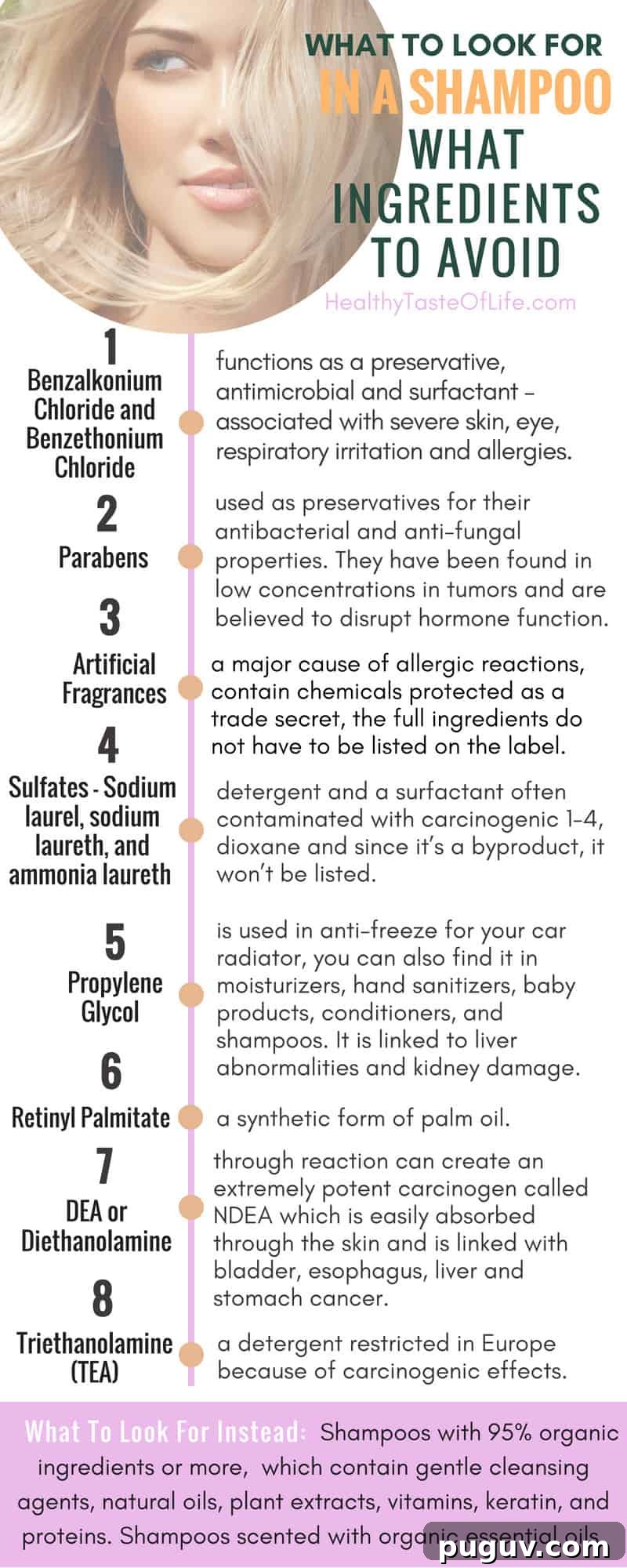
Ingredients to Avoid in Shampoo:
- Benzalkonium chloride and benzethonium chloride – used as preservatives and antimicrobials; can cause severe skin, eye and respiratory irritation and trigger allergies.
- Parabens – common preservatives with antibacterial and antifungal properties; traces have been detected in tissue samples and they are suspected of disrupting hormone function.
- Artificial fragrances – a frequent source of allergic reactions. Fragrance blends are often proprietary, so full ingredient disclosure can be limited.
- Sulfates – such as sodium lauryl sulfate (SLS), sodium laureth sulfate (SLES), and ammonium laureth sulfate (ALS). These detergents produce strong lather but can be contaminated with byproducts like 1,4-dioxane, a potential carcinogen, and can be harsh on skin and hair.
- Propylene glycol – found in a range of cosmetics and personal care items; it has been linked in some studies to liver and kidney effects with high exposures.
- Retinyl palmitate – a synthetic derivative of vitamin A used in some products; formulations and exposure risks vary.
- DEA (diethanolamine) – a foaming and wetting agent. When it reacts with certain ingredients it can form secondary nitrosamines (like NDEA), which are potent carcinogens. These compounds are easily absorbed through skin.
- TEA (triethanolamine) – used as an emulsifier and surfactant; concerns about irritation and carcinogenic potential have led to restrictions in some regions.
Example of bad ingredients in shampoo:
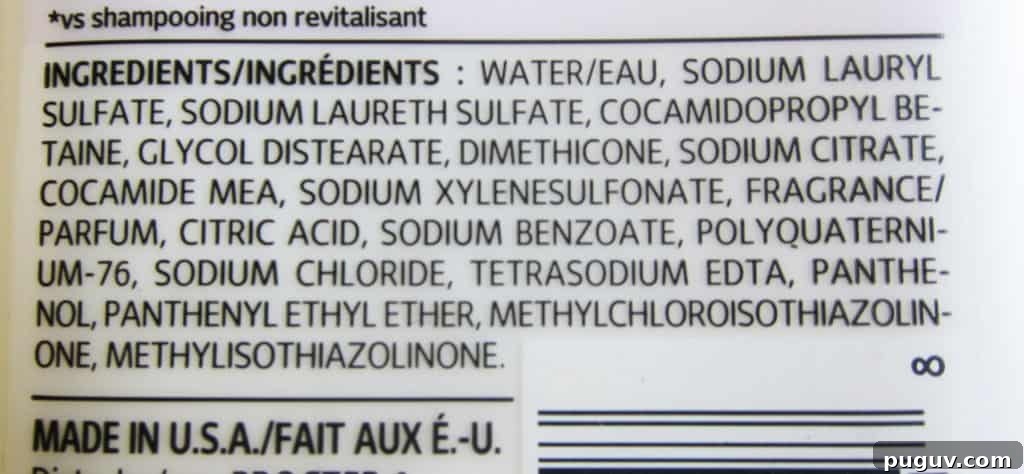
Known Shampoo Brands Often Containing Questionable Ingredients
- Nexxus
- L’Oréal
- Garnier
- TRESemmé
- Aveeno
- Pantene
- Dove
- Suave
- OGX
- Head & Shoulders
- Johnson’s
- Aussie
- Herbal Essences
- Hask
Ingredient safety databases and independent organizations can help you check specific products and ingredients. Keep in mind that most safety assessments focus on short-term exposure; long-term daily use has not been as thoroughly studied for many chemicals.
What Ingredients to Look For Instead
Safer shampoo options usually rely on gentle, plant-derived surfactants and nourishing botanical ingredients. Look for products that list high percentages of organic components and avoid aggressive detergents, synthetic preservatives, and undisclosed fragrances.
Natural shampoos may not produce the same foamy lather as conventional formulas, but they can clean effectively while being gentler on the scalp and hair over time.
Example of Good Ingredients in Shampoos
- Essential oils (as fragrance and for scalp benefits)
- Plant oils: coconut oil, avocado, jojoba, almond, camelina, grapeseed
- Herbal extracts: nettle, dandelion, horsetail, sage, peppermint, green tea, rosemary, neem, calendula, chamomile
- Seaweed collagen
- Aloe vera
- Biotin
- Honey
- Shea butter
Some people make their own shampoos using castile soap, honey, carrier oils (jojoba, argan), aloe vera, dried herbs, coconut milk, baking soda and apple cider vinegar. Essential oils are added for scent and benefits, and natural extracts such as rosemary or grapefruit seed extract can act as mild preservatives. If DIY isn’t for you, many commercial natural shampoos are available, though truly natural formulas are often more expensive and sold in smaller sizes.
Best Non-Toxic Natural Shampoos (Examples)
1) Carina Organics (Vegan, biodegradable, hypoallergenic, paraben-, soy-, and gluten-free)
2) Christina Moss Naturals (suitable for dry, oily, curly or fine hair)
3) Clevos Natura Foresta (for dry, sensitive, itchy scalps)
4) Acure Vivacious Volume Shampoo (vegan, gluten free, paraben & sulfate free)
Some premium natural shampoos can be costly, but many effective, affordable options are now available. Formulations have improved, and you can find gentle products for dry, color-treated, oily, curly, or thinning hair.
Take time to read labels, look for clear ingredient lists, and choose products with recognizable, plant-based ingredients when possible. Over time, switching to gentler shampoos can benefit scalp health and reduce exposure to potentially harmful additives.
Read More: