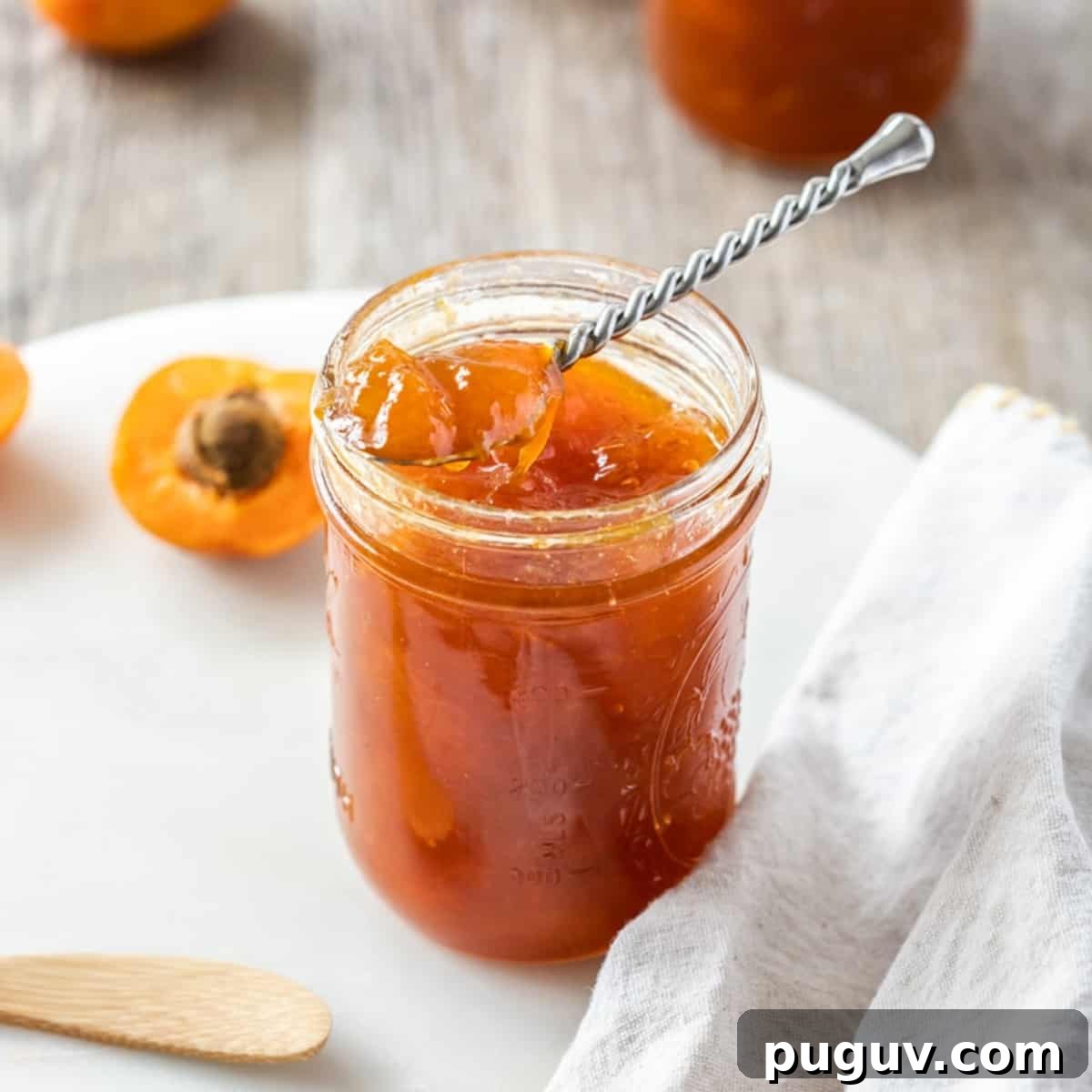
You will love this classic Apricot Jam recipe made with sweet, ripe, juicy apricots at the peak of the season. It’s a simple, reliable way to preserve stone fruit and enjoy bright summer flavour through the year. This jam uses just three ingredients — fresh apricots, granulated sugar and lemon juice — so no pectin is required.
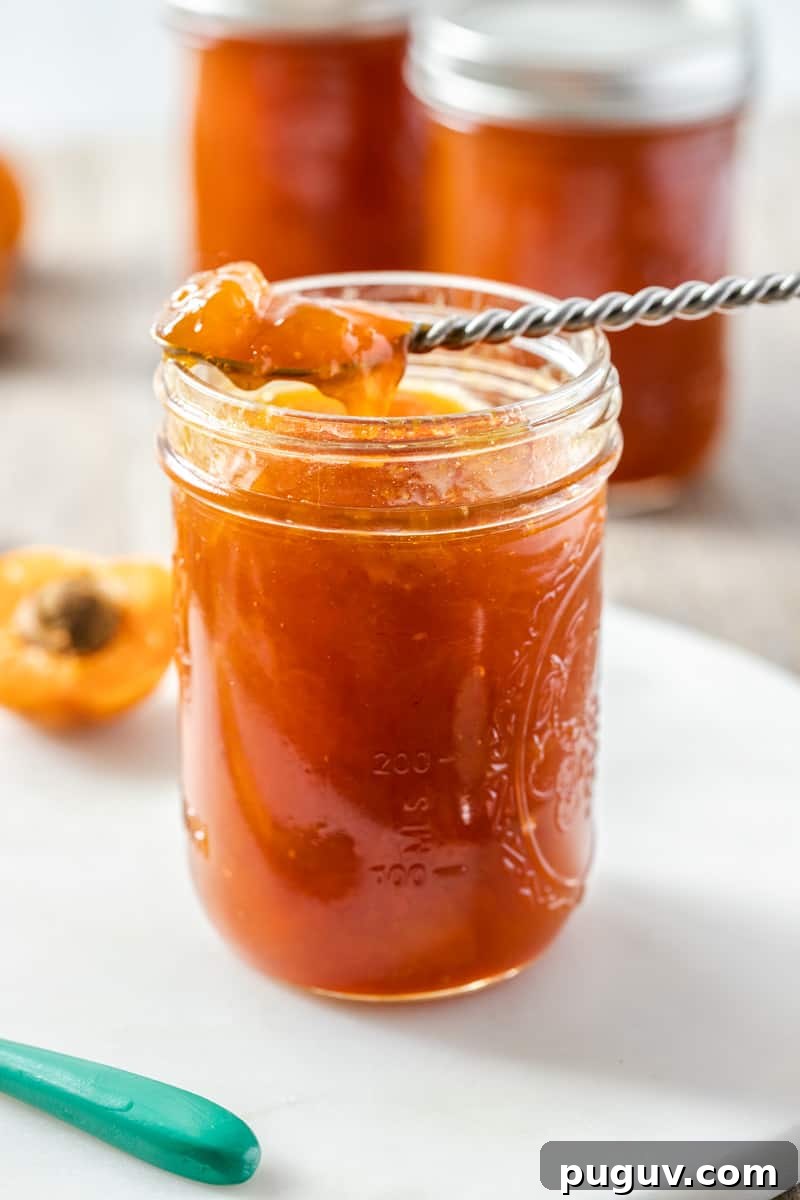
Why you’ll love this recipe:
- Apricot jam is incredibly easy to make and keeps a jar of summer flavour on your shelf long after fresh fruit is gone. The instructions below guide you step-by-step.
- Homemade jam tastes far better than most shop-bought varieties.
- There are no additives or artificial preservatives — you control the quality of the ingredients.
- It makes a lovely edible gift. For presentation, cover the lid with a circle of fabric or paper and tie with a ribbon.
Recipe Inspiration: This recipe is a family tradition passed down through generations. Stone fruits have long been part of my family history and this jam is a simple way to honour that heritage while enjoying fresh seasonal fruit.
Ingredients and Substitutions
Please see the recipe card below for exact quantities and full method.
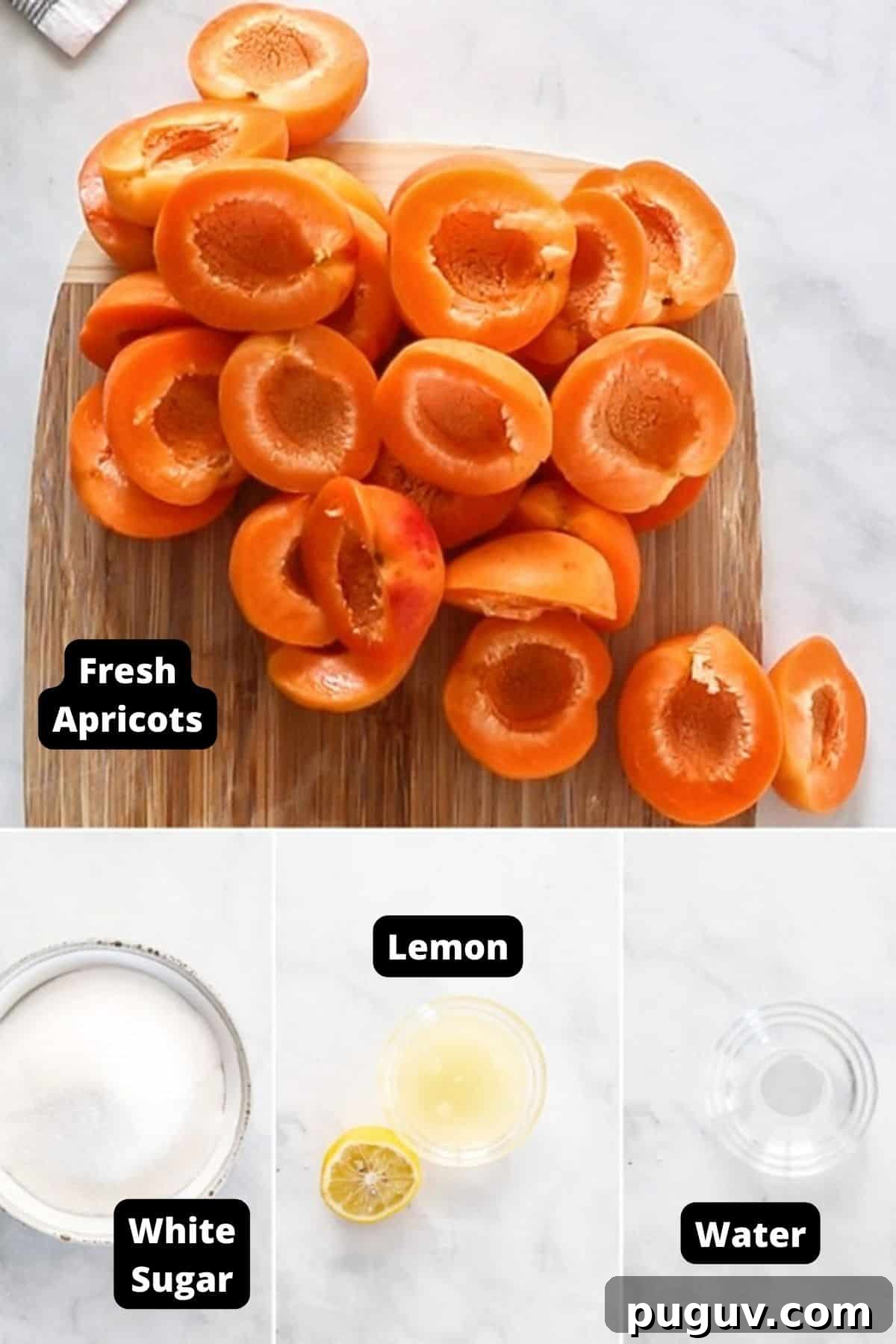
- Fresh apricots: Use freshly picked, firm-ripe apricots with good flavour. Fruit that is just ripe (including a few slightly tart pieces) helps the jam set because it contains more natural pectin and acid. Avoid overripe, soft or bruised fruit.
- Lemon juice: Adds acidity and pectin to improve setting and balance the sweetness. Freshly squeezed is preferred.
- Sugar: Granulated white sugar sweetens the jam, helps the pectin gel, and acts as a preservative to make the jam shelf-stable.
Variations
Add warm spices such as ground cinnamon, nutmeg or ginger for depth, or stir in a splash of vanilla extract at the end. Spices will slightly change the jam’s colour and flavor intensity, so add to taste.
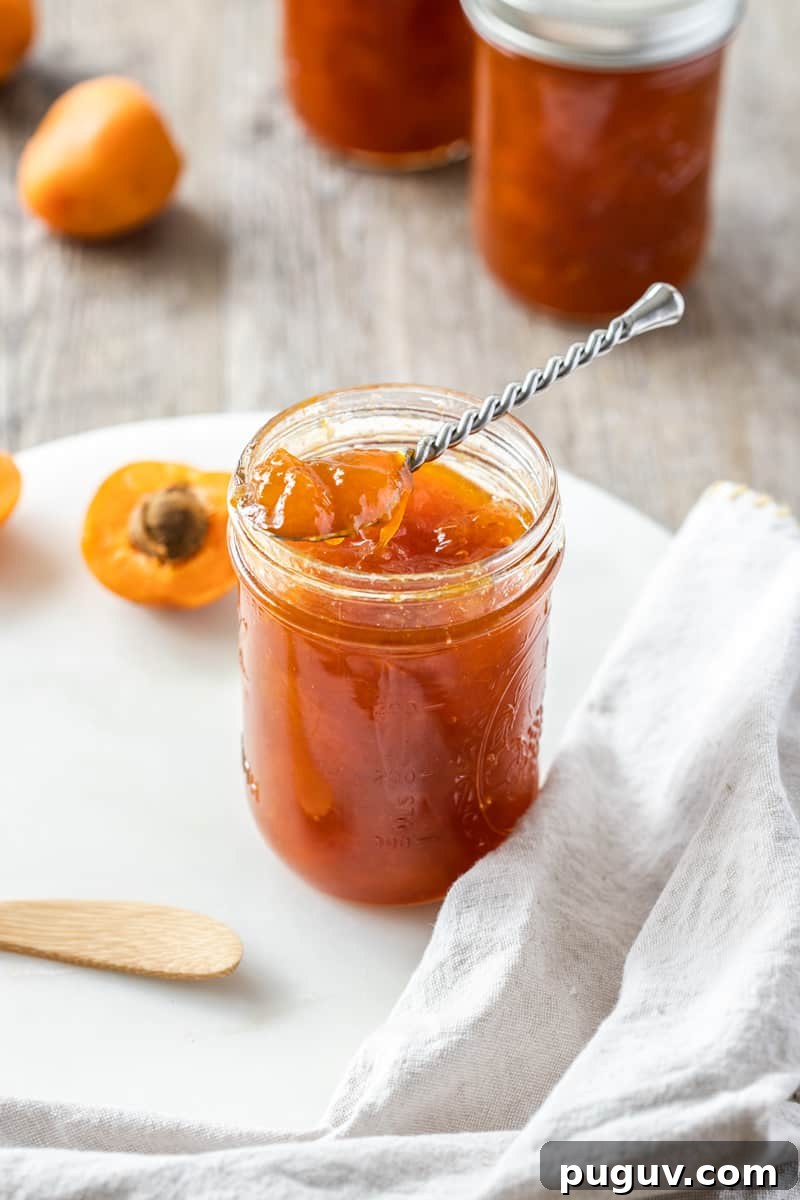
How to Make Apricot Jam
Please see the recipe card below for exact quantities and full method.
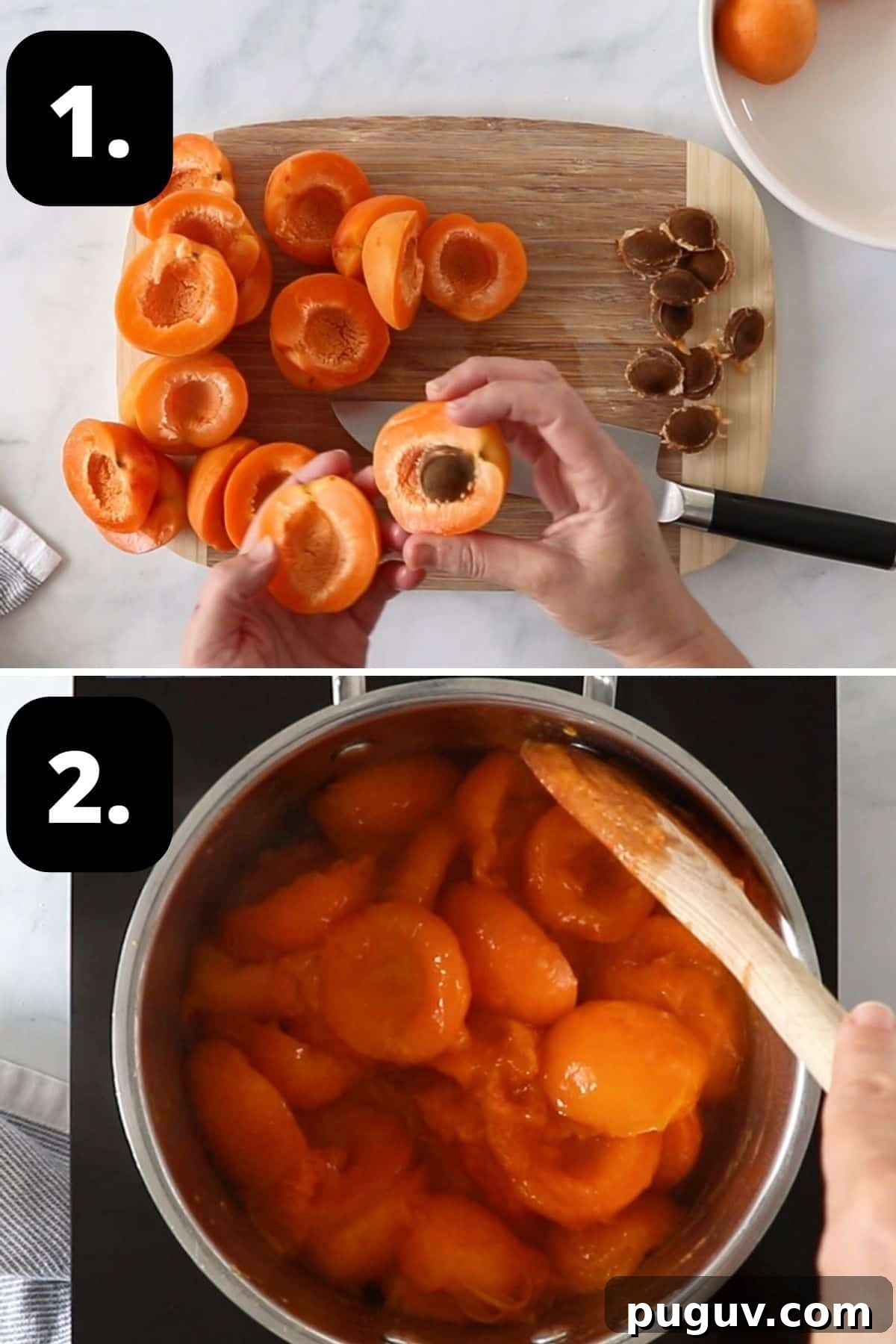
1 — Prepare the fruit: Wash and dry apricots, halve and remove stones, and trim any blemishes. Use the prepared weight (after stones removed) for the recipe.
2 — Soften the fruit: Place apricots in a large, wide saucepan with the lemon juice and a small amount of water. Heat over medium until gently simmering. Cover to retain juices while the fruit softens.
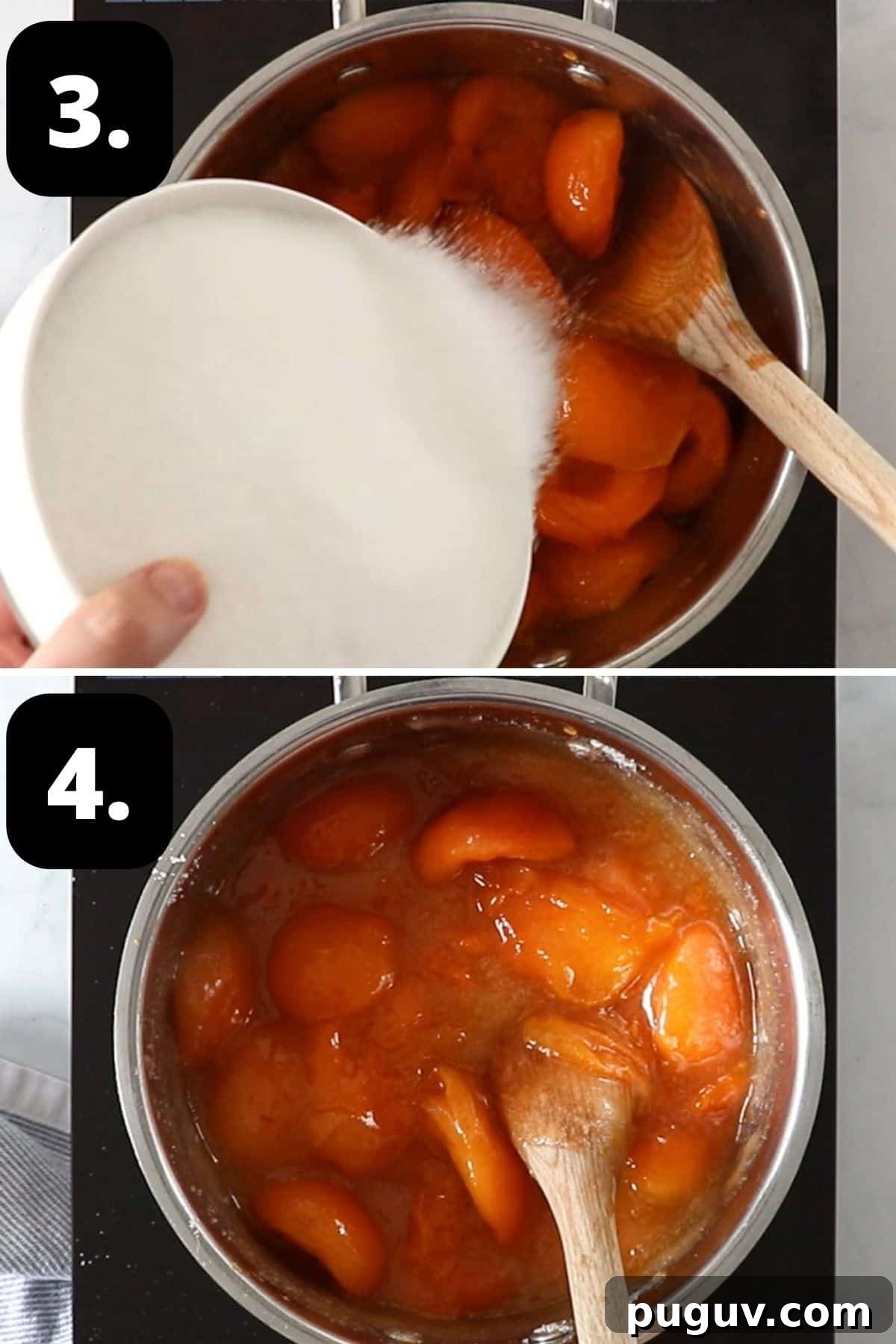
3 — Add the sugar: After about 10–15 minutes, when the fruit is tender, remove the lid and stir in the sugar until dissolved.
4 — Boil to concentrate: Increase the heat and bring the mixture to a rolling boil. Stir frequently to prevent sticking and burning.
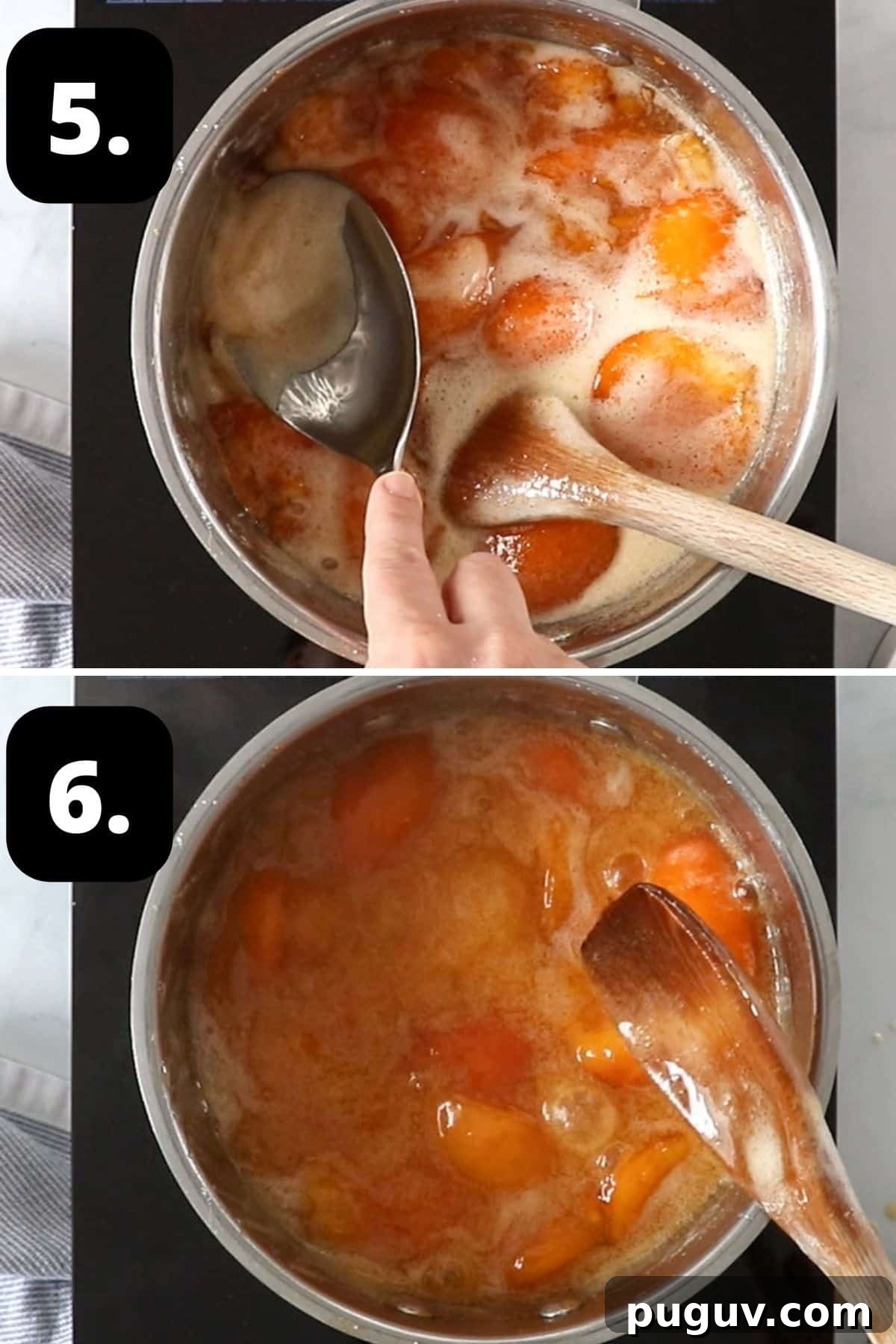
5 — Remove scum: Foam or scum that appears is normal; skim it off with a spoon. A small knob of butter added at the end of cooking also helps clear any surface scum.
6 — Cook until thickened: Continue to cook, stirring regularly, until the mixture thickens — roughly 20 minutes, depending on pan size and heat.
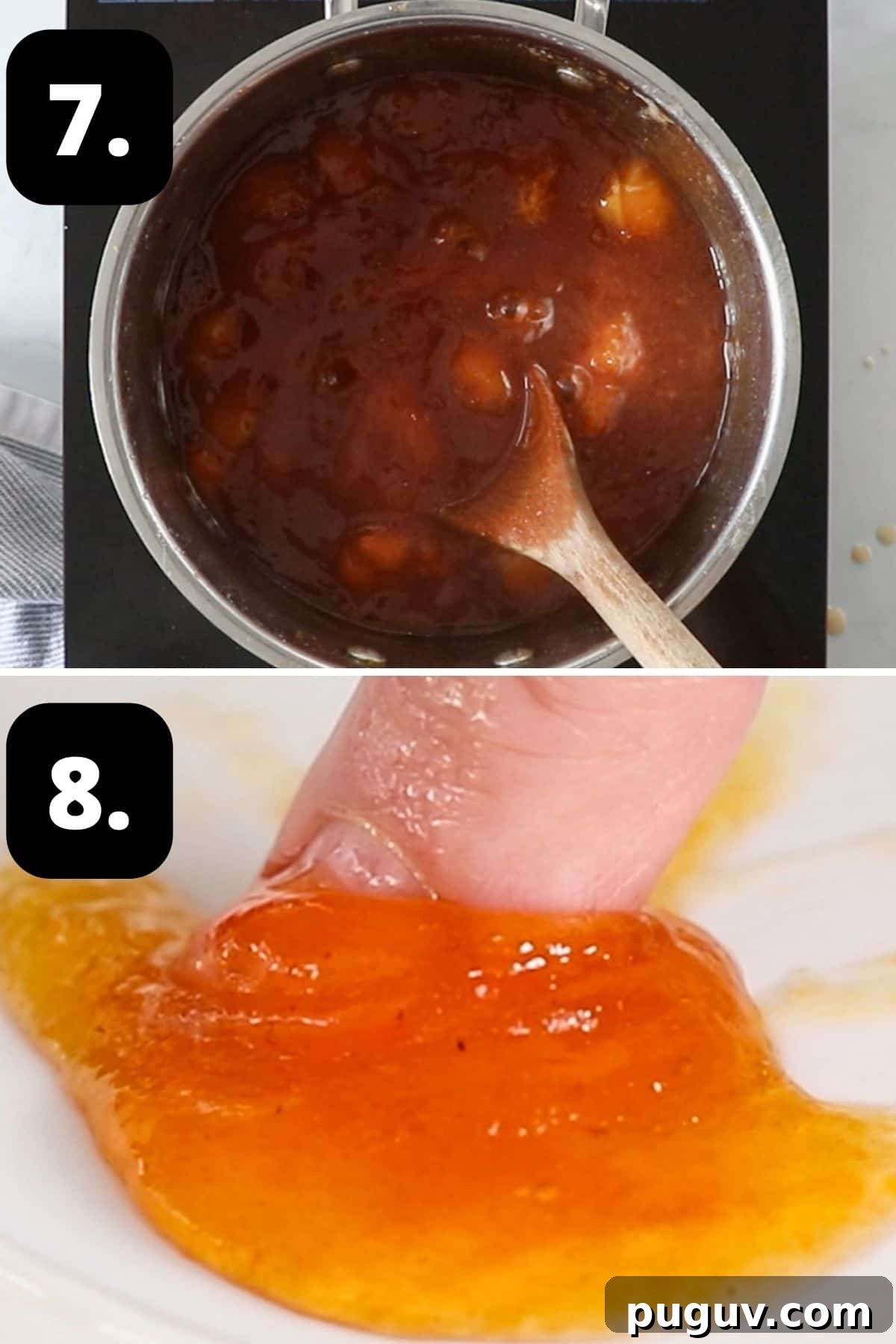
7 — Test for setting point: Use the chilled-plate wrinkle test: place a small spoonful on a cold saucer, let it cool for a minute, then push the edge with your finger — if it wrinkles slightly, the jam is set. If unsure, boil for another 3–5 minutes and test again. A sugar thermometer is an alternative: 104°C (220°F) indicates setting point.
Let the jam rest for about 10 minutes so fruit pieces distribute evenly. Do not wait longer; bottle while still hot into sterilised jars and seal immediately. The jam will continue to set as it cools and can take up to 48 hours to fully firm.
Equipment Needed
Sterilising jars is essential. Use clean glass jars with airtight metal lids. Wash thoroughly and preheat jars (without rubber-sealed lids) in a 130°C (270°F) oven for 15–20 minutes. If lids have rubber inserts, wash and air dry them instead of heating. Use a large, wide saucepan (for quicker evaporation) and a long-handled wooden spoon. Avoid aluminium, copper or iron pans because fruit acids can react and create off-flavours.
Tips for Success, Storage and FAQs
How long will the jam last?
Follow the sterilisation and bottling instructions and the jam will be shelf-stable for up to a year when stored in a cool, dark place. Refrigerate after opening and always use a clean spoon; opened jam is best within six weeks.
Do I need to peel the apricots?
No. Apricot skins are fine and contain pectin that helps the jam set.
Can I use less sugar?
Traditional jam needs a relatively high sugar ratio for flavor, setting and preservation. Reducing sugar risks weak set and spoilage, so it’s not recommended for shelf-stable jam.
Can I leave out the lemon?
Lemon is important: its acidity and pectin help the jam set and balance sweetness.
What is pectin?
Pectin is a natural polysaccharide found in fruit that forms a gel when combined with sugar and acid at high temperatures. Fruit pectin content varies by type and ripeness.
Top Tip
Place two heatproof saucers in the freezer before you start. Use them to test the setting point quickly. Use freshly picked, good-quality fruit for the best results.
Serving Suggestions
Apricot jam is versatile:
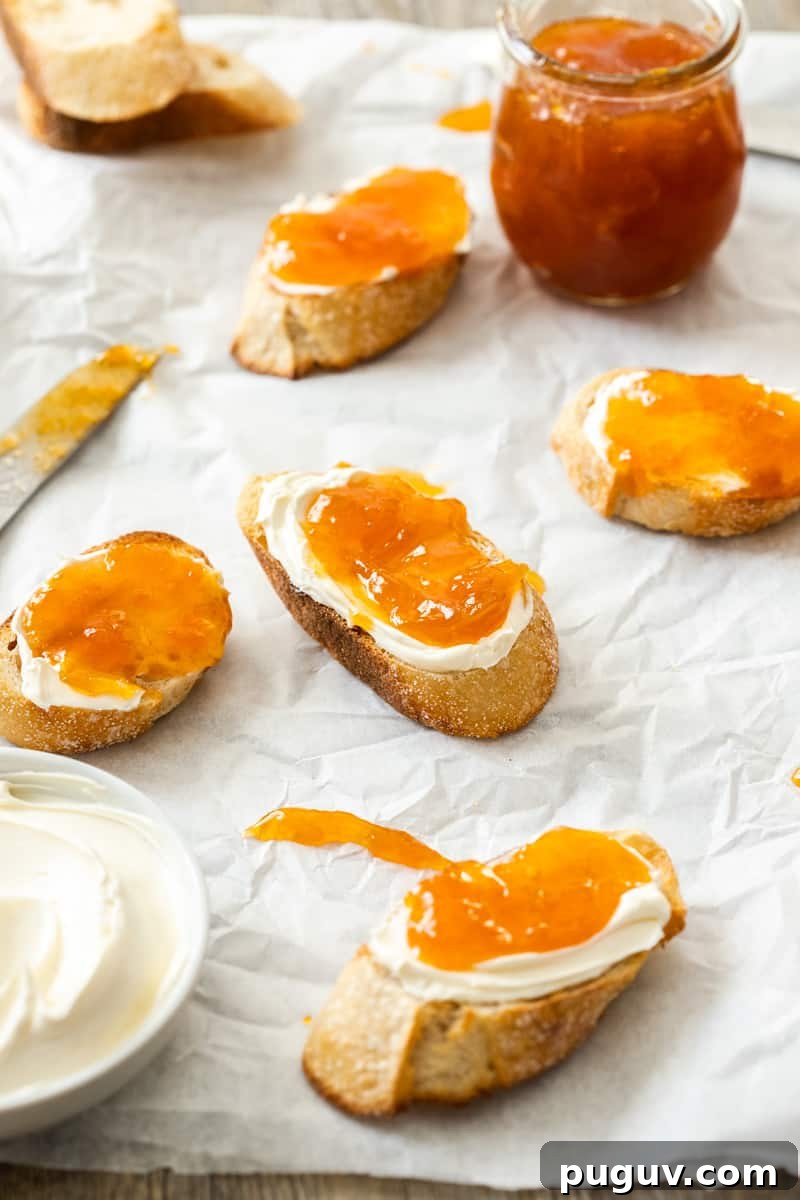
- Spread on toast or croissants for breakfast.
- Serve with scones and cream, swirl into plain yoghurt, or use to fill pastries.
- Spoon over oatmeal or pancakes and waffles.
- Use as a glaze for tarts, puff pastry or ham, or drizzle over tangy goat cheese.
Homemade jam is a lovely way to use fruit at peak season and makes a thoughtful gift.
Recipe Card
Apricot Jam
You will love this classic Apricot Jam made with fresh apricots, sugar and lemon juice. No pectin required.
Yields
About 12 x 250ml (8.5 oz) jars
Times
Prep: 40 minutes | Cook: 55 minutes | Total: 1 hour 35 minutes
Ingredients
- 2.5 kg (5.5 lb) fresh apricots, prepared weight (stones removed)
- 1/4 cup (60 ml) water
- 1/4 cup (60 ml) freshly squeezed lemon juice
- 1.8 kg (4 lb) granulated sugar
Instructions
To sterilise the jars
- Preheat oven to 130°C (270°F). Wash jars and lids; discard any lids that are rusty or damaged. Place jars and lids on a baking tray and heat at least 15–20 minutes. If lids have rubber seals, allow them to air dry instead of oven heating.
- Keep hot jars on a warm surface (not cold) until ready to fill.
To make the jam
- Place two heatproof saucers in the freezer for testing.
- Wash and dry apricots, halve them and remove stones.
- Put apricots in a large, wide saucepan with lemon juice and water. Simmer over medium heat, stirring occasionally, until fruit is tender (10–15 minutes).
- If you prefer smoother jam, briefly blend with a hand blender off the heat.
- Add sugar and stir constantly off the heat until dissolved.
- Return to the stove, increase heat and boil uncovered, stirring frequently to prevent burning. Skim any scum that forms.
- After about 20 minutes of boiling, test for setting point using the chilled plate wrinkle test or a sugar thermometer (104°C / 220°F). If it doesn’t wrinkle, boil a few minutes longer and test again.
- When set, remove from heat. Remove any remaining scum or stir in 1 tsp butter to clear the surface.
- Let the jam rest for about 10 minutes to distribute fruit pieces, then carefully ladle into hot sterilised jars and seal immediately. The jam will continue to set as it cools.
- When cool, wipe jars, label with date and store in a cool, dark place. Refrigerate after opening.
Notes
- The apricot weight is the prepared weight after stones and blemishes are removed. Use fresh, unbruised fruit for best pectin and flavor.
- Do not reduce the sugar significantly — it is needed for set and preservation.
- Lemon juice contributes acidity and pectin, helping the jam to set and balancing sweetness.
- Choose a wide, tall saucepan so the fruit can boil vigorously without spilling.
- The time to reach setting point varies with pan size, fruit quantity and heat; watch carefully.
Nutrition Estimate (per whole jar)
Calories: 682 kcal; Carbohydrates: 173 g; Protein: 3 g; Fat: 1 g; Sugar: 169 g. These values are estimates and will vary depending on exact ingredients and brands used.