Imaginative play is a treasured part of life in our home. Each of my children had a dress-up box filled with costumes, silks, hats, jewelry, and assorted accessories when they were little. Encouraging pretend play sparks creativity, confidence, and joyful exploration.
My youngest is three and practically lives in dress-up clothes. She often wears them while we run errands; her favorite right now is a playsilk she calls her “super cape.” When she wears it she announces herself in the third person as Super Molly, and proceeds to save people, animals, and the day. She also adores wings—fairy wings, dragon wings, and especially butterfly wings.
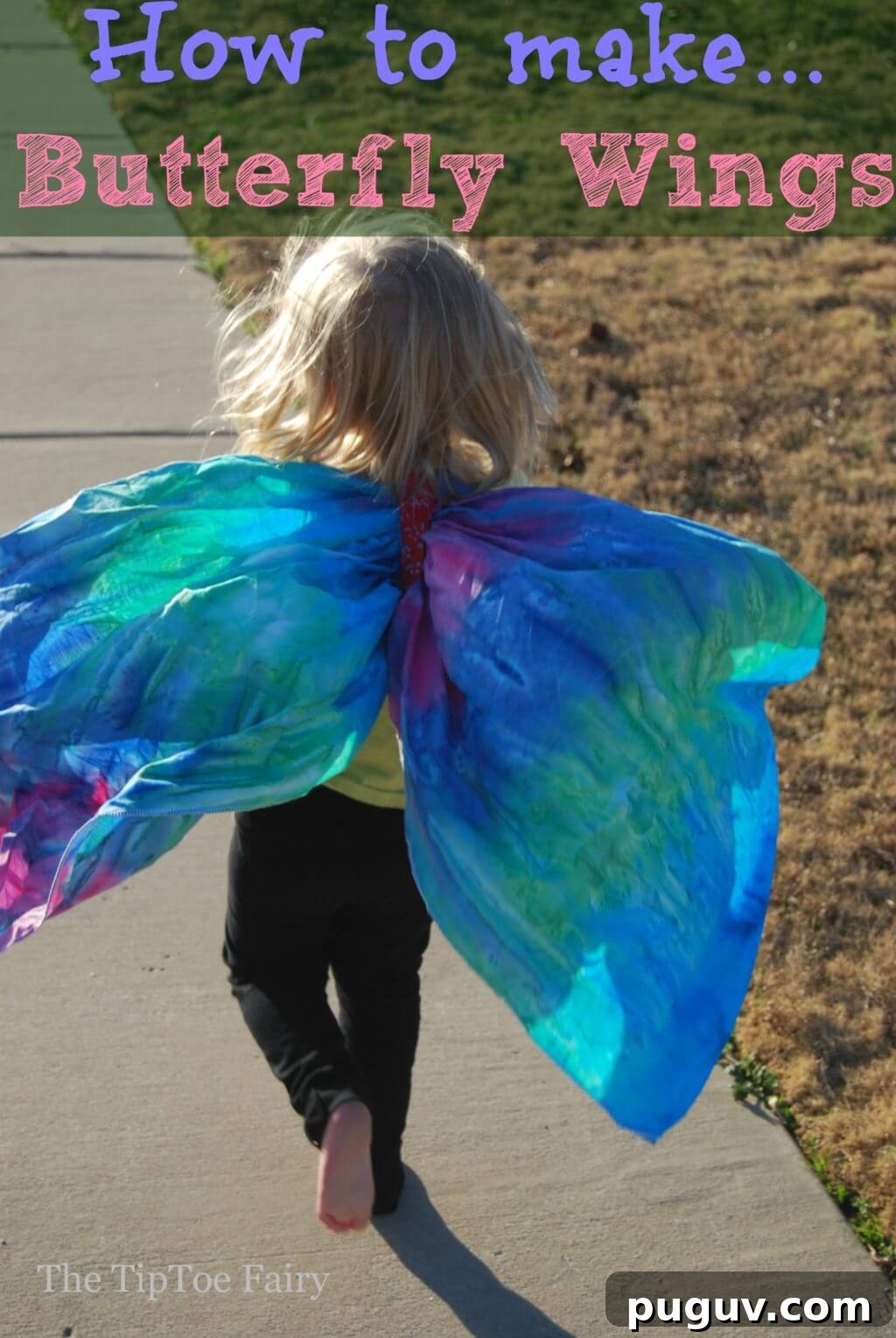
These butterfly wings are simple to sew and don’t require stiff wires like some fairy wings. They’re designed to flutter softly in the wind as a child runs and plays, and they work well in lightweight cotton fabrics or silk-like materials for extra movement and color.
Recommended fabrics include quilting-weight cotton batiks—rainbow tie-dye batiks are particularly vibrant and feel perfectly “butterfly.” Hemp silk and dupioni silk also dye beautifully and give an elegant sheen. For this project use the standard fabric width (44–45 inches) for the wing width, and cut the length to suit the child.
Butterfly Wings Tutorial
Supplies
- 1 yard cotton batik or similar fabric (main wing)
- 1/4 yard coordinating fabric (center strip)
- 1 yard 1-inch wide elastic (arm straps)
- 1/2 yard 1/4-inch wide elastic (hand loops)
Directions
Note: “outside of the wings” refers to the visible back side when worn. “Inside of the wings” refers to the side against the child’s back.
- Cut the main fabric to a rectangle using the fabric width (44–45 inches) as the wing width and the length based on size:
- Toddler: 44 inches wide x 22 inches long
- Child (ages 4–7): 44 inches wide x 30 inches long
- Finish the raw edges of the rectangle with a hem or serging to prevent fraying.
- Find the center of the rectangle lengthwise and sew two parallel gathering stitches about 1/4 inch apart down the full length. Pull the gathers until the center measures roughly 6 inches long for a toddler or 8 inches long for a child.
- Cut a coordinating fabric strip for the wing center:
- Toddler: 4.5 inches wide x 13.5 inches long
- Child: 4.5 inches wide x 17.5 inches long
- Press the long raw edges of the strip toward the center lengthwise, then fold the strip in half so it measures about 1.25 inches wide. Stitch along the long open edge to close the strip into a neat casing.
- Cut the 1-inch elastic for the arm straps:
- Toddler: 25 inches
- Child: 28 inches
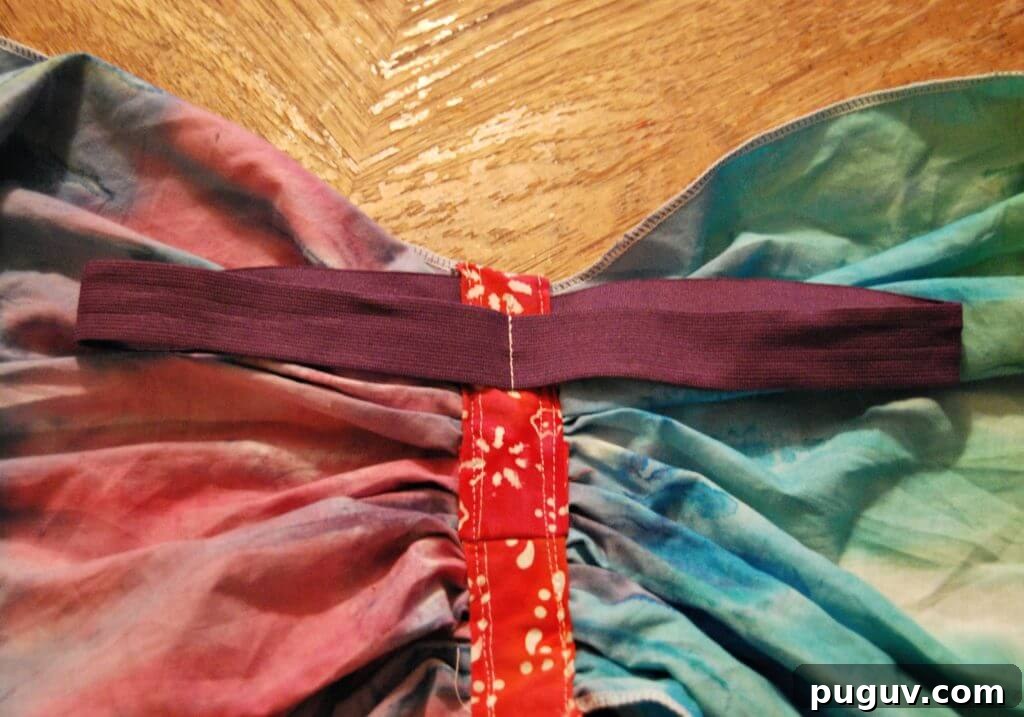
- Wrap the finished strip around the gathered middle of the wings to conceal the gathering stitches. Fold the raw edge of the strip inward on the inside of the wings and pin in place. At the top of the inside, position and pin the raw ends of the 1-inch elastic inside the fold so the elastic will form two straps when secured.
- On the outside of the wings, stitch along one edge of the center strip, reinforcing with a backstitch or backtack where the elastic is inserted. Repeat on the other side of the strip so the strip is securely sewn and the elastic ends are anchored.
- Locate the midpoint of the elastic, flatten it onto the center strip, and tack it down to form two arm loops. This creates balanced straps so the wings sit comfortably on the child’s shoulders.
- Cut two pieces of the 1/4-inch elastic for hand loops:
- Toddler: two pieces of 5.5 inches each
- Child: two pieces of 6.5 inches each
- Fold the top corner edge of each wing down over the raw ends of the small elastic and tack securely on both sides. These become the hand loops the child can slip their hands through to keep the wings in place while playing.
That’s it—your butterfly wings are complete. You can scale the measurements to make an adult pair or experiment with fabric choices and surface decoration. For a simple variation, use red fabric and paint black spots to create ladybug-style wings.
These wings are lightweight, easy to wear, and encourage active, imaginative play. Have fun making and playing with them!