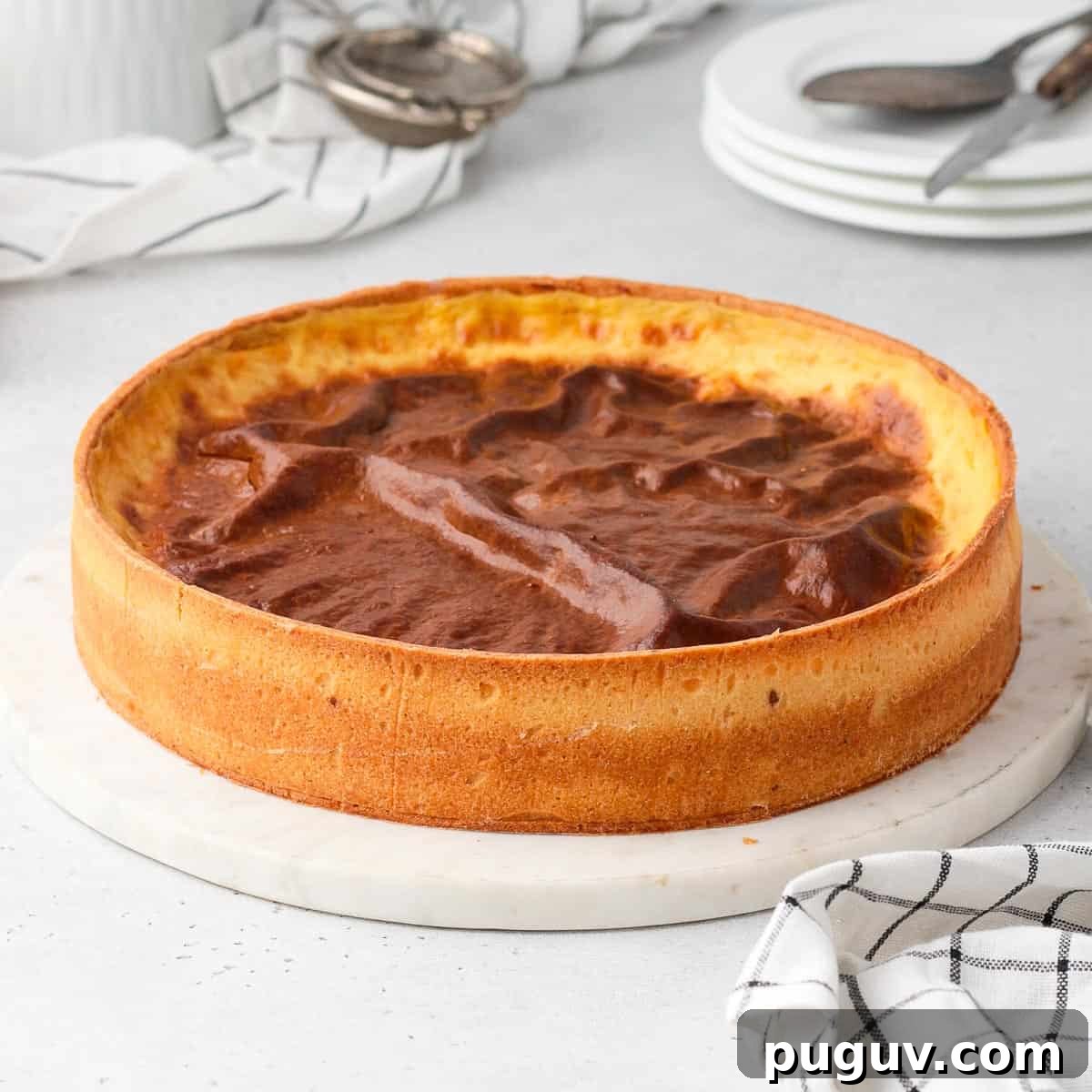
This Parisian Flan (Flan Pâtissier) is a classic French dessert featuring a crisp, buttery crust and a rich, creamy baked custard. It’s an ideal choice for afternoon tea or as a simple, elegant dessert.
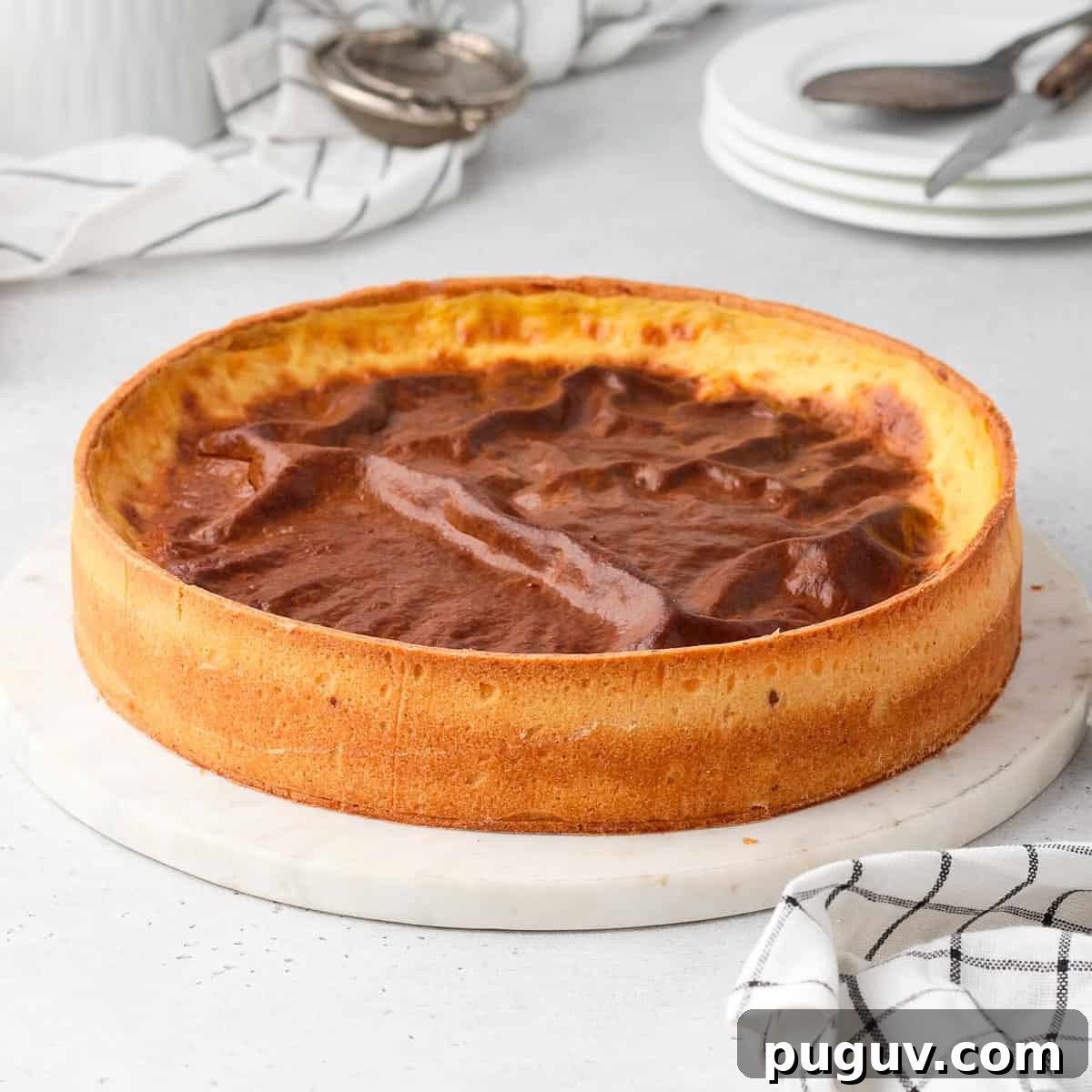
This Parisian Flan is a staple in French pâtisseries — and for good reason: it’s delicious, comforting and nostalgic. The tart combines a sweet shortcrust pastry (pâte sucrée) and a thick, vanilla-packed baked custard, finishing with a golden, lightly caramelised top.
Ingredients
Key components of Parisian Flan:
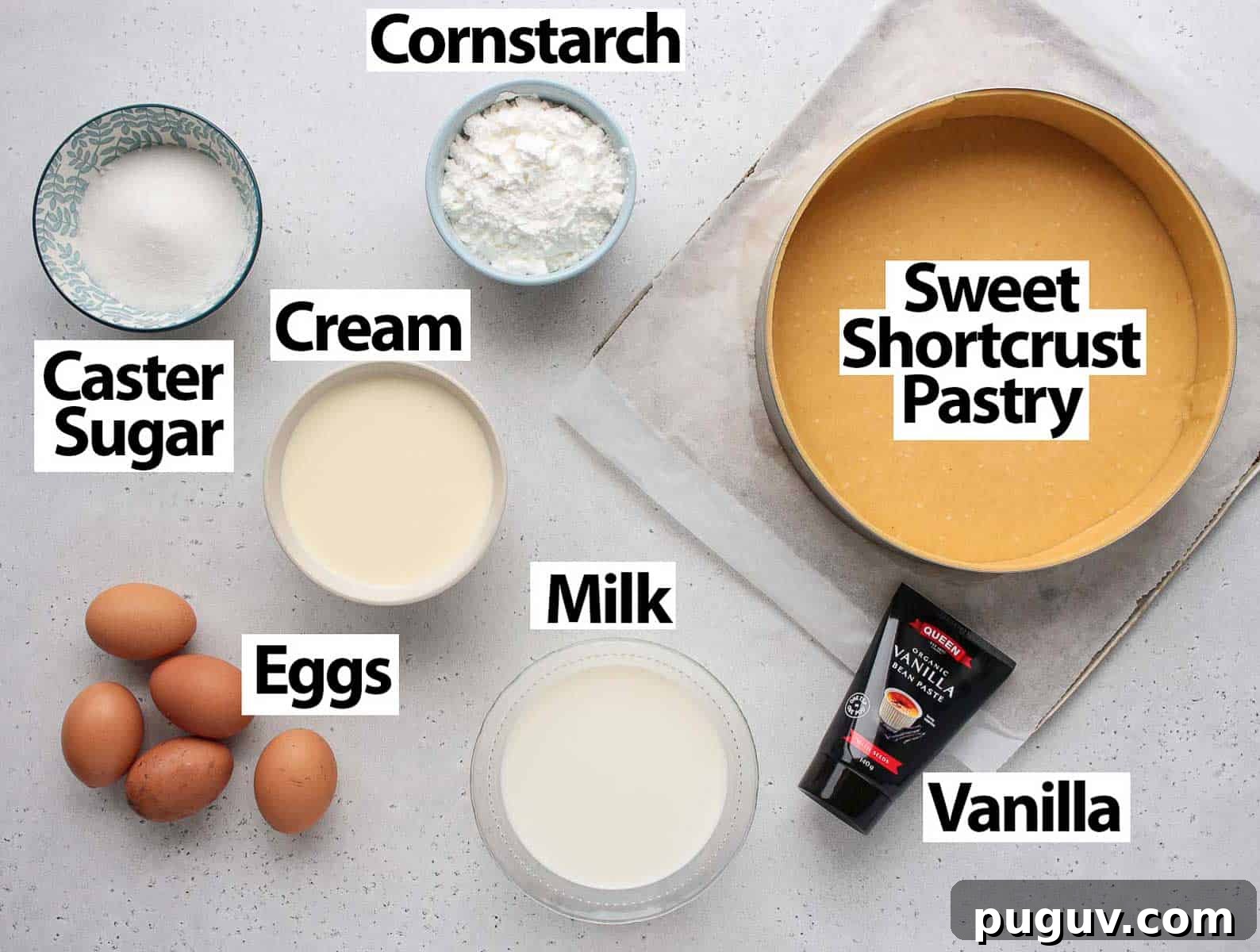
Scroll down to the recipe card below for exact quantities
The tart is made of two main elements: a Sweet Shortcrust Pastry (Pâte Sucrée) and a Vanilla Custard filling. You can also make variations with puff pastry or flavour the custard with chocolate, coffee, or fruit.
Sweet Shortcrust Pastry (Pâte Sucrée)
- Wet: room-temperature unsalted butter and an egg.
- Dry: plain/all-purpose flour, confectioner’s (powdered) sugar, almond meal, and a pinch of salt.
Vanilla Custard Filling
- Eggs: large, room temperature.
- Sugar: caster or fine granulated sugar; adjust to taste.
- Cornstarch: sifted for a smooth, lighter texture (all-purpose flour can be used if needed).
- Cream: heavy/thickened cream (30–35% fat) for richness.
- Vanilla: vanilla paste or a fresh vanilla bean for best flavour; extract is an acceptable substitute.
- Milk: full-cream/whole milk. A flavored plant milk (coconut or almond) can be used to change the profile.
Optional Additions
The classic is vanilla, but you can easily adapt the custard with chocolate, coffee, citrus zest, orange blossom water or fruit, depending on your preference.
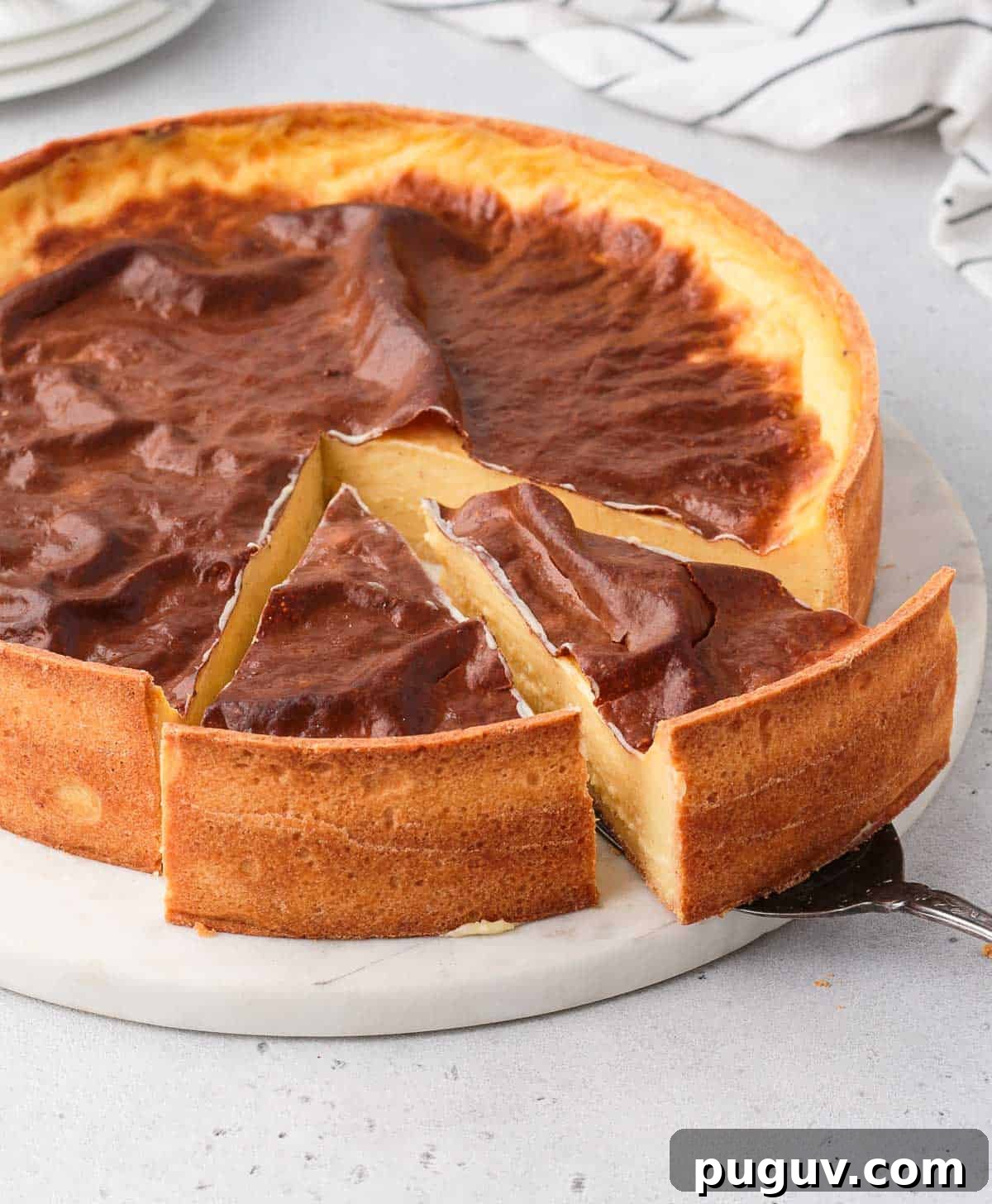
How to make French Flan Tart
The recipe has two main stages: preparing the sweet shortcrust pastry and making the vanilla custard.
Sweet Shortcrust Pastry (Pâte Sucrée)
You can prepare the pastry ahead of time. It keeps in the fridge or can be frozen before baking.
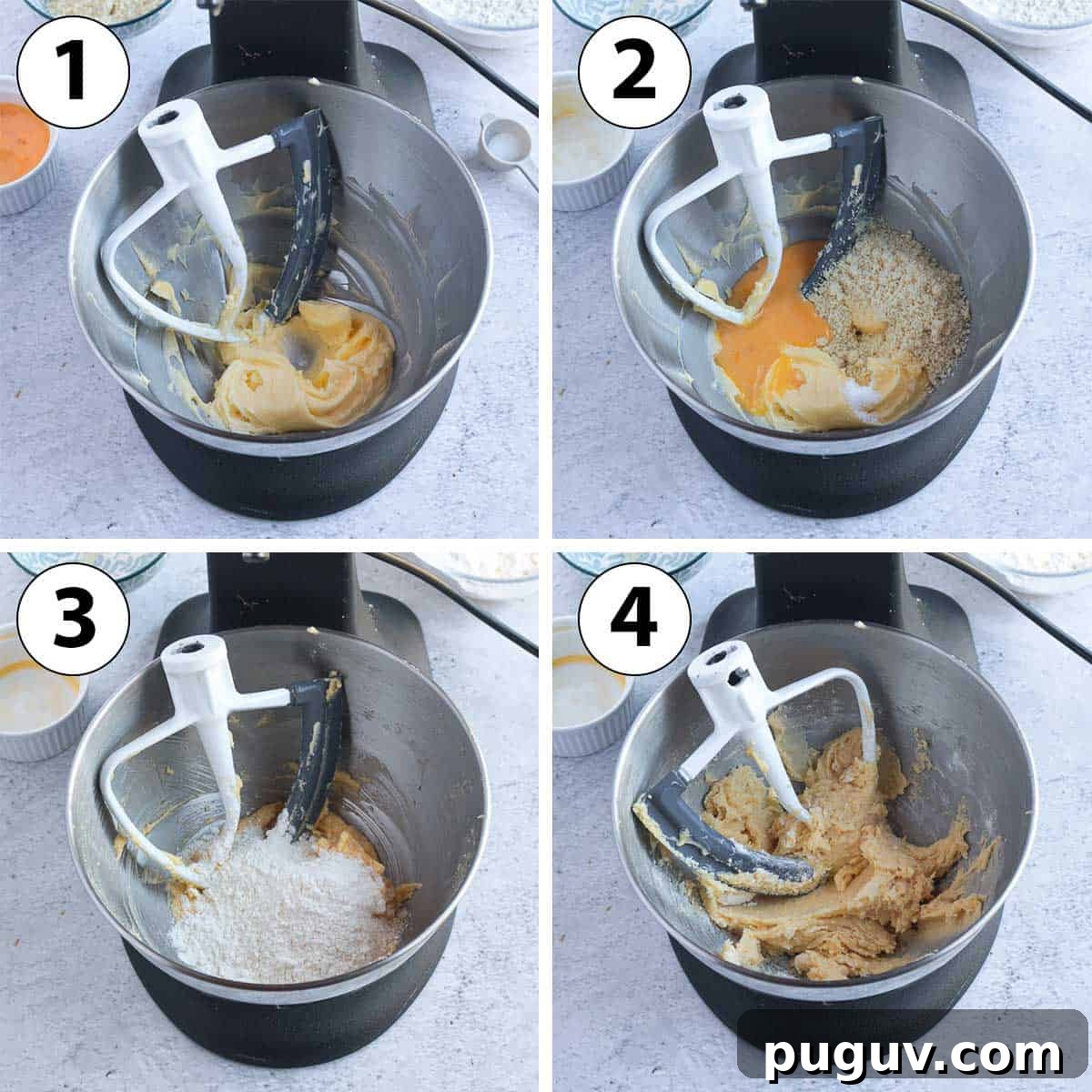
- Cream the soft butter and confectioner’s sugar until combined, then mix in the egg and almond meal.
- Add the flour and salt and mix on low speed just until combined — avoid overworking the dough.
- Divide the dough into two pieces and roll each between sheets of baking paper to about 2–3 mm thickness. Chill for at least 1 hour (or up to 24 hours); freezing briefly before baking helps keep the pastry cold.
- Use one sheet to cut the base for a 25 cm (10 in) pastry ring or a deep tart pan. Cut long strips from the second sheet to build the side walls, overlapping and pressing seams to avoid leaks. Trim excess pastry and chill again for at least 1 hour.
Custard Filling
- Preheat oven to 200°C / 390°F.
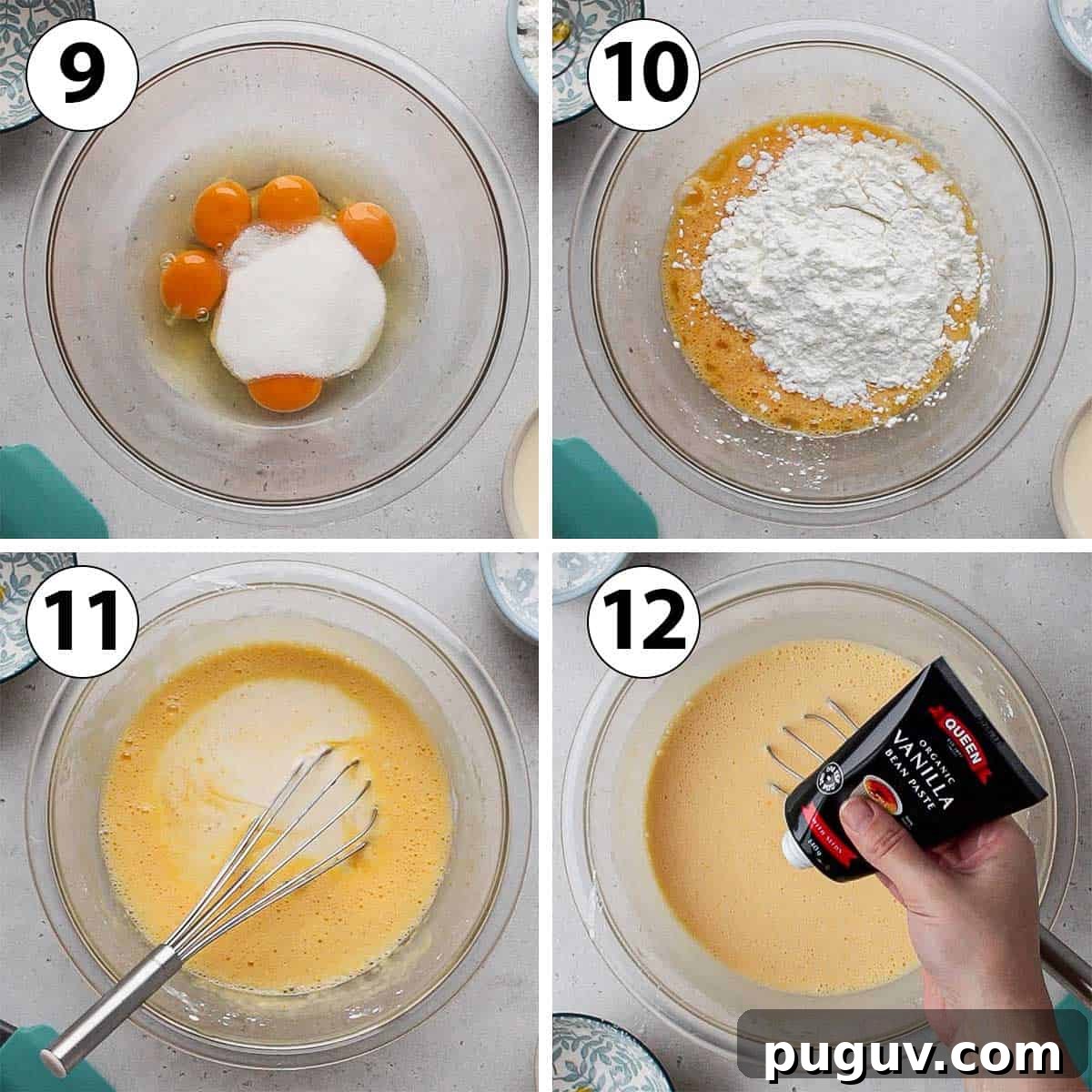
- In a heat-proof bowl whisk eggs and sugar until just combined. Whisk in sifted cornstarch, then add the cream and vanilla paste (or prepared vanilla-infused milk if using vanilla beans).
- Heat the milk until it just starts to simmer. Temper the egg mixture by slowly pouring hot milk into it while whisking continuously. Return the mixture to the pot and cook over low–medium-low heat, whisking constantly, until it thickens.
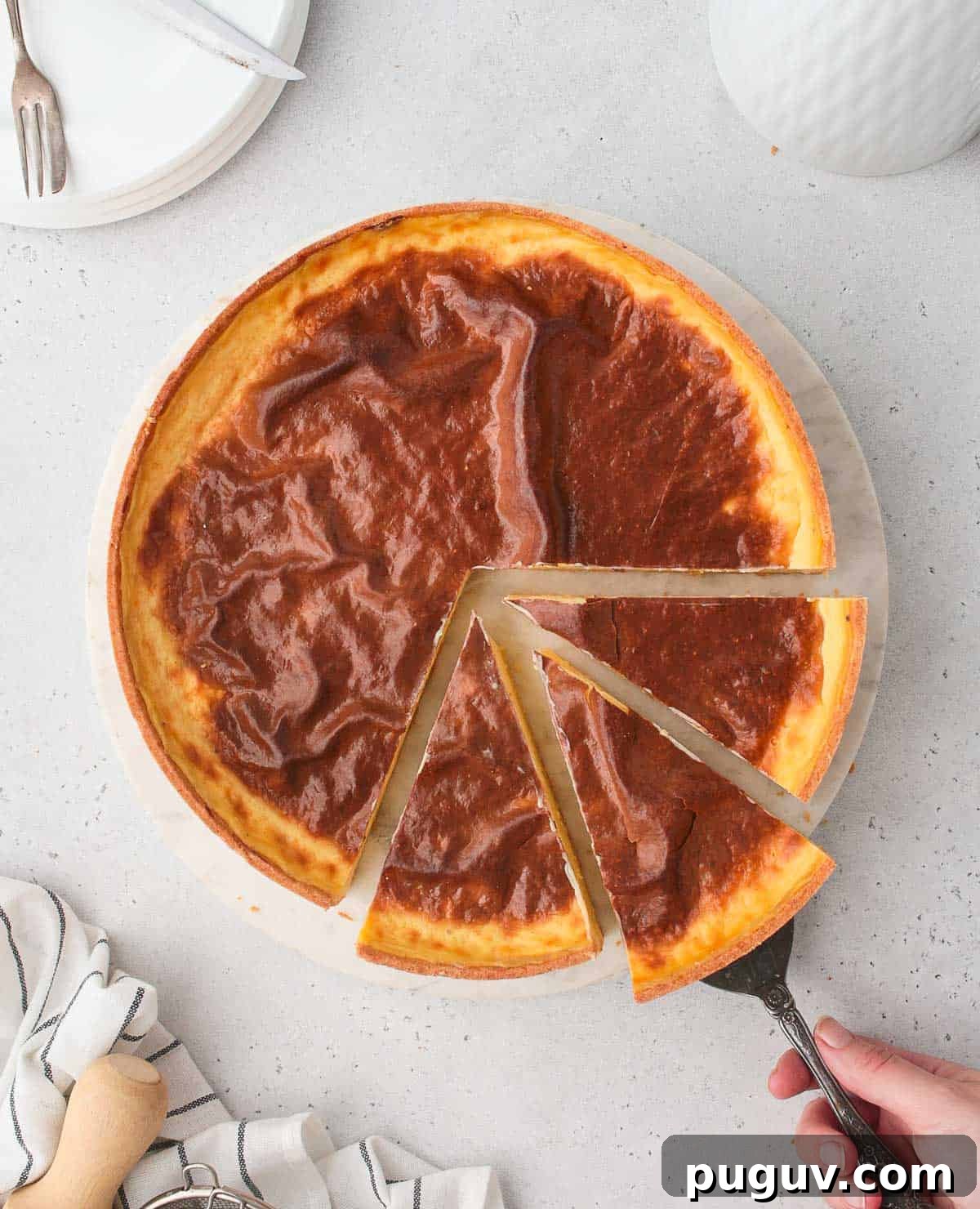
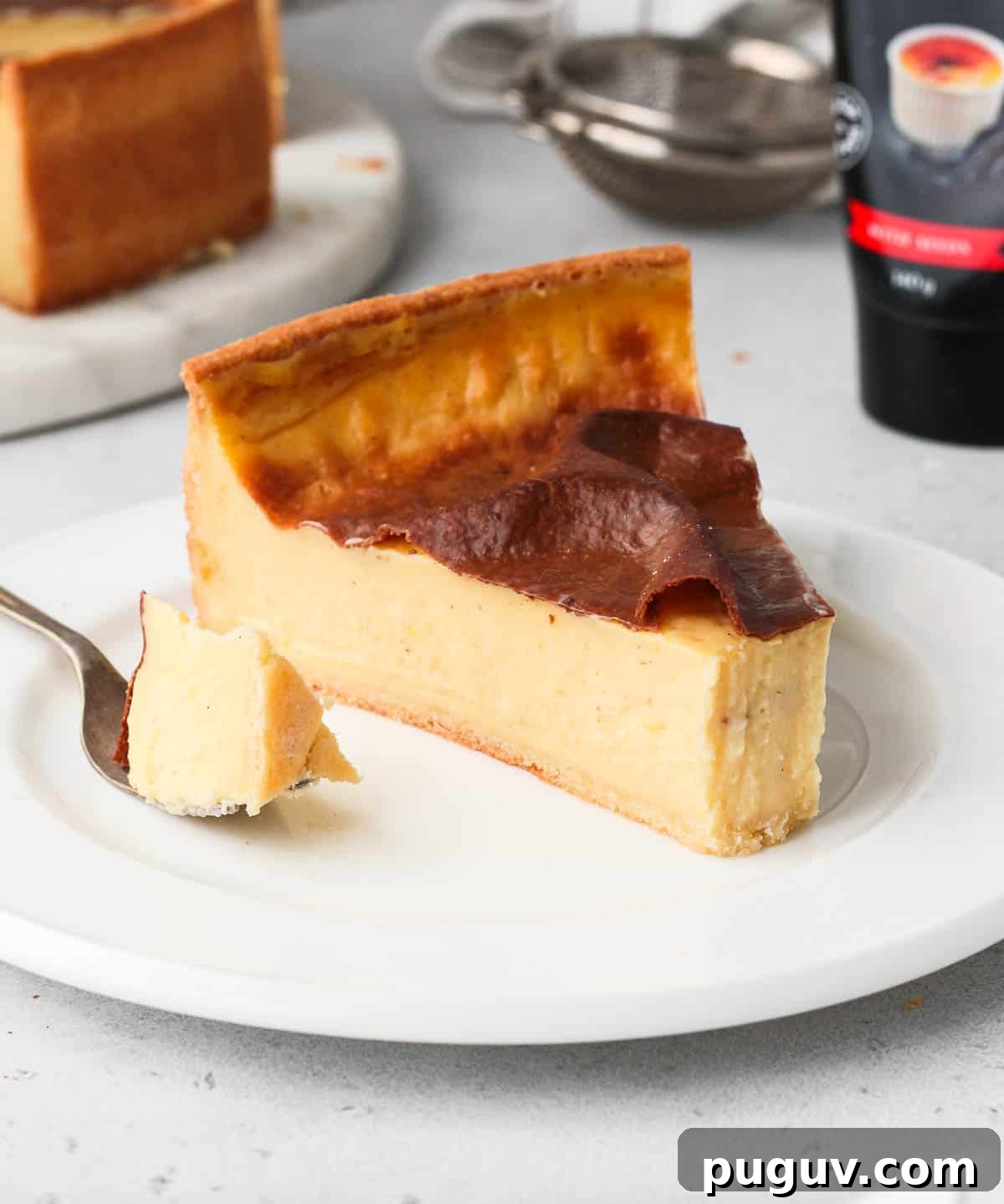
- Pour the hot custard into the chilled pastry shell. Reduce oven temperature to 180°C / 350°F and bake for about 50 minutes, until the custard surface develops a golden-brown skin. The center should still wobble slightly — it will set as it chills.
- Cool at room temperature for about 1 hour, then refrigerate for at least 3 hours, preferably overnight, before serving for the best texture.
Recipe FAQs
The French version is baked in a tart shell, while the Spanish flan (crème caramel) is a pudding-like custard usually baked in a water bath and often lacks cornstarch. Crème caramel is the French counterpart to the Spanish style.
Yes. Puff pastry is sometimes used, but a shortcrust is preferable here to ensure the base cooks fully without blind-baking.
Yes — store-bought shortcrust will work, though you may need multiple sheets depending on size.
Yes. The flan benefits from resting overnight in the fridge. The pastry can also be made ahead and refrigerated or frozen.
Tips & Troubleshooting
- Chill the pastry thoroughly. Resting relaxes gluten and firms the butter, preventing shrinkage and collapse in the oven.
- Avoid over-whisking the custard batter — too much air can cause the custard to rise and then collapse.
- If the custard becomes lumpy after cooking, whisk vigorously, pass through a sieve, or use an immersion blender on low speed to smooth it.
- Experiment with flavours: infuse milk with coffee, citrus zest, or add melted chocolate for variations.
Storing & Freezing
Store the baked flan in the refrigerator and allow it to rest as long as possible for the creamiest texture (overnight is ideal). It keeps for up to 3 days, best eaten within 24–48 hours. Freezing the assembled flan is not recommended; however, the pastry dough can be frozen for several months, either rolled between baking paper or lined in the pan.
More French Tarts
- Strawberry Custard Tart
- Chocolate Ganache Tart
- Orange Cream Tart
- Rhubarb Custard Tart
- Peach Galette
- French Apple Tart
- Baked Chocolate Tart
- Chocolate Raspberry Tart
Made this recipe? Leave a comment below and share a photo on Instagram @a.baking.journey!
Recipe
Ingredients
Sweet Shortcrust Pastry (Pâte Sucrée)
- 100 g unsalted butter, very soft
- 40 g confectioner’s (powdered) sugar
- 1 large egg, room temperature
- 40 g almond meal
- Pinch of fine table salt
- 200 g plain / all-purpose flour
Vanilla Custard
- 5 large eggs, room temperature
- 100 g caster sugar
- 100 g cornstarch, sifted
- 250 ml heavy / thickened cream (35% fat)
- 2 tsp vanilla paste or 2 fresh vanilla bean pods
- 1000 ml full cream / whole milk
Instructions
Sweet Shortcrust Pastry (Pâte Sucrée)
- Cream butter and confectioner’s sugar until just combined. Mix in the egg and almond meal.
- Add salt and flour; mix on low speed only until incorporated.
- Divide dough in two, roll each between baking paper to 2–3 mm thickness, and chill at least 1 hour.
- Cut one sheet to line the bottom of a 25 cm (10 in) pastry ring or deep tart pan. Cut long strips from the second sheet to form the sides, overlapping and pressing seams to seal. Chill again for at least 1 hour.
Vanilla Custard
- Preheat the oven to 200°C / 390°F.
- Whisk eggs and sugar in a heat-proof bowl until just combined. Whisk in sifted cornstarch, then add the cream and vanilla.
- Heat milk until it begins to simmer. If using vanilla beans, infuse seeds and pods in the milk, then remove pods before continuing.
- Temper the egg mixture by slowly whisking hot milk into it, then return the mixture to the pot and cook over low–medium-low heat, whisking constantly until thickened.
- Pour the custard into the chilled pastry shell. Lower oven to 180°C / 350°F and bake about 50 minutes, until the top forms a golden skin and the center still wobbles slightly.
- Cool at room temperature for about 1 hour, then refrigerate for at least 3 hours, preferably overnight, before slicing and serving.
Notes
General: For best accuracy, use grams and millilitres. A 25 cm x 5 cm pastry ring was used in this recipe; adjust bake time for other pan sizes.
- Roll pastry thin so you have enough to line the base and cut strips for the sides.
- Cut the pastry directly on the lined baking tray to avoid moving it.
- If using vanilla beans: split, scrape seeds into milk, add pods, heat, then cover and infuse for 20 minutes before reheating slightly and using.
- If the cooked custard is lumpy, whisk vigorously, pass through a fine sieve, or blend briefly with an immersion blender on low speed.
- The custard should wobble slightly when removed from the oven; it will firm up as it chills.
Nutrition (per serving)
Carbohydrates: 38 g |
Protein: 8 g |
Fat: 21 g