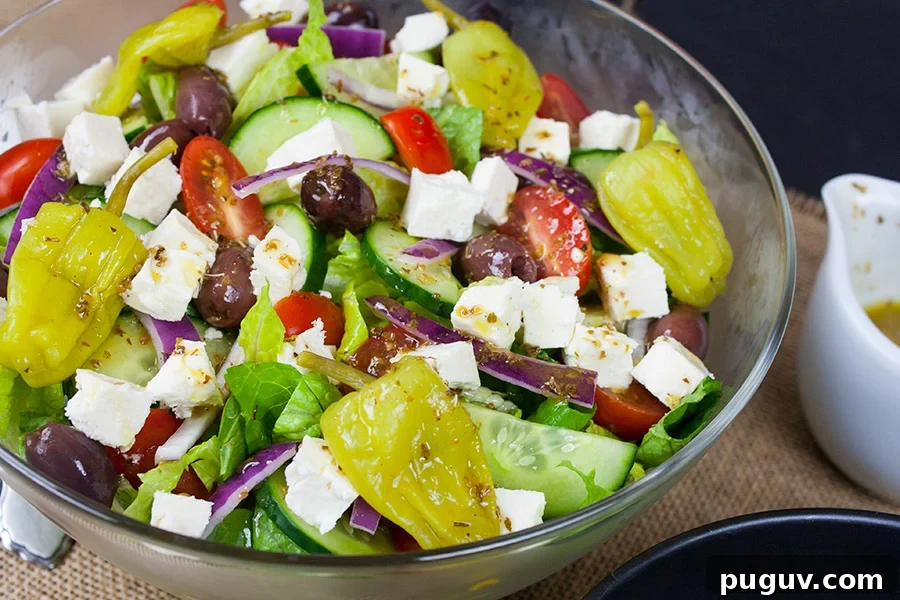
Homemade Greek salad can be on the table in about 10 minutes. Crisp, bright, and full of Mediterranean flavor, this easy salad is far better than most restaurant versions.
Why You’ll Love This
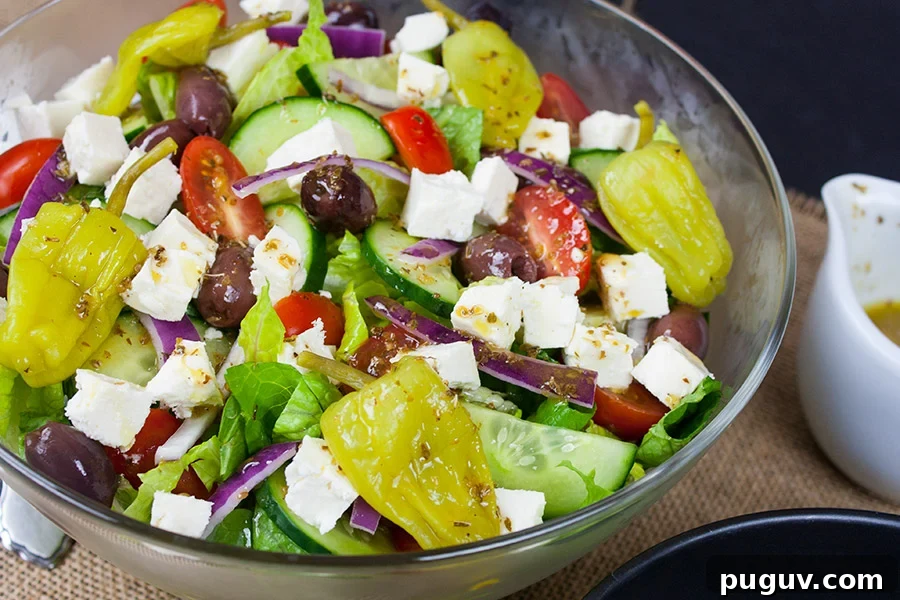
The typical restaurant Greek salad is often overdressed and soggy. Making it at home means fresher ingredients, better texture and a balanced dressing you control. This recipe is fast, straightforward, and yields a bright, flavorful salad every time.
A classic Greek salad features tomatoes, cucumbers, red onion, kalamata olives, and feta. This version adds romaine for crunch and skips the green bell pepper for a cleaner flavor profile. The homemade dressing—olive oil, red wine vinegar, lemon, garlic and oregano—gives an authentic, tangy finish.
Ingredients Needed
- Extra virgin olive oil – use a good-quality oil; it’s the base of the dressing.
- Red wine vinegar and fresh lemon juice – provide bright acidity to balance the oil.
- Garlic cloves – lightly smashed to infuse the dressing; mince if you prefer a stronger garlic presence.
- Dried oregano, kosher salt, and black pepper – the classic Greek seasoning trio.
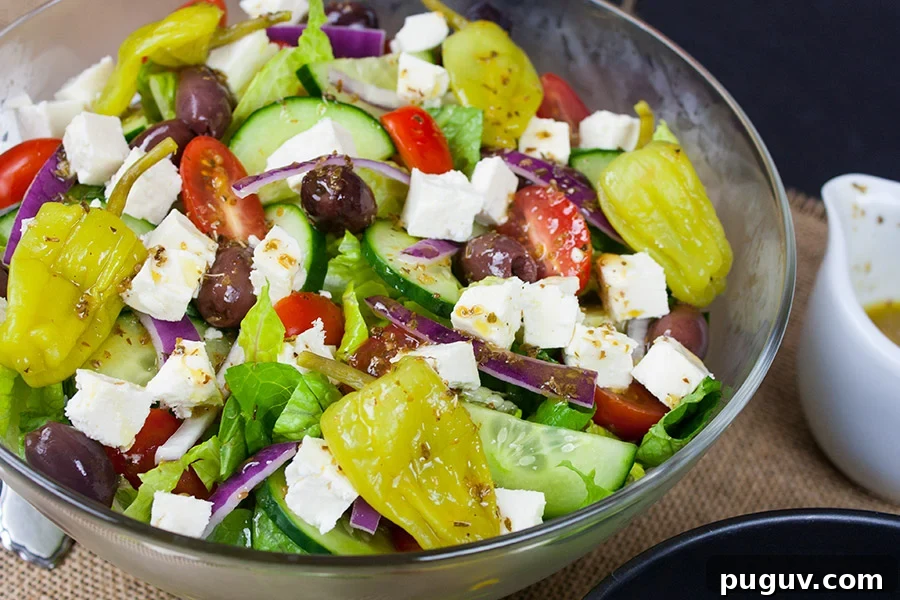
- Romaine lettuce, grape tomatoes, cucumber, red onion, kalamata olives, feta, and pepperoncini – the salad components for a fresh, satisfying dish.
How to Make the Dressing
Make the dressing first so the flavors can meld while you prep the vegetables. In a small jar or bowl combine the olive oil, red wine vinegar, lemon juice, smashed garlic, dried oregano, salt and pepper. Whisk or shake until combined. Let it rest while you cut the vegetables so the garlic and oregano infuse the oil.
Tip: keep the dressing in a sealed jar and shake it again before using if the ingredients separate.
Serving suggestion: portion individual bowls so everyone can add the amount of dressing they prefer. Chilling serving bowls keeps the salad crisp and cool.
How to Make the Salad
Roughly chop the romaine, thinly slice the cucumber and red onion, and halve the grape tomatoes. Quarter the onion rings so they separate into delicate layers. Halve the kalamata olives and either crumble or cut the feta into chunks—whichever you prefer.
In a large bowl combine the romaine, tomatoes, cucumber, red onion, olives, feta and pepperoncini. Pour the desired amount of dressing over the salad and gently toss to coat. Taste and add salt and pepper if needed, then serve immediately.
This salad works well as a main when paired with grilled chicken, shrimp, pork or fish, and also makes a bright side to any summer meal. It’s delicious with warm skillet bread or crusty toast for a complete plate.
What to Serve With Greek Salad
Greek salad is versatile: serve it as a light main for lunch, or as a side for grilled pork, chicken or fish. It also pairs nicely with Mediterranean mains like roasted lamb or baked fish, and complements grain-based dishes such as pilafs and pasta salads.
Tips
- Use high-quality extra-virgin olive oil—it’s the primary flavor in the dressing.
- Chill the serving bowl briefly to keep the salad crisp.
- Choose English or mini cucumbers for fewer seeds and a sweeter, crisper bite.
- Kalamata olives add briny depth; substitute black olives if needed, but the flavor will change.
- For a creamy version, whisk in 2–3 tablespoons of Greek yogurt and adjust salt to taste.
- Add grilled chicken, shrimp, or chickpeas to make the salad a protein-rich main.
FAQs
Assemble the salad just before serving to keep it crisp. You can make the dressing up to 2 days ahead and store it in a sealed jar; bring it to room temperature and shake before using. Wash and pre-cut the vegetables (except tomatoes) and store them separately in airtight containers for up to one day. Prepare tomatoes just before serving for best flavor.
Store dressing in the refrigerator in a sealed container. Because it contains olive oil, it may solidify when cold—bring it to room temperature or set the jar in warm water before using, then shake well to recombine.
Homemade Greek Salad Recipe
Print
Pin
Ingredients
Dressing:
- 1/2 cup extra-virgin olive oil
- 1/4 cup red wine vinegar
- 1 lemon, juiced
- 2 cloves garlic, smashed and peeled
- 2 tsp dried oregano
- 1/2 tsp kosher salt
- 1/4 tsp fresh ground black pepper
Salad:
- 1 large bunch romaine lettuce
- 4 oz grape tomatoes, halved
- 1 large cucumber, thinly sliced
- 1/2 medium red onion, thinly sliced
- 1/2 cup kalamata olives, halved
- 1/2 cup feta cheese, diced or crumbled
- 4 pepperoncini peppers
Instructions
Greek Dressing
- Combine all dressing ingredients in a small airtight jar or bowl. Shake or whisk until combined and set aside.
Salad
- Roughly chop the romaine and place it in a large, chilled bowl.
- Halve the grape tomatoes and add them to the bowl. Slice the cucumber and add it as well.
- Slice the red onion into thin rings, separate the layers and add to the salad.
- Halve the olives, add the feta, pour the desired amount of dressing over the salad, gently toss, add pepperoncini and serve immediately.
Notes
Nutrition
Carbohydrates: 11 g |
Protein: 5 g |
Fat: 34 g