I’ve mentioned a few times that I recently moved house. In my previous property I had only a small yard hemmed in by tall neighbouring houses and shaded for much of the day by a large tree. That limited sunlight meant my chilli plants grew slowly, so I relied on grow lights to give seedlings an early boost and to get plants up to a productive size in time for late-summer fruiting. To keep young plants warm and protected I also used inexpensive mini greenhouses, which helped extend the growing season in that restricted light and heat environment.
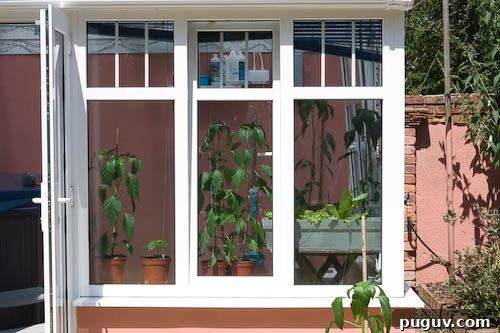
Fortunately my new garden is larger and faces south, so it receives substantially more direct sun. The property also has a summerhouse/conservatory, and I’ve taken over part of it for the plants. It’s quickly become known as the chilli house. Because the summerhouse is double glazed it retains heat far better than the cheap mini greenhouses I used previously, giving the plants a consistently warmer and more stable microclimate.
To avoid overheating on sunny days I keep ventilation in mind: I open the windows and keep the door ajar during warm daylight hours, and then close everything up overnight to retain warmth. This balance of ventilation and insulation helps prevent temperature spikes that could stress the plants while still providing the benefit of a warmer space than the open garden.
The difference in growth has been striking. With increased light levels and warmer daytime temperatures inside the chilli house, my plants have developed more vigorously than they did in the shaded yard. Rapid growth means they require more frequent watering—often twice a day during heatwaves—to keep the compost evenly moist without becoming waterlogged. I have found that regular checks in the morning and early evening prevent both drought stress and overwatering, and help me spot pests and nutrient issues quickly.
The extra space in the summerhouse is useful for more than just growth; it gives me room to organize trays and pots, to separate varieties, and to manage humidity and airflow more effectively. Good airflow reduces the risk of fungal problems and keeps foliage dry, while the sheltered environment still protects tender plants from cool nights and unpredictable weather.
One of my aims this year is to try to over-winter as many of the plants as possible, rather than starting all new ones from seed next spring. Keeping plants healthy through the colder months means gradually reducing water and feeding as growth slows, providing consistent yet cooler temperatures, and ensuring adequate light. The chilli house should make over-wintering much more feasible than it was in my old location, where limited light and cold nights made it difficult to carry plants through to the following season.
Overall, relocating to a sunnier garden with a warm, usable summerhouse has made a big difference. My chilli plants are responding well to the improved conditions: faster growth, stronger foliage, and the promise of an earlier and more generous harvest. I’ll continue to monitor ventilation, watering, and the plants’ general health to make the most of this space and to give my chillies the best chance of thriving now and through the colder months.