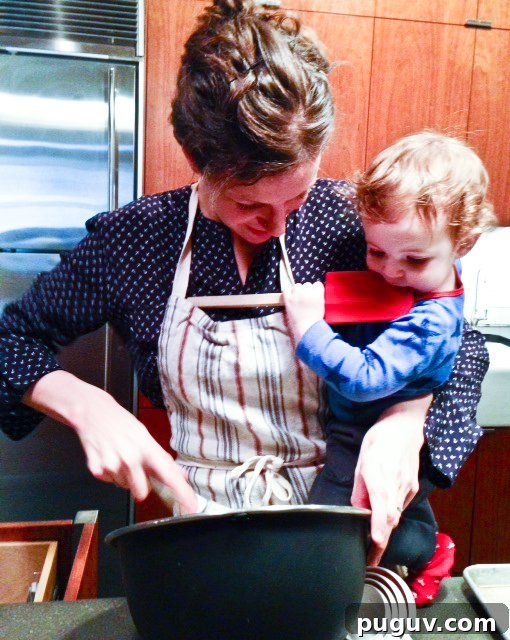
Aria Beth Sloss is a writer and the author of the novel Autobiography of Us, recently released in paperback.
She is married to Dan Barber, the celebrated chef of Blue Hill in New York City, where they live together. After I published a short Q&A with Dan, Aria kindly sent me an advance copy of her novel, which I enjoyed very much.
Last year Dan and Aria welcomed a little girl, and for my Parents Who Cook series I asked Aria how family life and cooking routines have changed. Below she shares her practical approach, her tips, and two recipes she regularly makes for her daughter.

Can you tell us a few words about your daughter? Age, name, temperament?

Edith turned one last month. From the very beginning she has shown a distinct personality: cheerful, opinionated, determined, and endlessly funny. She surprises them with how expressive and entertaining she is for someone so small.

Did having a child change the way you cook?

Honestly, the bigger change has been that I find myself cooking more often. I have always loved baking while my husband works as a chef, but a baby can’t live on sweets alone.
When Edith began solids around six months, we decided to skip purees and offer her modified versions of the meals we eat—less salt, no whole beans that could be a choking hazard, and so on. This approach, often called baby-led weaning, was nerve-wracking at first, but it has worked well for our family.
We found ourselves with this new member of the household, who couldn’t, turns out, survive on cake and cookies.
When Dan is home for dinner he tends to make dishes similar to what he always did: omelets, grain and roasted vegetable salads, tartines with soft cheese, vinegar, and fresh herbs. On nights he’s at the restaurant I rely on a handful of reliable dishes: lentil soup (surprisingly baby-friendly), simple omelets, avocado mash on toast, baked sweet potato with miso butter (recipe below), and quick pastas like soba with sesame and broccoli. I’ve also started baking with sprouted wheat flour to boost nutrition.
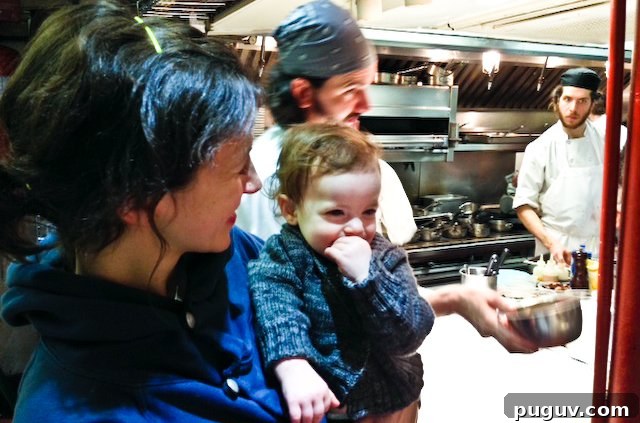
Aria and Edith in the kitchen at Blue Hill.

Do you remember what it was like to cook with a newborn? Any tips or saving grace for new parents going through that phase?

One practical tip: get help from friends and family. Surprisingly, when your partner is a chef people can feel intimidated about bringing meals, but generosity at that time is invaluable. Even store-bought items can be a comfort.
One tip would be: “don’t marry a chef!” If you do, everyone you know will be too intimidated to bring you the homemade meals you so desperately need.
Also, be kind to yourselves and embrace half-finished meals. Put a pot of beans to simmer if you can, and supplement with quick takeout rice or prepped vegetables. Leftover sandwiches can be cut into small rectangles and paired with sautéed greens for a simple meal.
We rarely eat meat, which helps when you need quick, nutritious meals. Eating lightly but nutritiously keeps you alert and better able to care for your baby.

Over time, have you developed staple dishes or strategies that make it possible to prepare a meal and keep the kid happy at the same time?

Planning ahead is essential. Avoid meals that require last-minute, time-consuming prep. Baked sweet potatoes—we prefer the dense Japanese variety—keep well in the fridge and reheat quickly, as do soups and stews.
We have the extra benefit of having a restaurant kitchen to take her to. She could watch the Blue Hill cooks for hours.
We keep Edith in the kitchen while we cook; she enjoys sitting on a hip or in a sling and watching the activity. Pots, pans, spatulas, and measuring cups make entertaining toys and help familiarize her with cooking. When she was tiny, the sling allowed her to nap while still being part of the kitchen atmosphere.
Having access to a restaurant kitchen is an extra advantage: the sights, sounds, and bustling energy captivate her, and often we have to coax her away.

Have you found ways to involve your daughter in the cooking process? If it’s too early to do that, how and when do you envision getting her involved?

Involvement begins with proximity. Even when a child isn’t actively helping, being close to the activity builds interest. I remember sitting in my highchair while my mother cooked; those afternoons taught me to love food.
I credit my own love of food to the many afternoons I spent sitting in my highchair while my mother chopped and pureed and sauteed.
At the restaurant she is exposed to more people, ingredients, and smells than at home, which is wonderful. I look forward to dressing her in a tiny chef’s coat one day. For now, I give her small, safe snacks to taste while I cook—avocado, sweet potato sticks, or a ripe pear—so she can participate through tasting.

As someone who’s passionate about food, can you talk about the joys and challenges of feeding your child, and how you plan to go about teaching her to be a happy, adventurous eater?

Watching Edith eat has been deeply rewarding. There is a simple joy in seeing a child happily eat something you prepared. To keep mealtimes pleasant, we decided early not to force food or revolve meals entirely around her preferences.
We’ve made a habit of trying to incorporate a wide range of ingredients and flavors in even the simplest dishes.
We let her feed herself from the start. It is messy, but giving her control has helped her enjoy eating and explore food independently. Full-coverage bibs make the process manageable.
We regularly include varied flavors and textures: steel-cut oats reheated with almond milk, cinnamon, and fresh ginger; savory yogurts like parsnip-flavored varieties from Dan’s restaurant; lentil soup with coconut and curry; avocado mash with a pinch of paprika; ricotta toast with parsley. We also bake muffins with sprouted whole wheat and use grains like buckwheat and emmer in soups. Children are often more open-minded about food than adults expect, so exposing them to a wide range of tastes helps them become adventurous eaters.
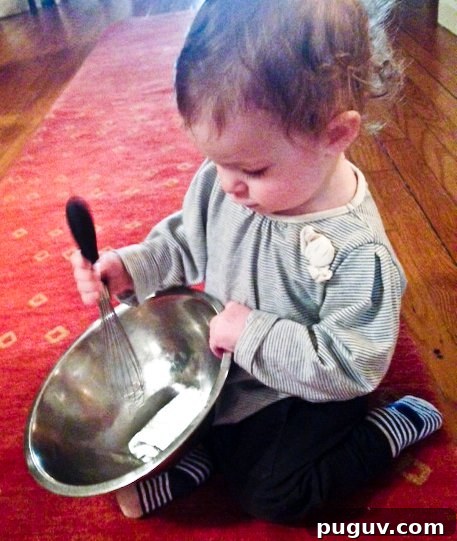
Aria’s Lentil Soup
Use small lentils such as black beluga if you have them, but any lentil will work. Cook lentils in a well-salted liquid—about two parts liquid to one part lentils—using stock if available or water otherwise. Quarter a yellow onion and add it to the pot while the lentils cook, then remove the onion once the lentils are tender if you prefer less onion flavor. At the end of cooking, finish with one of these variations: a pinch of cinnamon and curry, a small spoonful of harissa, or a splash of coconut milk and a sprinkle of red pepper flakes.
Aria’s Miso Sweet Potatoes
Roast Japanese sweet potatoes in the oven until tender. Peel and slice them; for small children cut into rectangular batons for easy handling. In a small sauté pan, melt a pat of butter until it foams, add a spoonful of white (mild) miso, and stir until it dissolves. Quickly sauté the sweet potato pieces in the miso butter, turning until they are well coated and warmed through.