When I was a child, every Saturday we drove to San Gimignano to visit my grandfather. We arrived in the afternoon and spent our time wandering the town’s narrow alleys and little streets, greeting friends and relatives. With such busy afternoons there was rarely time to prepare an elaborate dinner; most evenings were quick and simple meals.
My mother and aunt Silvana always stopped at Erminio’s grocery, a shop that sold a bit of everything, and picked up one or two packs of freshly sliced cold cuts. In the brown paper bag there was usually a soft, delicate cooked ham for me and my cousin, but also pork shoulder for cooking, Milanese salami, and the crumbly finocchiona or soppressata, and sometimes buristo. At home my grandfather would cut thick slices of bread and break them into small pieces for us; our dinner was a few slices of cold cut and a simple salad.
Cured meats are not only part of everyday life and childhood memories; they are central to a country’s food culture. Regional tastes in spices, methods of curing—salt or smoke depending on availability—and preferred cuts all shape the character of local charcuterie. It’s also fascinating to see cross-cultural parallels: many Tuscan salamis share surprising similarities with cured meats found in Czech, English, or French traditions.
The Italian Table Talk project starts the new year with a delicious focus on salumi, the world of cold cuts. January is traditionally pig-slaughtering month in many Italian villages: fresh sausages are made in abundance, while the best cuts are salted and cured for months or even years. Emiko writes about lardo di Colonnata, Valeria cooks spaghetti alla gricia with guanciale, and Jasmine explores Jewish culinary traditions and how they intersect with these products.
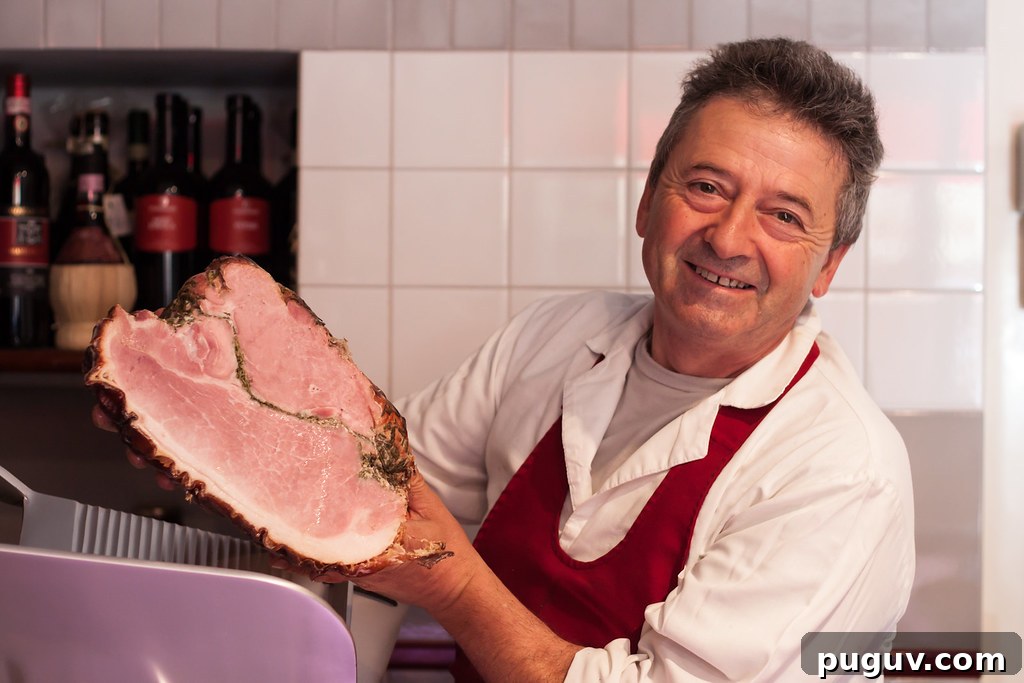
When I need first-hand knowledge about fresh and cured meat and local customs, I always visit Luciano, our town butcher. He’s the one who knows how to choose a good slice of Chianina beef—insist on Chianina, never mention Argentine Angus—and who supplies local salami and free-range chickens raised nearby. I arrived with questions and left entertained by his witty remarks while he sliced a T-bone and pounded a chicken breast.
One of Colle Val d’Elsa’s most typical cold cuts is what locals call the boiled cheek. Elsewhere pork cheek is usually cured and made into guanciale—wonderful with pasta—but in my town it is typically boiled and then seasoned with salt, pepper, minced garlic and nutmeg. Ask for boiled cheek and people will instantly place you: it’s a product very specific to Colle Val d’Elsa. Go ten kilometers away and a butcher will look puzzled if you ask for it.
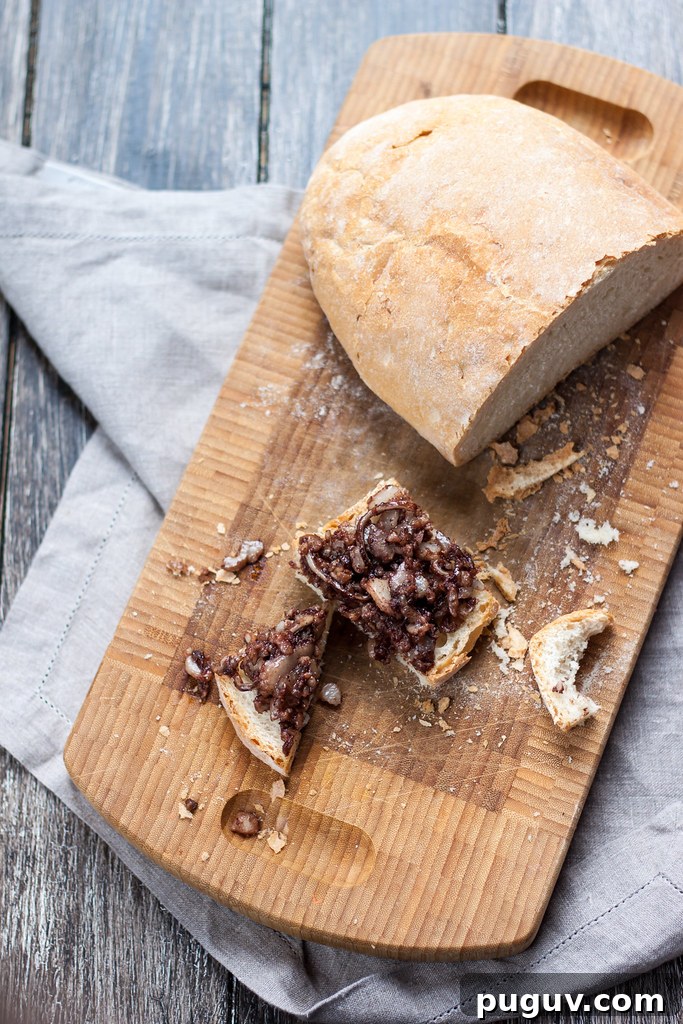
Another old-fashioned, well-loved local sausage is buristo. The name has German roots and recalls the word wurst. Buristo is popular in Siena and surrounding areas and is a rustic sausage made from parts of the pig’s head boiled with lemon and orange peel, sage, garlic, salt and pepper, then mixed with blood and fat. Some versions include pine nuts and raisins. Descriptions like this can make buristo sound unappealing, but as a child taught by my grandfather Remigio, I never turned down a slice of buristo with crusty bread. That’s how many of us in Tuscany grew up.
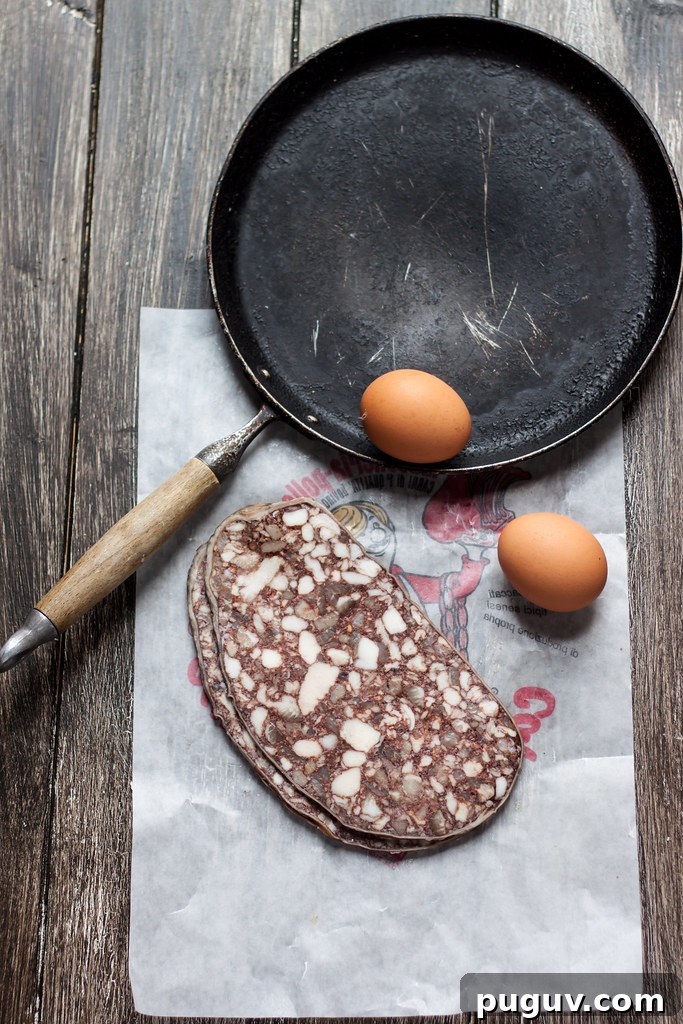
I used to eat buristo simply with Tuscan bread until Luciano showed me a careful way to cook it as part of a typical desìna—the name farmers once used for a hearty midday meal—that could easily double as breakfast.
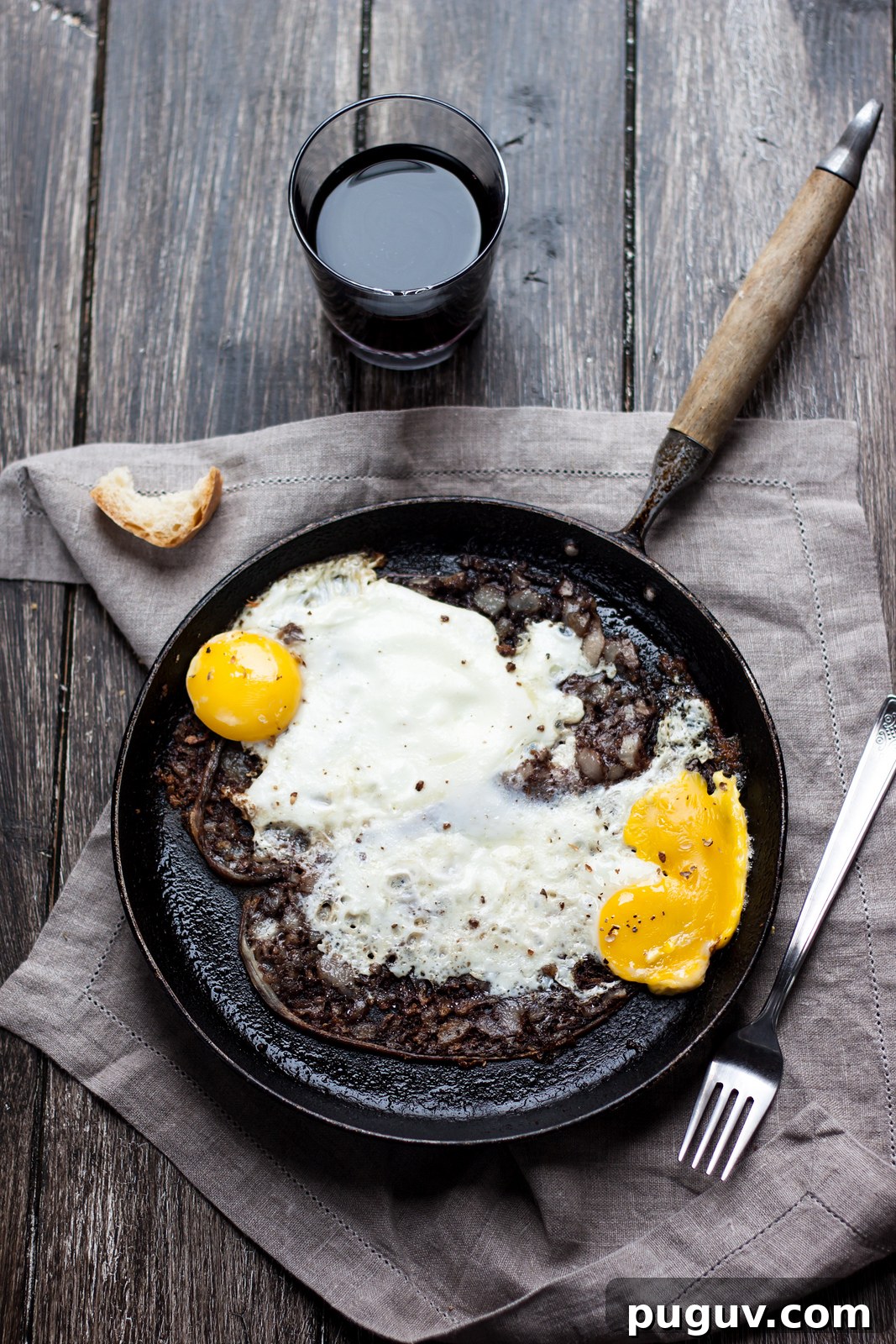
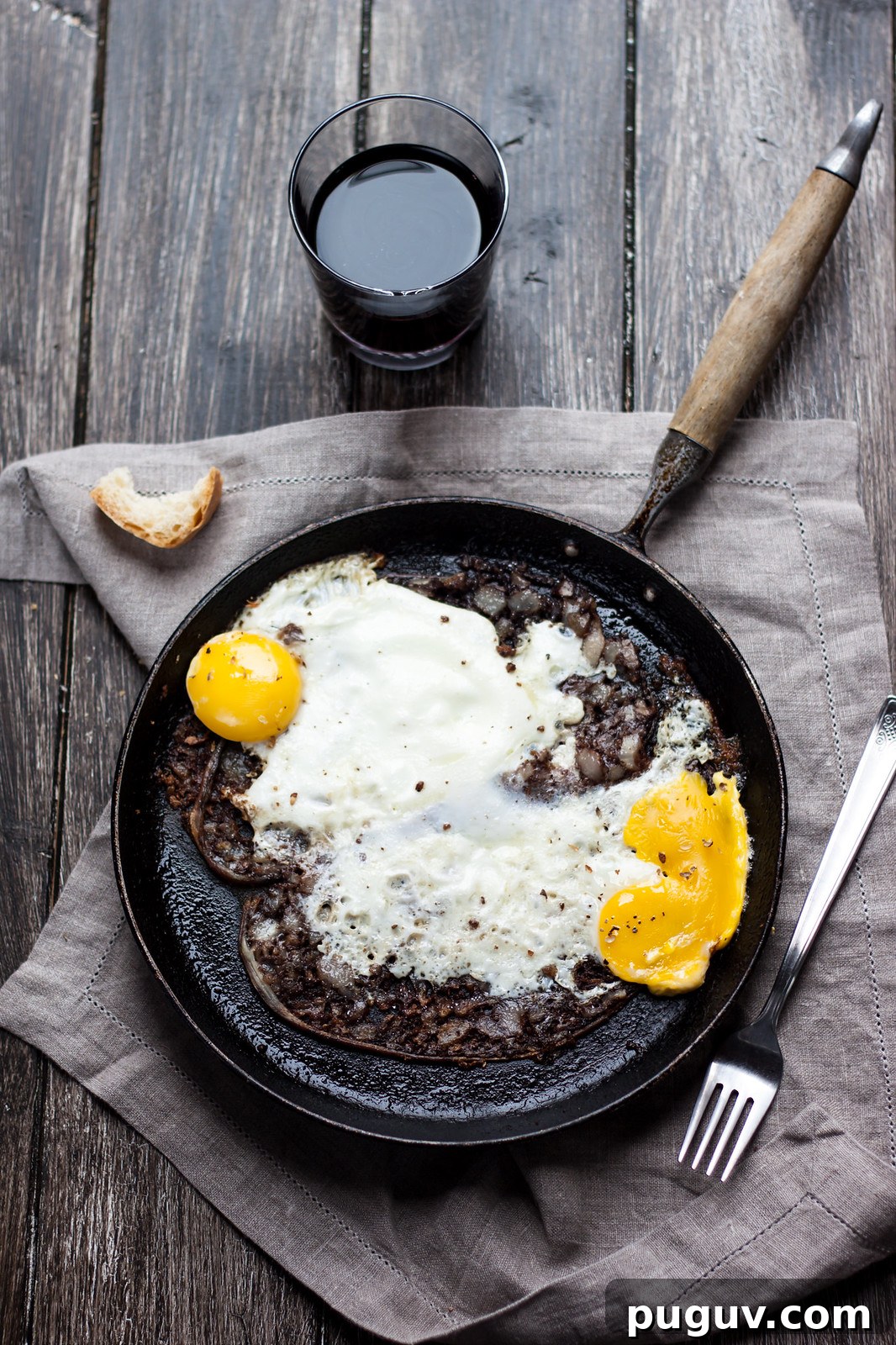
Begin by heating a non-stick pan. Lay slices or cubes of buristo in the hot pan; it will soften and release its rich flavors. Spoon the melted bits over bread and don’t be put off by its rustic appearance. To turn this from an appetizer into a substantial meal, add two eggs.
Fried eggs and buristo
Ingredients
- 2 slices of buristo (or any cured meat you prefer)
- 2 free-range eggs
- A dash of extra virgin olive oil
- Salt
- Freshly ground black pepper
- Tuscan bread
Instructions
- Brush the bottom of a non-stick frying pan with a little extra virgin olive oil. When the pan is hot, add the sliced buristo.
- As the buristo sizzles, crack the eggs and pour the whites into the pan, keeping the yolks protected in their shells so they don’t break.
- Cover the pan with a lid so the whites set. When they are cooked through and slightly crisp at the edges, gently add the yolks back into the pan and cook them to your preferred doneness. I like them lightly set on the surface but still runny inside.
- Remove from heat, season with salt and freshly ground pepper, and serve with plenty of rustic Tuscan bread.
Link love
To keep up with the Italian Table Talk contributors and their posts, follow their social accounts and blogs. They each bring personal perspectives on regional ingredients, recipes and traditions.
I’ve noticed similar products to buristo across Europe: Czech specialties, English black pudding, French boudin noir, and German Blutwurst or Rotwurst. Have you tried any of these? Which local charcuterie do you prefer? Share your favorites and join the conversation using the hashtag #ITabletalk on Twitter.