Out of Georgian dishes that have reached international recognition, khinkali dumplings stand out. Traditionally filled with minced beef, pork or lamb and aromatic spices, they might seem unlikely to suit vegetarians.
But Georgian cuisine has long accommodated meat-free options.
Thanks to the influence of the Georgian Orthodox Church and its many fasting days — when meat is avoided — vegetarian versions of classic dishes are common. Mushroom khinkali, in particular, are a traditional and widely enjoyed alternative to their meat-filled cousins.
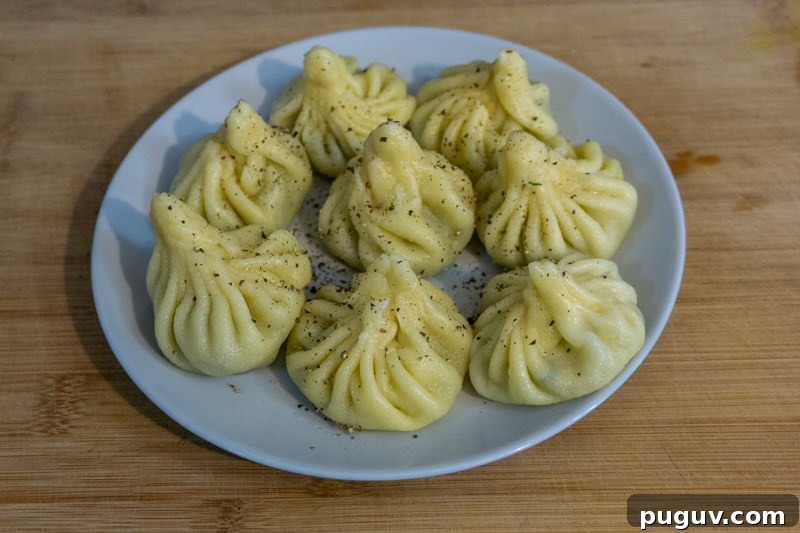
Georgia offers many vegetarian dishes — lobio, ojakhuri, ajapsandali and mushroom chashushuli among them — so visitors or home cooks who avoid meat will find plenty to enjoy.
How to Make Mushroom Khinkali
Making mushroom khinkali is straightforward and makes a rewarding kitchen project. Set aside an hour or two and enjoy the process.
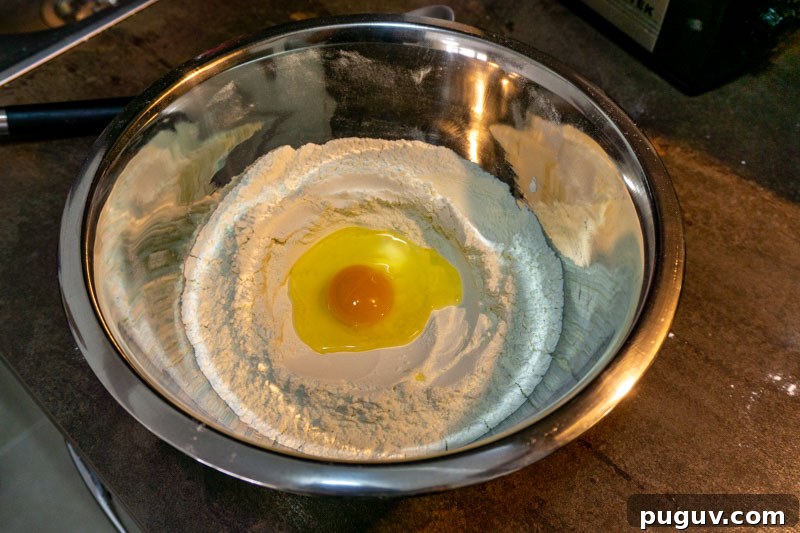
Begin with the dough. This simple dough works for all khinkali varieties. In a large bowl, whisk the salt into the flour. Make a well in the center, add one large egg, a tablespoon of neutral oil and 60 ml (¼ cup) of water. Mix until a shaggy dough forms, adding more water if needed to fully hydrate the flour.
Turn the dough onto a lightly floured surface and knead until smooth, elastic and supple, about 5–10 minutes. This develops enough gluten so the dumplings hold together during shaping and boiling.
Place the dough in an oiled bowl, cover with plastic wrap or a damp towel and rest at room temperature for at least 30 minutes. This relaxes the gluten and makes rolling much easier. The dough can be refrigerated for up to three days or frozen; bring it back to room temperature before rolling.
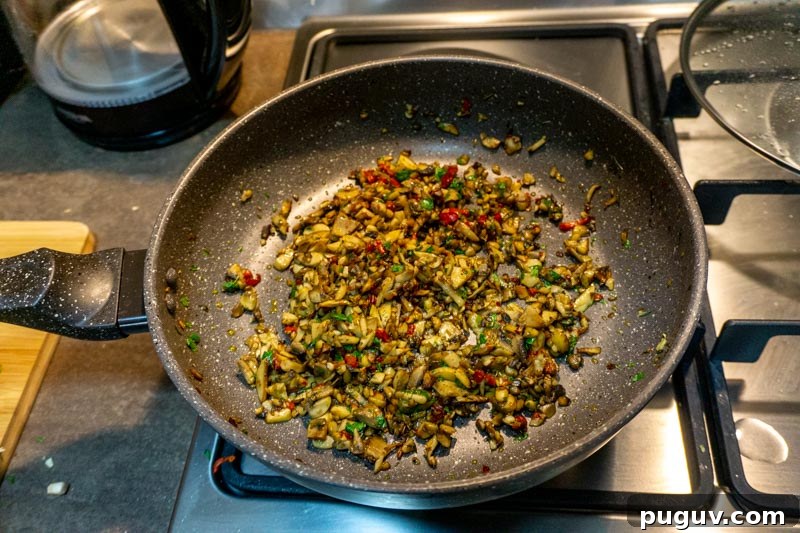
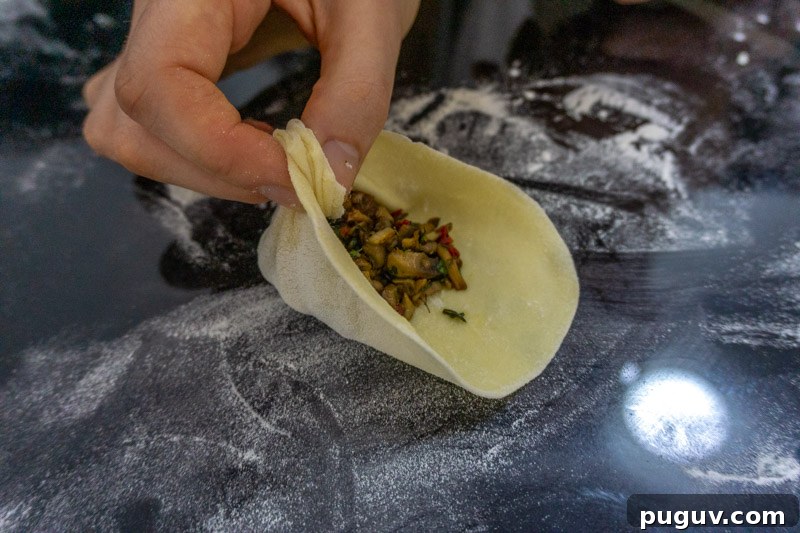
Next, prepare the mushroom filling. Use white button mushrooms or a more flavorful variety if you prefer. Finely dice about 500 g (1 lb) of mushrooms. Heat 1 tablespoon of neutral oil in a large sauté pan over medium heat, add the mushrooms with a generous pinch of salt, cover and cook until browned and reduced by roughly half, stirring occasionally (5–10 minutes).
Reduce the heat to medium-low and add minced garlic, ground coriander, dried savory (or thyme as a substitute) and minced mild red chili (or ½ tsp red chili flakes). Cook briefly until the spices are fragrant and the flavors meld. Remove from the heat and stir in roughly 3 tablespoons chopped fresh cilantro. Taste and adjust seasoning.
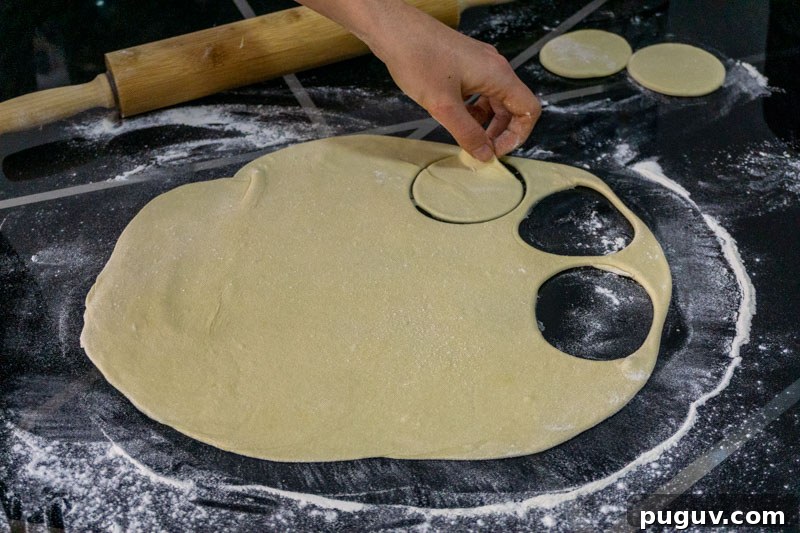
Forming khinkali takes a little practice but is easier than it looks. Roll the rested dough on a lightly floured surface to about 3 mm (⅛ in) thick. Use an 8 cm (3½ in) cutter or a drinking glass to cut rounds. Re-roll scraps if needed, letting the dough rest briefly if it becomes resistant.
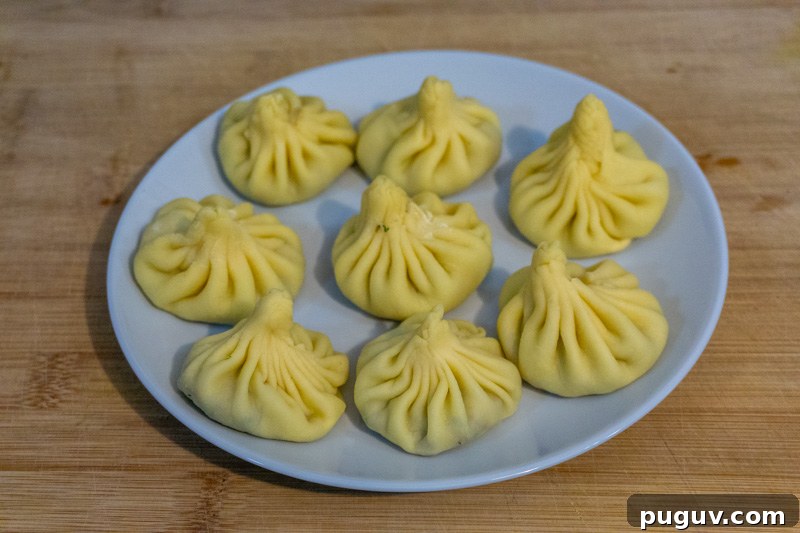
Thin the rounds further to about 1–2 mm thickness. Place roughly one tablespoon of filling in the center of each round. Pick up the edge of the dough furthest from you between your thumb and forefinger of both hands, fold and pinch repeatedly while rotating the dumpling until all edges are gathered. Twist or pinch the top to seal completely. Set finished khinkali aside on a lightly floured surface.
Bring about 2 litres (2 quarts) of salted water to a rolling boil. Lower khinkali into the water using a spider or slotted spoon and cook mushroom khinkali for 6–8 minutes, until cooked through and steaming. Remove with a spider or slotted spoon and serve immediately with cracked black pepper.
How to Eat Your Khinkali
Khinkali are casual finger food — no cutlery needed. Pick up a dumpling by its twisted top (this serves as a handle). Take a small bite at the base to sip any juices inside, then continue eating toward the top. The sealed top is typically not eaten because it can remain doughy; discard it when finished.
These mushroom khinkali may contain less broth than meat versions, but they are still rich in flavor and immensely satisfying.

Mushroom Khinkali: Vegetarian Georgian Dumplings
Ingredients
Dough
- 300 g (2½ cups) plain (all-purpose) flour
- 6 g (1 tsp) salt
- 1 egg
- 1 tbsp neutral oil
- 60-120 ml (¼-½ cup) water
Filling
- 500 g (1 lb) mushrooms chopped
- 3 cloves garlic minced
- ½ tsp ground coriander seed
- ½ tsp dried savory (or thyme)
- 1-2 mild red chilies minced (or ½ tsp red chili flakes)
- 3 tbsp fresh cilantro (coriander) chopped
Instructions
Dough
-
Combine flour and salt in a large bowl. Make a well, crack in the egg, add oil and 60 ml (¼ cup) water and mix until a shaggy dough forms. Add more water if needed.
-
Knead the dough on a lightly floured surface until smooth and elastic, about 5–10 minutes. Place in an oiled bowl, cover and rest for at least 30 minutes.
Filling
-
Heat 1 tablespoon neutral oil in a large pan over medium heat. Add mushrooms and a generous pinch of salt. Cover and cook until browned and reduced, 5–10 minutes.
-
Reduce heat to medium-low. Add garlic, coriander, savory (or thyme) and chili. Cook until the mixture reduces and the flavors meld, a couple minutes. Remove from heat and stir in chopped cilantro. Transfer to a bowl and let cool slightly.
Forming & Cooking
-
Roll the rested dough to 3 mm (⅛ in) thickness. Cut 20 rounds with an 8 cm (3½ in) cutter. Thin each round to about 1–2 mm.
-
Place ~1 tablespoon filling in each round. Fold and pinch the edges in a circular motion to form pleats, then twist the top to seal. Repeat for all dumplings.
-
Bring 2 litres (2 quarts) salted water to a boil. Lower khinkali in and cook mushroom khinkali 6–8 minutes. Remove and serve immediately with cracked black pepper.
Notes
You can use ½ tsp red chili flakes instead of fresh chilies.
Raw khinkali freeze well. Freeze on a tray first, then transfer to a container. Cook from frozen, adding a couple of minutes to the cooking time. Use within three months.
Nutrition
This recipe is flavorful and surprisingly easy to make. Perfect for vegetarians or those seeking more plant-based options, these Georgian dumplings are sure to be a hit.
Want to try a vegetarian khinkali or have questions? Leave a comment to share your experience.