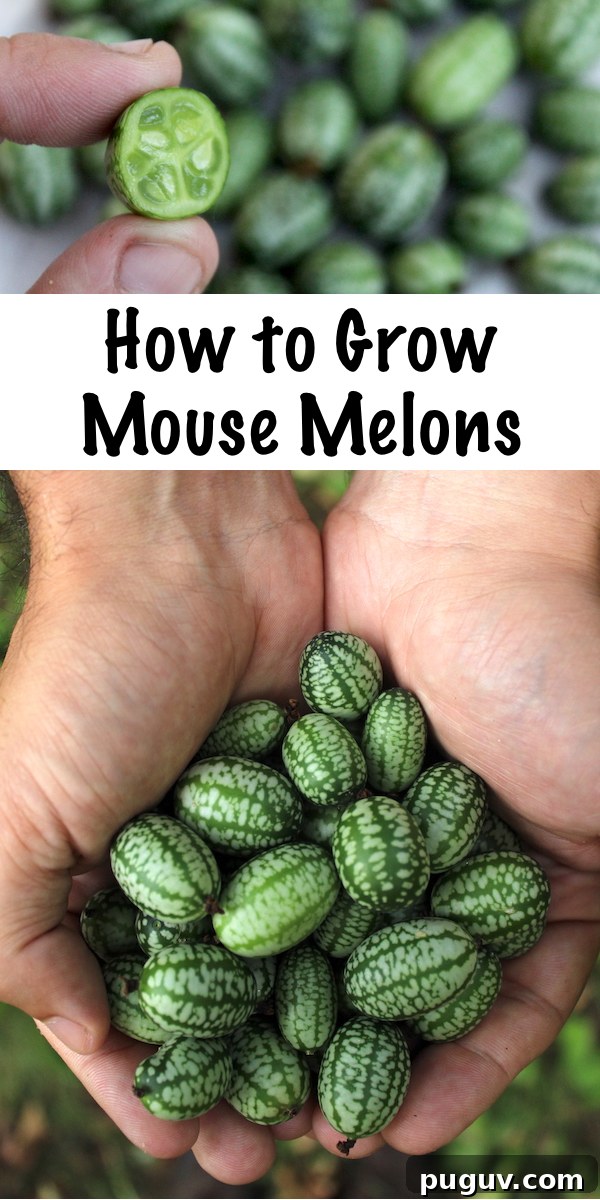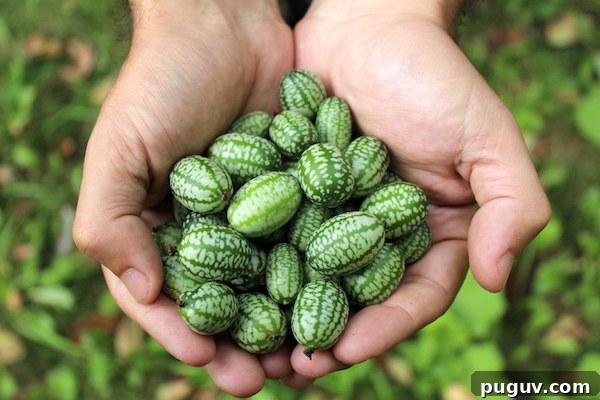
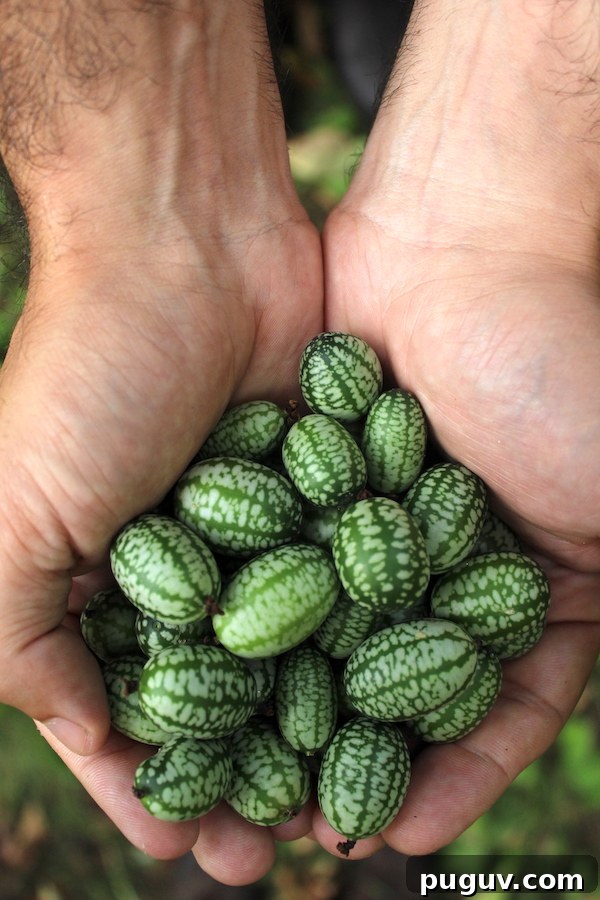
Walking through the farmers market, it’s hard not to pause at the tiny baskets of cucamelons. Their miniature, watermelon-like appearance draws you in, but these mouse melons are more than a novelty—they’re delicious. Fresh cucamelons taste like a crisp cucumber brightened by a hint of lime, and because they’re small enough to pop in your mouth straight from the garden, growing them is a rewarding use of space.
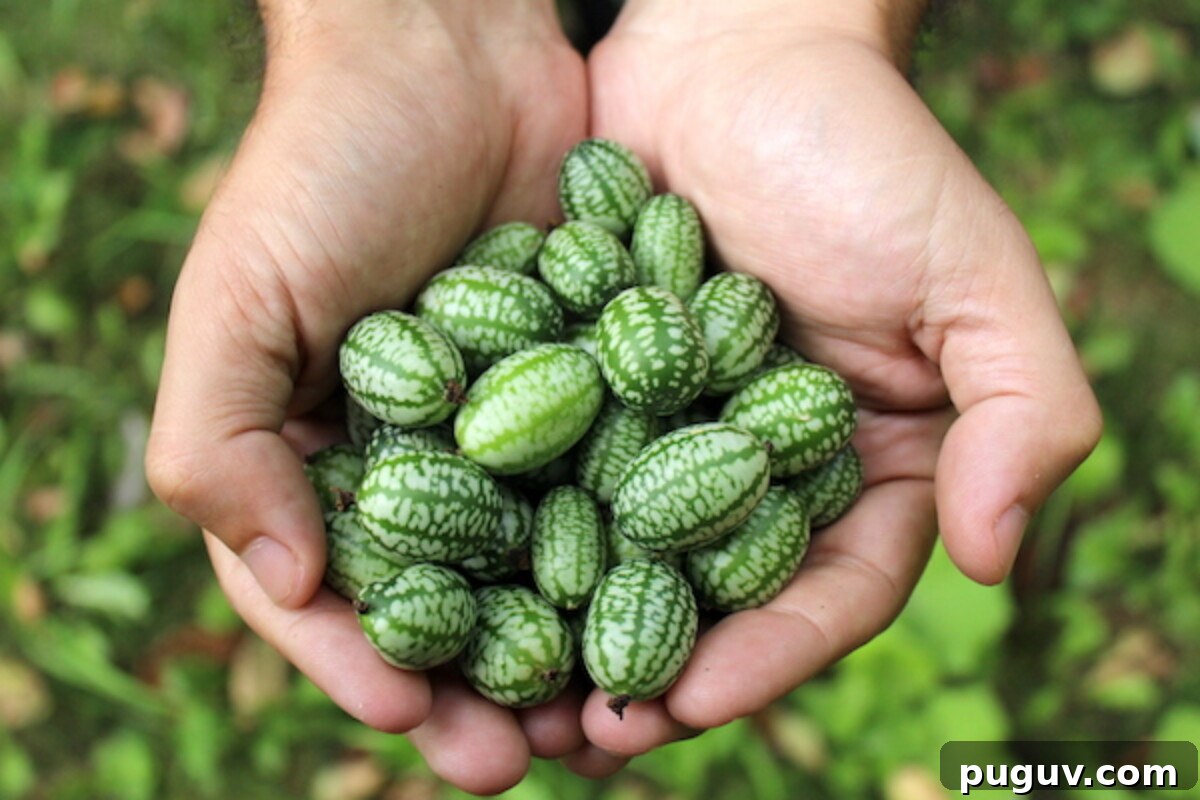
What are Cucamelons?
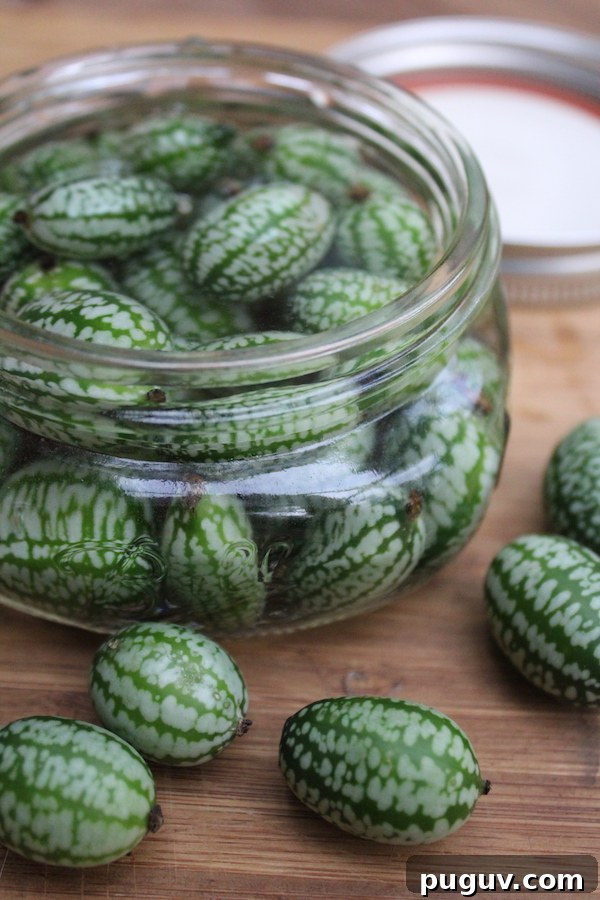
Cucamelons resemble tiny 1-inch watermelons, which can make you think they’re a miniature cross between cucumber and melon. In reality, they’re a distinct species in the cucumber family: Melothria scabra. They don’t cross-pollinate with common cucumbers or melons.
Native to Mexico and Central America, cucamelons have long been cultivated there under names like pepquinos (little cucumbers) and sandiita (little watermelons). Today they’re also called mouse melon, Mexican sour gherkin, Mexican miniature watermelon, or Mexican sour cucumber.
How do Cucamelons Taste?
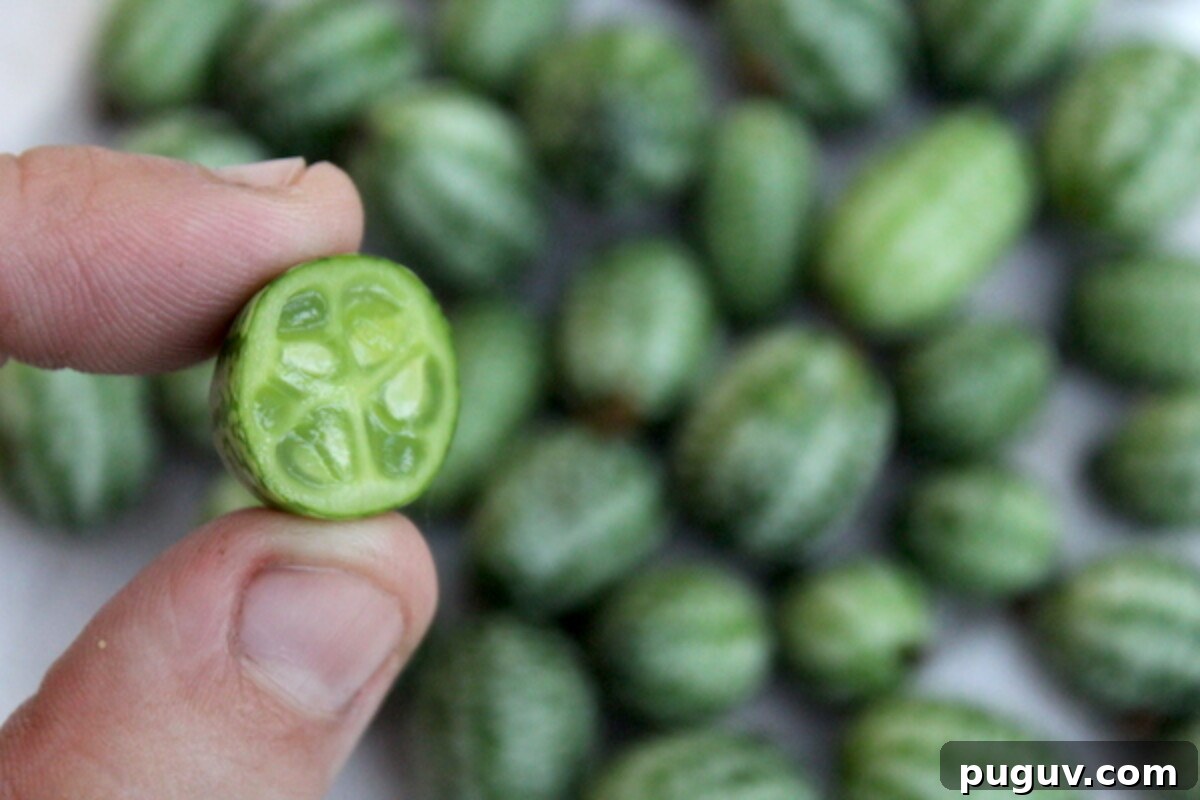
Despite names suggesting sourness, cucamelons are pleasantly mild rather than sharply sour. They offer a fresh, crisp cucumber flavor with a subtle lime-like tang that feels especially refreshing in summer. Inside, they contain cucumber-like flesh and tiny seeds—no red watermelon interior—so they eat and feel like a miniature cucumber.
How to Grow Cucamelons
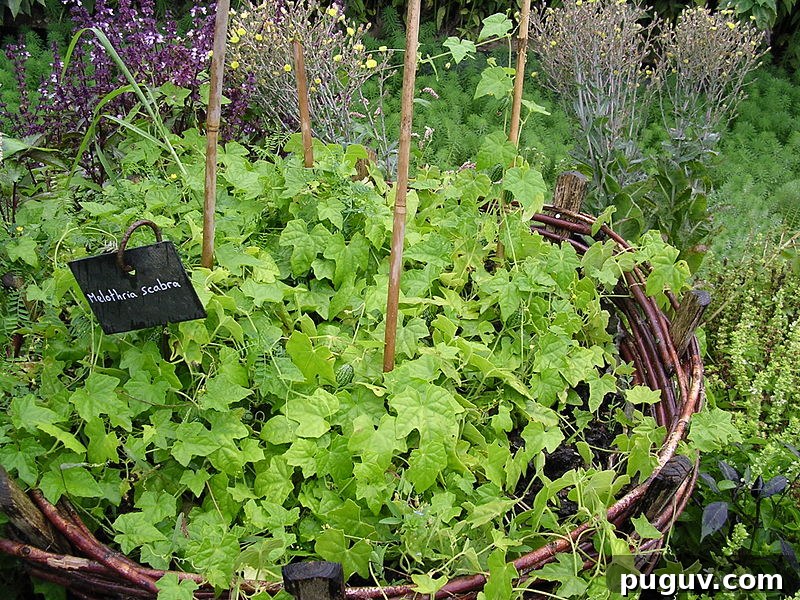
Cucamelons begin as slow, delicate seedlings but eventually form vigorous, sprawling vines. They prefer full sun and warm soil and will readily climb a tall trellis in hot weather.
Starting Cucamelon Seeds Indoors
Start seeds about four weeks before the last frost. Cucamelons, like other cucurbits, don’t transplant well if left to mature too long indoors, so give them a head start but avoid overgrowing them. Plant seeds 1/4 to 1/2 inch deep; germination typically takes 7–14 days, faster in warm soil around 70–75°F. In cooler seed-starting areas, a seedling heat mat helps maintain consistent warmth.
In the warmest climates, you can sow seeds outdoors once soil temperatures exceed 70°F. Direct seeding is generally practical only where cucamelons act as perennials (USDA zones 7–10).
Transplanting Cucamelon Plants
Harden off seedlings after the last frost, then transplant them into well-drained garden soil. Space plants about 12 inches apart and provide a tall trellis for vertical growth. Trellising improves light exposure, keeps fruit off the soil, and makes harvesting easier. In long, warm seasons vines can exceed 10 feet, so allow ample vertical space.
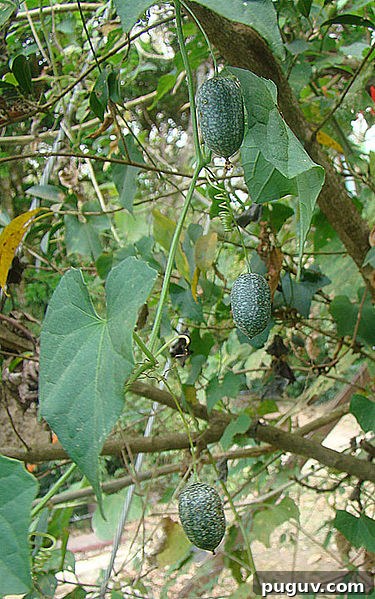
Growing Cucamelon Plants
Once established, cucamelons are low-maintenance. They are light-to-medium feeders and typically don’t need extra fertilizer unless soil is very poor. The plants produce underground tubers, so good drainage is essential to prevent tuber rot. If your soil is heavy, amend it lightly with sand or perlite to improve drainage.
Cucamelons appreciate about 1 inch of water per week during the growing season. In hot, dry climates, mulch can help retain soil moisture; water as needed to keep plants healthy.
Cucamelon Days to Maturity
Open-pollinated varieties vary, but cucamelons generally reach harvest in 65–75 days when grown in warm, sunny conditions. They perform best in hot, relatively dry summers but adapt to cooler, wetter regions—yields and timing may be reduced. In colder climates, treat them as tender perennials by lifting tubers in fall for winter storage.
Growing Cucamelons as Perennials
Cucamelons produce tubers that can overwinter in mild climates. They’re hardy outdoors only to about zone 7. In zones 7–10, mulch plants for winter dormancy and they should return the next season.
In colder areas, lift tubers after the vines die back from frost. Gently dig up the 4–6 inch tubers without scrubbing off soil—store them in slightly moist potting mix in a cool, frost-free place (root cellar, basement, or unheated garage). Keep tubers from touching and provide about 2 inches of soil above and below each one. In spring, pot tubers 6–8 weeks before the last frost to get a head start on the season, then harden off before planting out.
Growing Cucamelons in Containers
Containers work well for small spaces and cold climates, since you can bring pots indoors before hard freezes. Allow about 12 inches of space per plant in a container; large pots are usually needed if growing multiple plants. Provide a sturdy trellis in the pot and the vines will climb and fruit profusely.
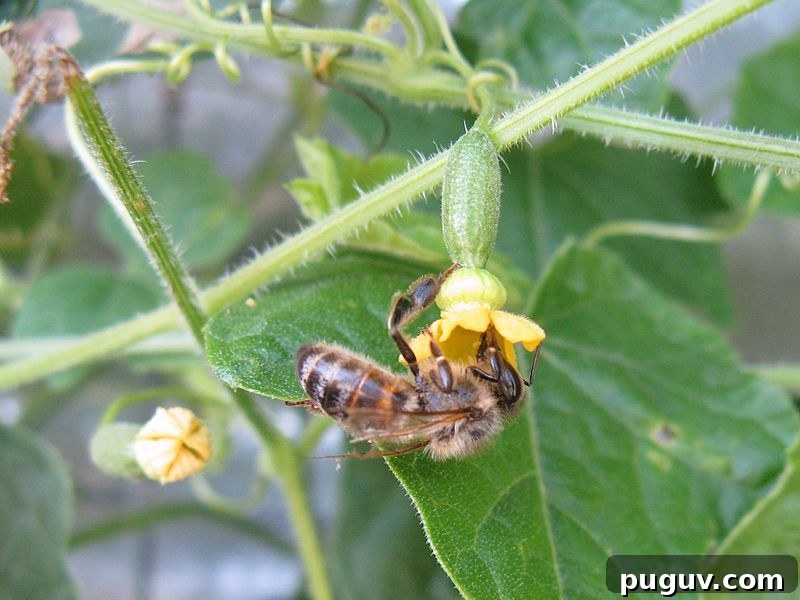
Cucamelon Plant Pollination
Cucamelons produce separate male and female flowers and rely on insects—chiefly bees—for pollination. To encourage reliable fruit set, provide habitat and plantings that support pollinators. If pollinators are scarce, hand pollination is possible: transfer pollen from male to female flowers using a small brush or cotton swab. Female flowers are identifiable by a tiny immature fruit at the base; male flowers grow on longer stems.
Where to Buy Cucamelon Seeds
Cucamelon seedlings are uncommon in garden centers, so seeds are the usual way to start. Many seed catalogs and online seed suppliers offer cucamelon seeds; germination rates are generally good for reputable varieties. If you know someone growing them, tubers can also be shared locally.
How to Harvest & Store Cucamelons
Harvest cucamelons like small cucumbers— they pop off the vine easily. Despite their size, they’re fairly sturdy and resist bruising. At room temperature they’ll keep for some time before drying and shriveling; when they lose crunch they’re still flavorful and can be used for infusing spirits or cooking.
One favorite use is cucamelon-infused gin, which complements their cucumber-and-lime profile beautifully.

How to Use Cucamelons
Cucamelons are most often enjoyed fresh—straight from the vine or in salads. They also hold up to quick cooking, adding crunch when stirred in at the end of a stir-fry. Because they’re a cucumber relative, they make excellent pickles: use any standard dill-pickle or quick refrigerator-pickle recipe and substitute cucamelons for pickling cucumbers.
Other ideas include salsa, marinated salad, sunomono-style dishes, and bruschetta topped with chopped cucamelons. Their small size and bright flavor make them versatile in appetizers, garnishes, and preserved recipes.
Have you grown cucamelons before? Consider trying fresh snacking, pickling, or infusing—these tiny fruits are an easy way to add brightness to the garden and the kitchen.