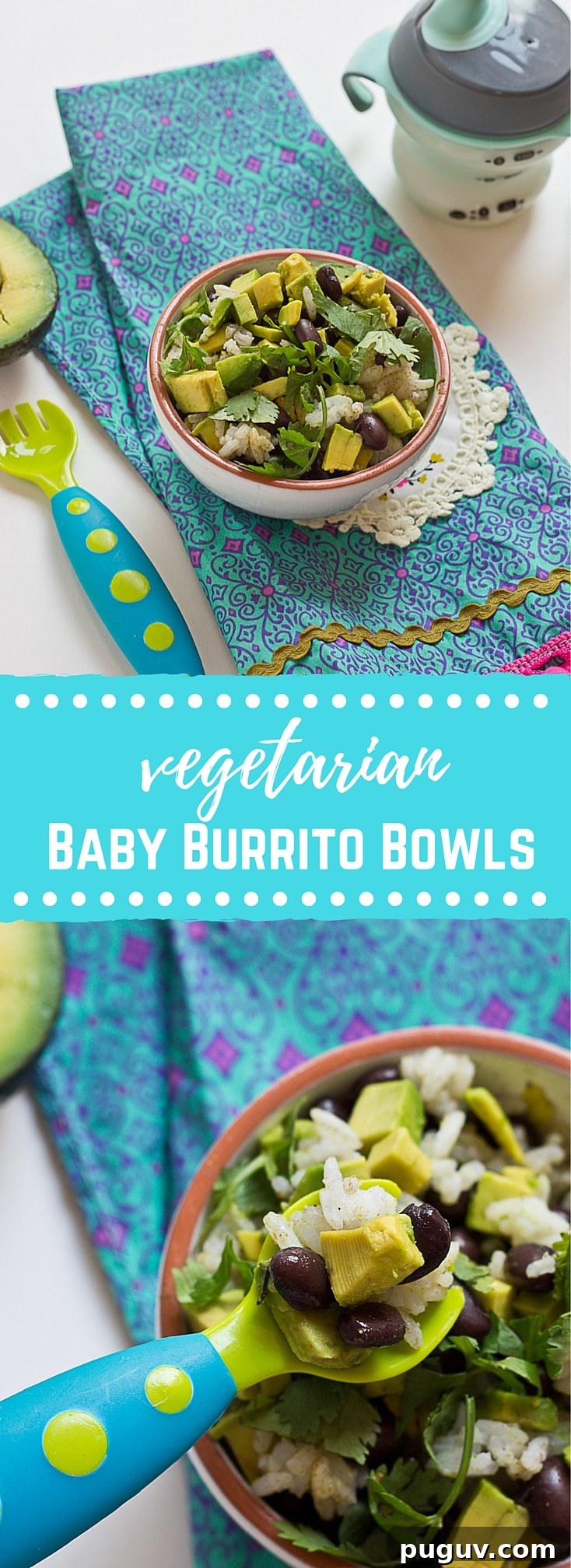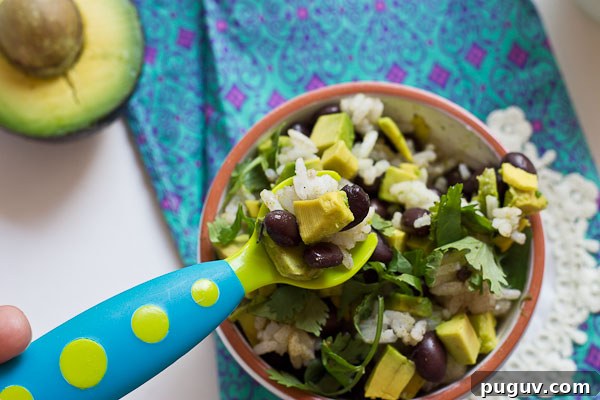
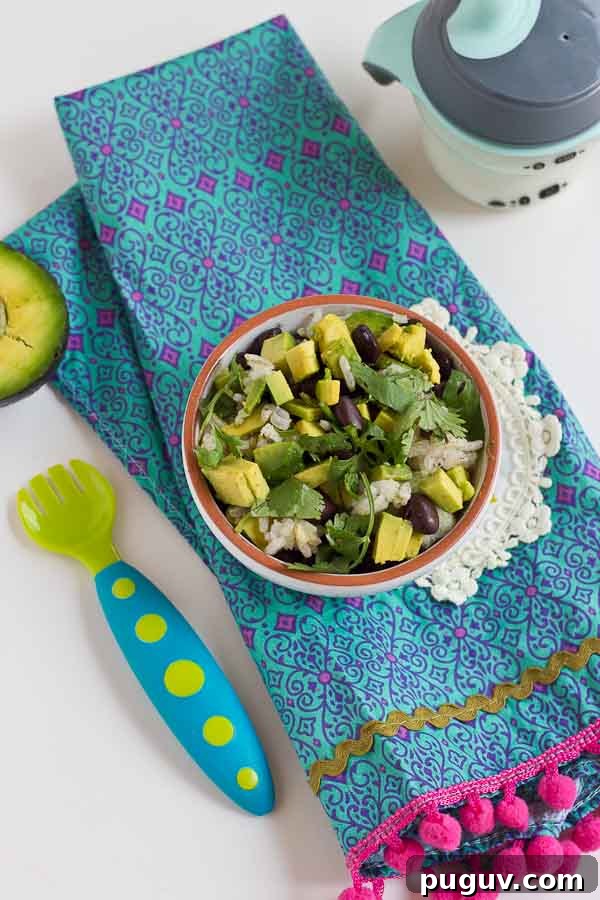
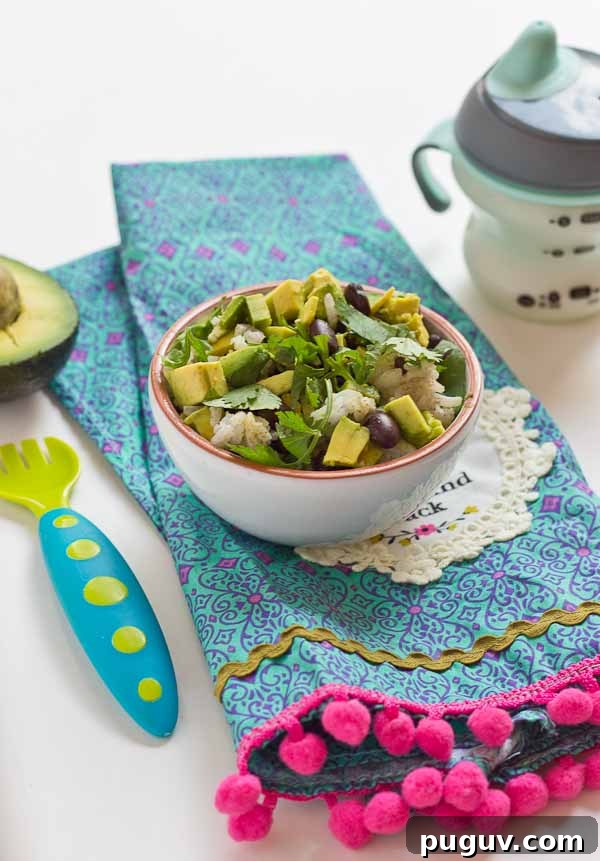
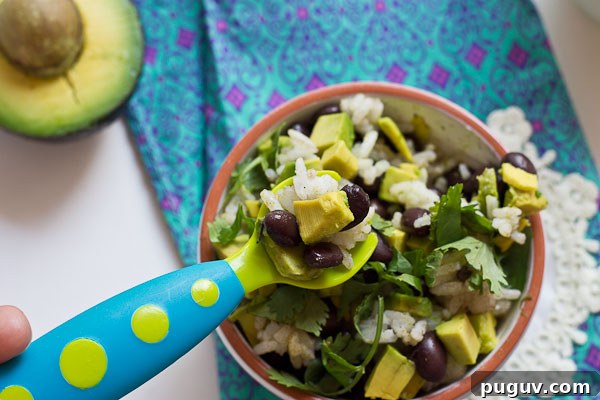
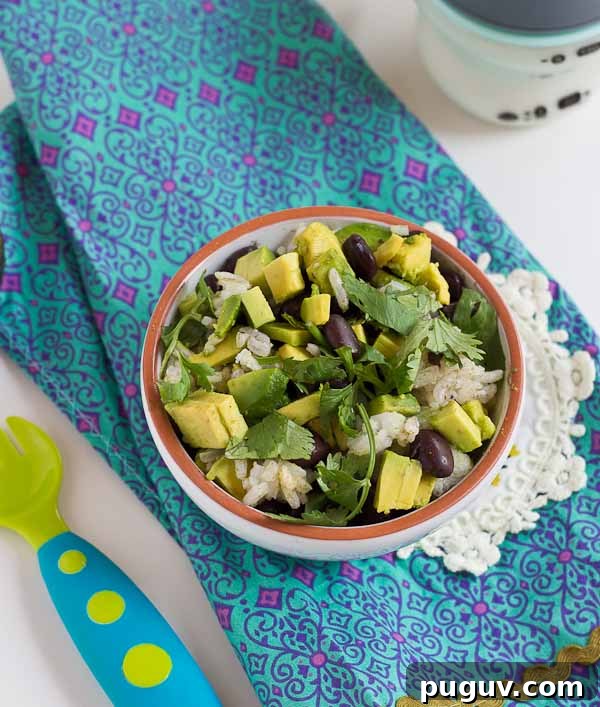
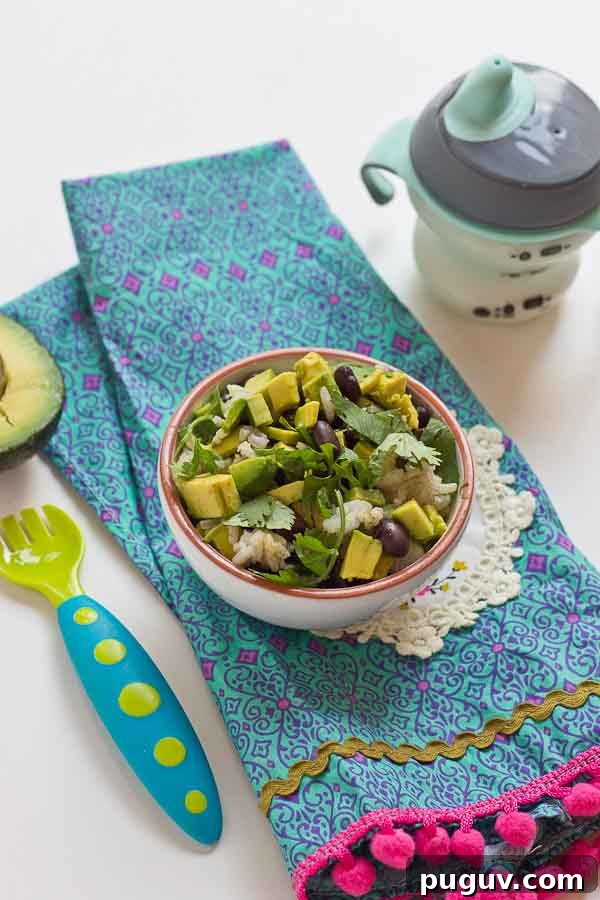
These Vegetarian Baby Burrito Bowls are a meal the whole family can enjoy and a great way for baby to develop their pincer grasp! Beans, avocado, and brown rice are wholesome foods for baby and you! If your baby isn’t ready for finger foods, simply puree this meal to the desired texture and consistency.
My current parenting challenge: my baby is nearly nine months old and mostly wants to slurp—breast milk, smoothies, and squeezable purees. He resists the spoon and gags on soft finger foods that are often considered developmentally appropriate. Even fast-dissolving puffed cereals, broken into tiny pieces, have caused gagging and spitting.
As a registered dietitian and a mom who wants my child exposed to varied, nutritious textures, this is frustrating. Babies don’t always follow the timeline shown in parenting guides, and my child is a perfect example—he’s never fit the neat progressions that I, a type-A parent, hoped for.
When Dr. Sonali Ruder from The Foodie Physician asked me to feature a recipe from her cookbook Natural Baby Food, I was eager. Her book is full of wholesome recipes—more than 150—and practical advice on introducing solids to babies and toddlers.
I appreciated Dr. Ruder’s clear take on what to introduce first. There’s a lot of repeated, outdated guidance—baby cereals, then fruits, then vegetables, then meat—that leads many parents to start with processed grains that aren’t whole. The important point, supported by current evidence and echoed by Dr. Ruder, is that the order doesn’t matter as long as the food is soft and an appropriate consistency for safe eating. Of course some foods remain off-limits for infants—honey, cow’s milk for under 1 year, and certain choking hazards or items to delay based on allergy guidance.
The American Academy of Pediatrics agrees: there’s no medical evidence that introducing solids in any particular order benefits babies. Dr. Ruder points out that vegetables, fruits, and even meats can be introduced early. Meats like turkey, chicken, and beef are valuable first foods for breastfed infants because breast milk can be low in iron and zinc—nutrients babies need for growth and development.
Beans and legumes—chickpeas, lentils, and black beans—are excellent vegetarian sources of protein and iron. I often add beans to a smoothie for my son or use bean-based squeezes when finger foods aren’t working. Dr. Ruder also recommends whole-grain cereal options, such as brown rice, barley, or oatmeal, if parents choose to use cereal.
My current strategy with Parker is to continue offering foods in drinkable forms he prefers while also presenting tactile, finger-friendly meals like these Vegetarian Baby Burrito Bowls during the same sitting. This gives him the chance to explore textures and practice his pincer grasp at his own pace. If he isn’t ready, I’ll puree the same ingredients so he still gets the nutrition without the frustration. Parenting and feeding are full of unpredictable moments—so patience, consistency, and nutritious choices are key.
Vegetarian Baby Burrito Bowls
- Author: Dr. Sonali Ruder from Natural Baby Food Cookbook
- Prep Time: 10 mins
- Total Time: 10 mins
- Yield: 1 1/2 cups 1x
Description
These Vegetarian Baby Burrito Bowls are a simple, wholesome meal for the whole family and a gentle way to help babies learn finger foods. Beans, avocado, and brown rice deliver protein, healthy fats, and whole-grain carbohydrates. If your baby isn’t ready for finger foods, puree the mixture to a smooth consistency and thin with water or low-sodium stock.
Ingredients
- 1/2 cup cooked brown rice, warmed
- 1/4 cup black beans, drained and rinsed
- 1/4 cup cooked corn
- 1 teaspoon cilantro, finely chopped
- 1/8 teaspoon ground cumin
- 1/2 medium Hass avocado, chopped into small pieces
- 2 teaspoons grated mild cheddar cheese (optional)
Instructions
- Combine the warmed brown rice, black beans, corn, cilantro, and cumin in a bowl. Gently fold in the diced avocado so it stays in small pieces. Sprinkle cheese on top if using.
- Offer the bowl for your baby to explore and pick up pieces with their fingers. If your baby isn’t ready for finger foods, transfer the mixture to a food processor or blender and puree with a small amount of water or low-sodium stock to reach a smooth, safe consistency.