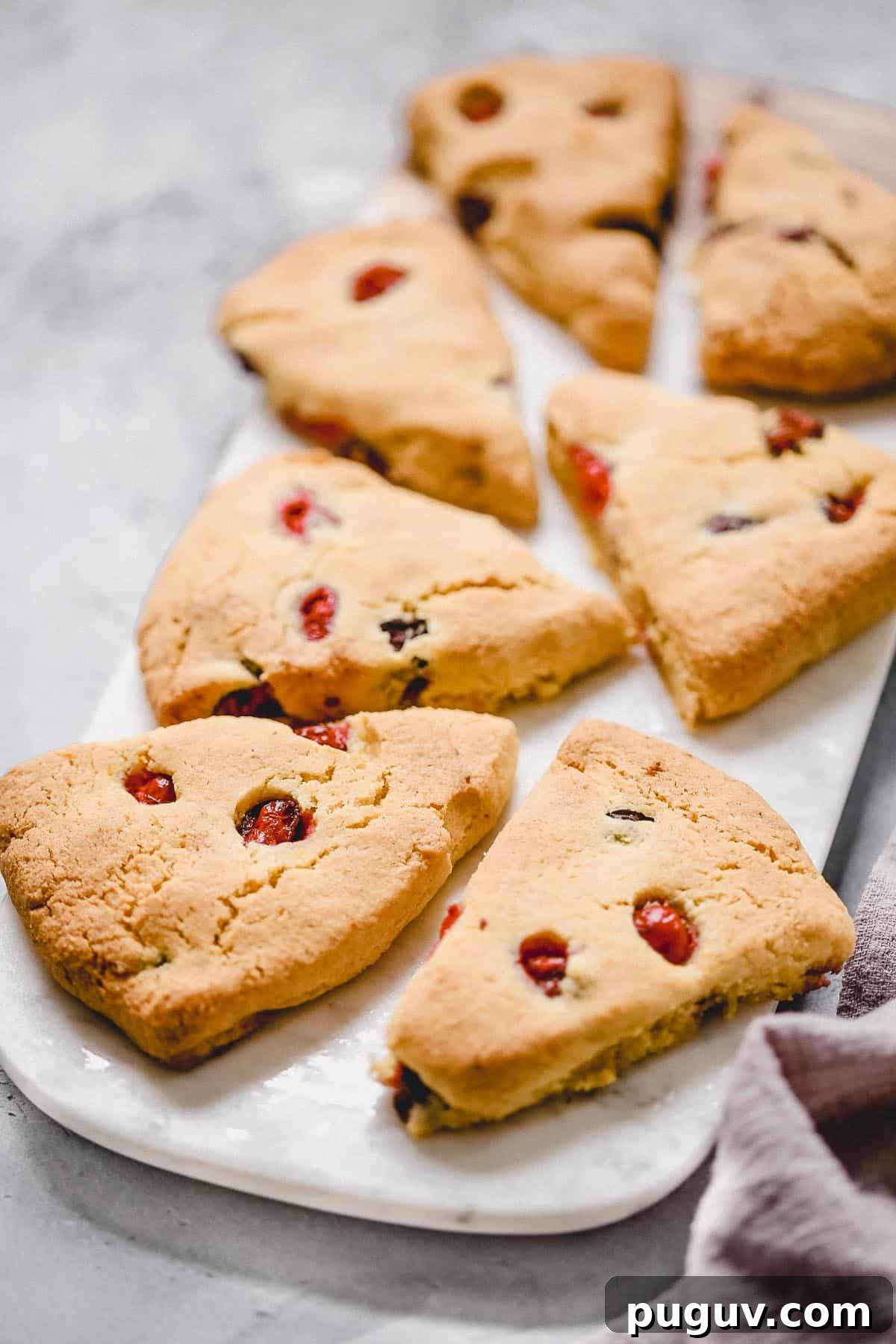
Cranberry orange scones combine bright citrus and tart berries into a beautiful, flavorful scone that works equally well for breakfast or dessert. This version uses almond flour instead of wheat flour to create a lighter, tender texture while keeping the recipe low in carbs and higher in protein.
Using almond flour (not almond meal) makes a noticeable difference: it’s more finely ground and yields a softer crumb. Coconut oil replaces butter for a neutral, slightly tropical note and keeps the scones dairy-free. A touch of erythritol provides gentle sweetness without added sugars, and fresh or frozen cranberries add color and a pleasant tartness.
How do you make cranberry orange scones?
Start by combining the dry ingredients in one bowl and the wet ingredients in another. Whisk the melted coconut oil with orange zest, vanilla, and an egg. Stir the wet mixture into the almond flour mixture, pressing gently with a spoon or spatula until a uniform, pliable dough forms. The dough will be denser and look different from traditional wheat-based scone dough — that’s normal. If it’s crumbly, add a teaspoon of coconut oil at a time until it holds together. Small lumps are fine; avoid overmixing to keep the scones tender.
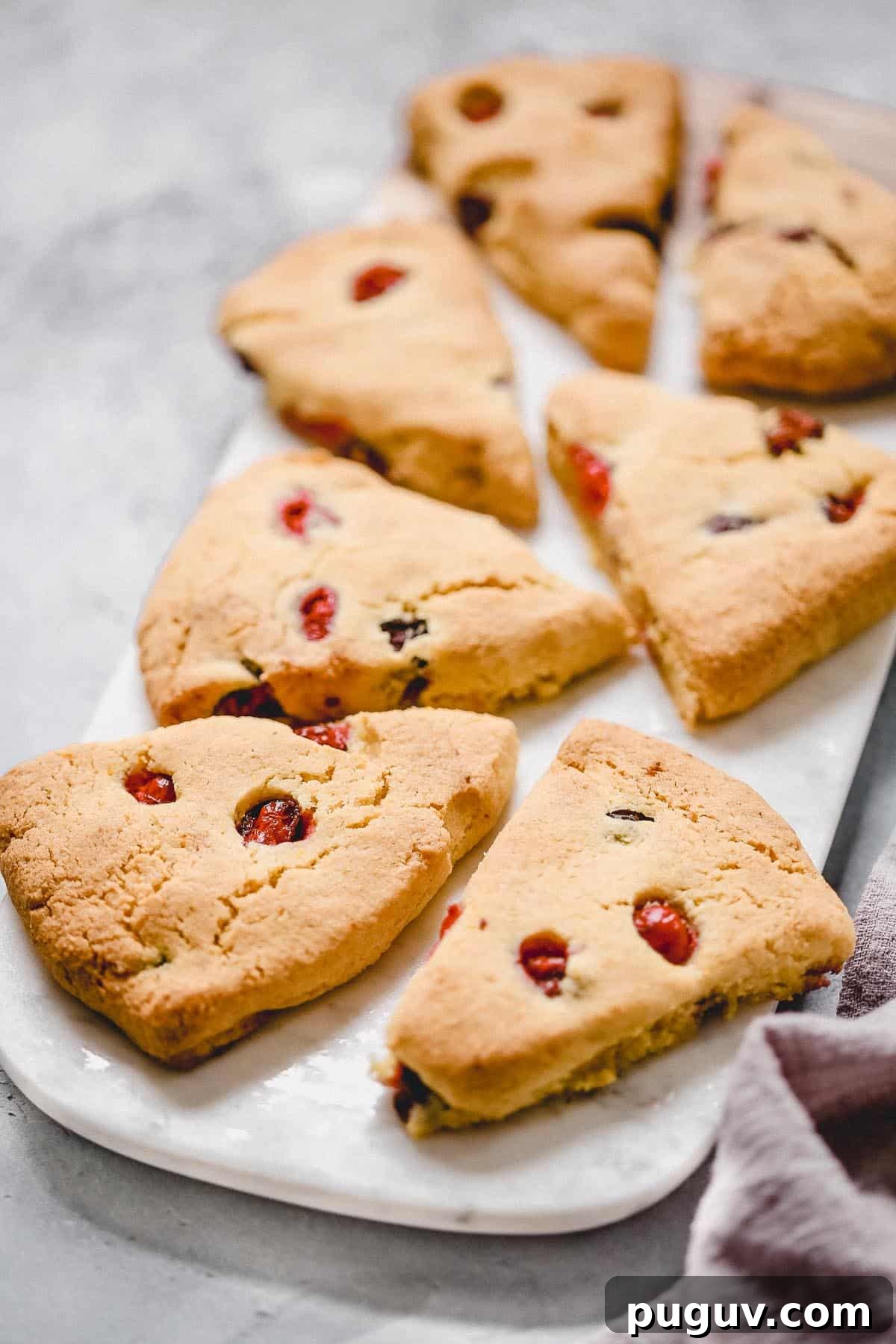
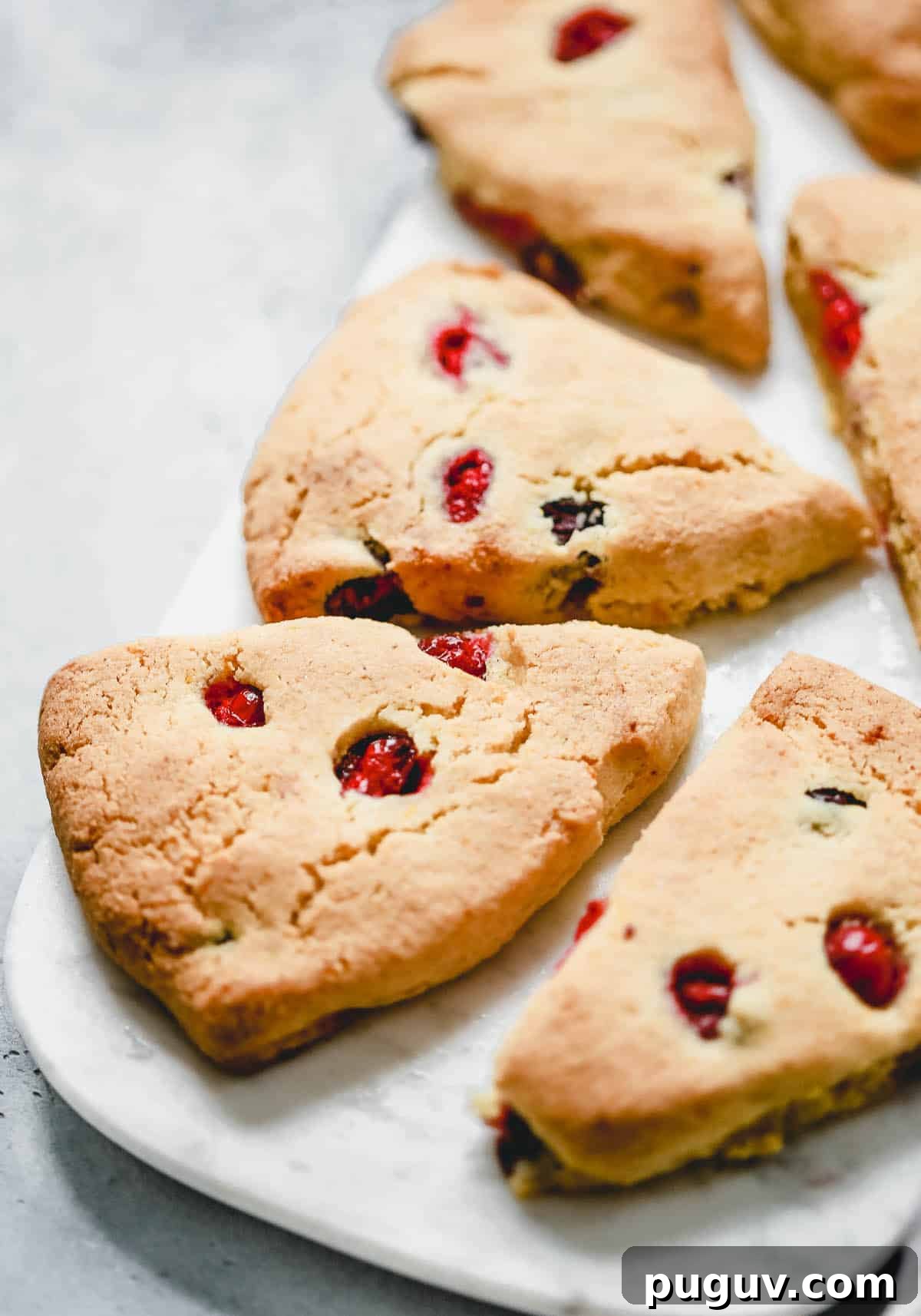
Gently fold or press the cranberries into the dough, reserving a few to press on top for a decorative finish. Shape the dough into a disk on a parchment-lined baking sheet, about 1 inch thick and roughly 6 inches in diameter, then cut into eight wedges. Space the wedges about an inch apart so they bake evenly and don’t stick together.
Bake until the scones are golden, then allow them to cool completely on the pan. They firm up as they cool, and moving them while still hot can cause them to fall apart.
Can you freeze scones?
Yes — these scones freeze well either before or after baking. For unbaked freezing, form and cut the disk into wedges before freezing so you can bake them straight from the freezer; baking time may increase by several minutes. Preparing the dough and freezing it ready-to-bake is the best make-ahead option since scones are at their peak right after baking.
If you freeze fully baked scones, thaw them at room temperature for a few hours and then reheat in the oven or microwave before serving.
Other low-carb treats to make:
- Cranberry Almond Chocolate Chip Cookies
- Almond Flour Shortbread Cookies
- Chocolate Almond Biscotti Cookies

Cranberry Orange Scones
Ingredients
- 2 cups blanched almond flour
- 1/3 cup erythritol
- ½ teaspoon baking powder
- ¼ teaspoon sea salt
- ¼ cup coconut oil melted
- 2 tablespoons orange zest
- ½ teaspoon vanilla extract
- 1 large egg
- ½ cup cranberries fresh or frozen
Instructions
-
Preheat the oven to 350°F (175°C) and line a baking sheet with parchment paper.
-
In a medium bowl, whisk together the almond flour, erythritol, baking powder, and sea salt.
-
In a small bowl, combine the melted coconut oil, orange zest, vanilla, and egg. Stir the wet mixture into the dry ingredients, pressing with a spoon or spatula until a uniform dough forms. If the dough is very dry, add more coconut oil, 1 teaspoon at a time. Fold in the cranberries, reserving a few to press on top.
-
Form the dough on the prepared pan into a 1-inch-thick disk about 6 inches across. Cut into 8 wedges and separate them about 1 inch apart. Bake for 18–22 minutes, or until golden around the edges.
-
Cool completely on the pan so the scones firm up before handling.
Notes
- Press a few extra cranberries on top before baking for a prettier presentation.
- Give each wedge space on the pan so they don’t bake into one another.
- Allow scones to cool fully on the baking sheet; they can break if moved while still warm.
- To store: Keep freshly baked scones wrapped or in an airtight container at room temperature for 1–2 days.
- To reheat: Warm scones briefly in the oven or microwave until heated through.
- To freeze: Freeze unbaked wedges on a tray and transfer to a sealed bag, then bake from frozen when needed. If freezing baked scones, thaw to room temperature before reheating.
Nutrition
Nutrition information is automatically calculated and should be used as an approximation.