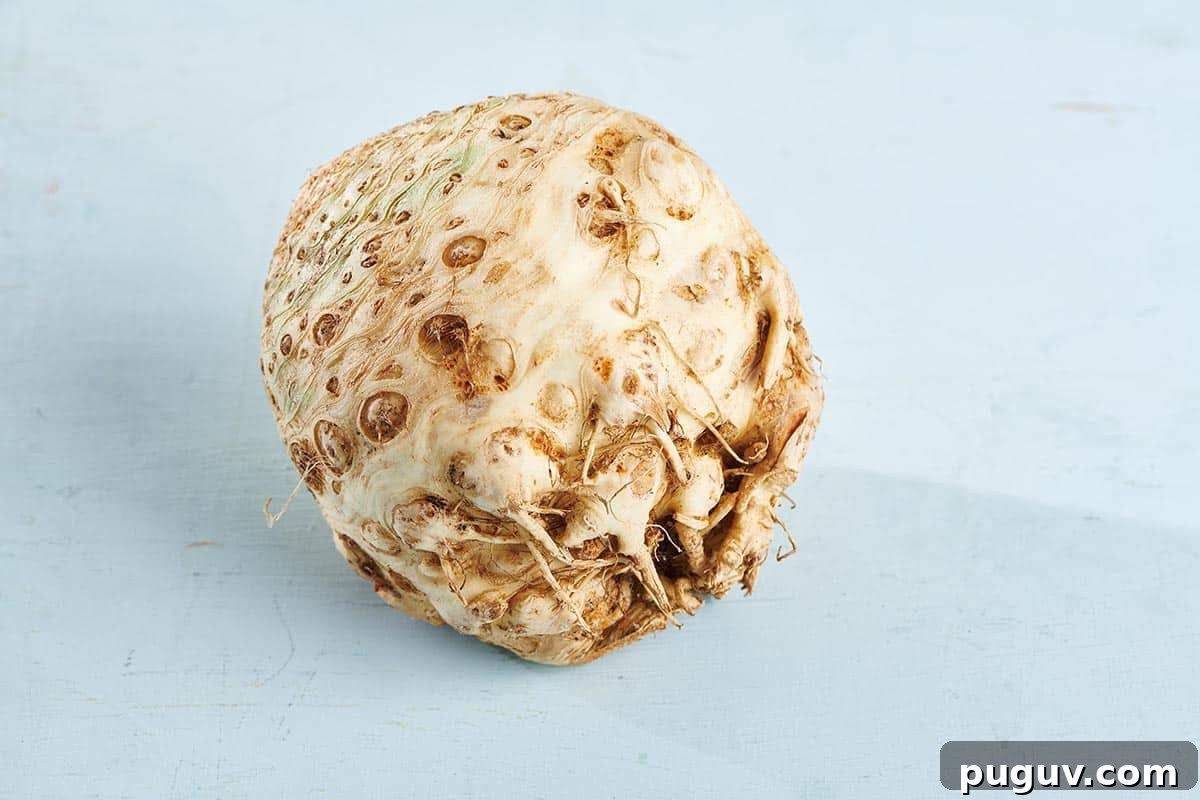
Celeriac deserves more attention. This knobbly root vegetable looks almost planetary, with twists and crevices on its surface. Below you’ll find where to buy celeriac, how to prepare and cook it, and ideas for enjoying it. At the end is a French-inspired Carrot Celeriac Remoulade recipe that pairs beautifully with grilled salmon.
- What Is Celeriac?
- What Does Celeriac Look Like?
- What Does Celeriac Taste Like?
- Substitutes
- Where to Find Celeriac
- How to Prepare and Cook With Celeriac
- How to Store Celeriac
- FAQs
- Recipes With Celeriac
- Carrot Celeriac Remoulade Salad
What Is Celeriac?
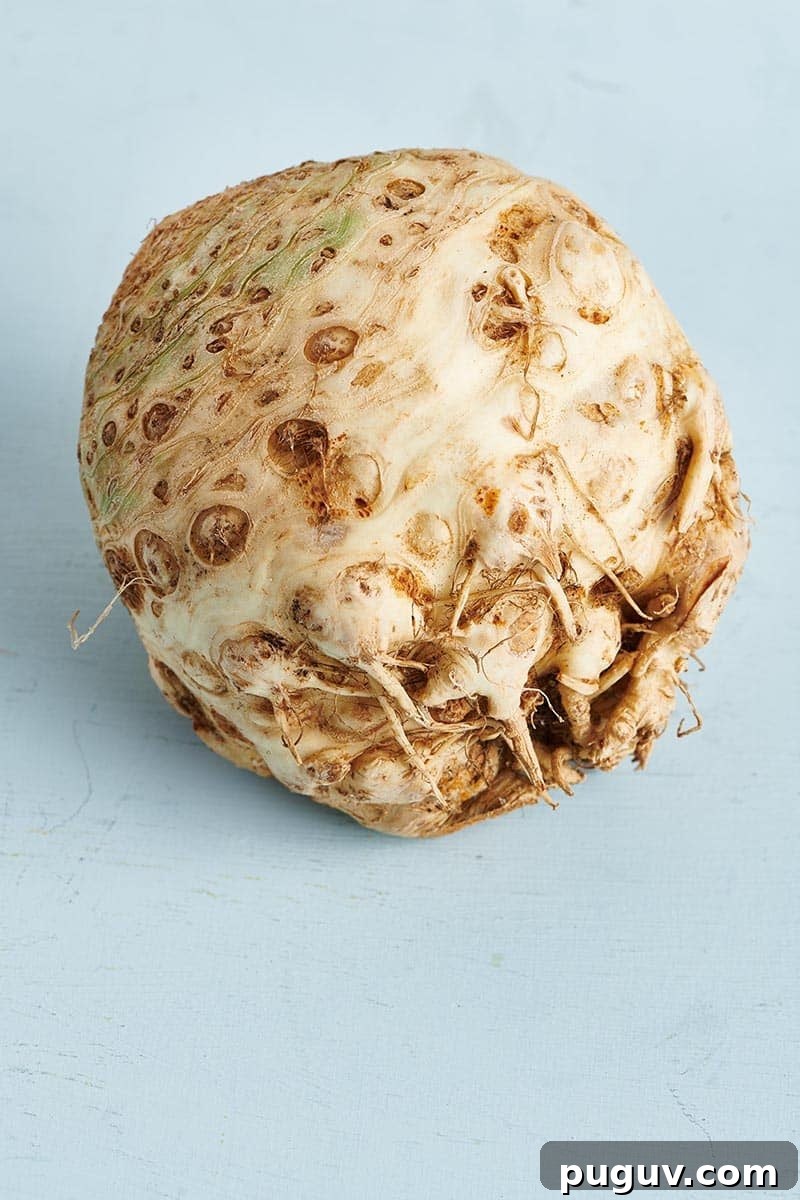
Celeriac, also known as celery root, is the swollen root of the celery plant. It’s a versatile vegetable that can be eaten raw or cooked. With a mild, celery-tinged flavor and a firm texture when raw, it makes a great alternative to potatoes in many dishes and is popular in Northern and Eastern European cooking.
What Does Celeriac Look Like?
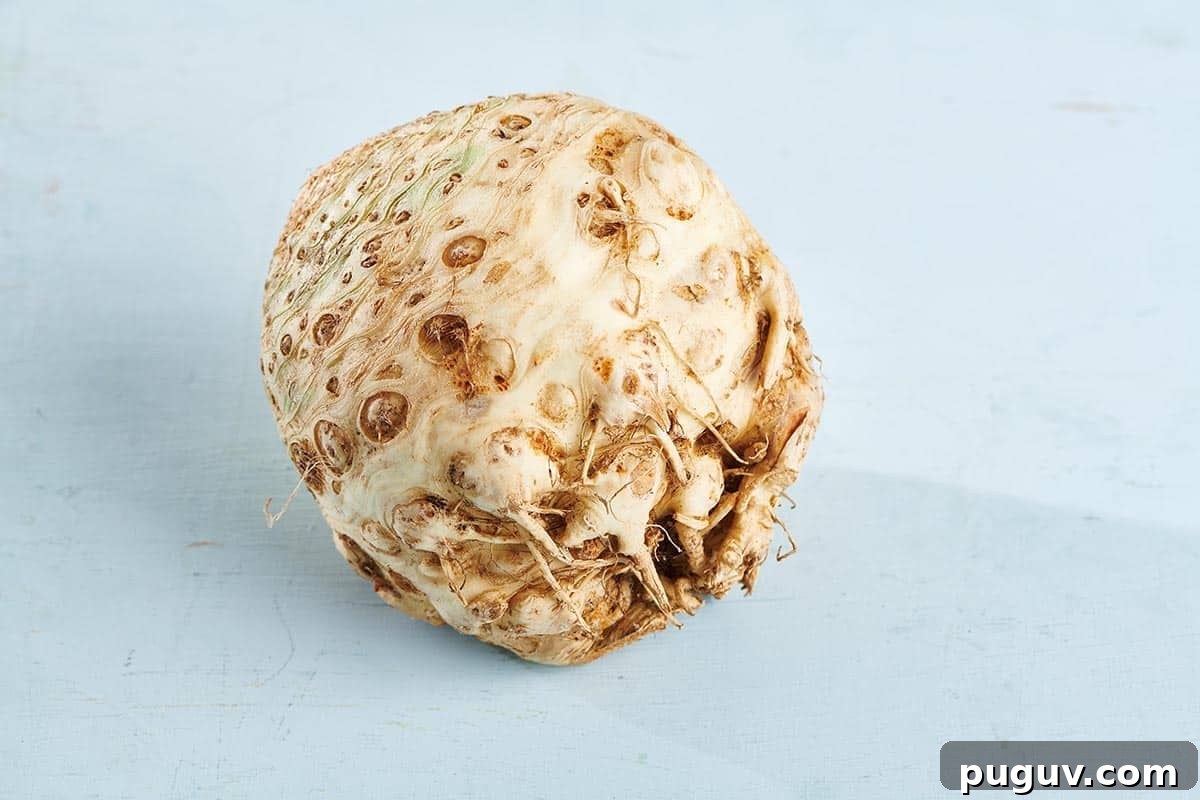
Celeriac is lumpy and round, roughly the size of a grapefruit or small softball. When sold by itself you’ll see a rough brown exterior with small rootlets and a somewhat dirty appearance — that’s normal for a root vegetable. Inside, the flesh is pale and smooth, similar to jicama in appearance. Choose bulbs that feel firm and avoid any with slimy or spongy spots; if only a small area is soft you can cut it away and use the rest.
Celeriac is a root vegetable that deserves more love! Here’s how to buy, prepare, and cook celeriac (plus a recipe for Celeriac Remoulade).
What Does Celeriac Taste Like?
Celeriac has an earthy, slightly nutty flavor with a fresh celery note. Raw, it’s crunchy and crisp — ideal for salads and slaws. Cooked, it softens and sweetens, becoming creamy when mashed or tender when roasted.
Substitutes
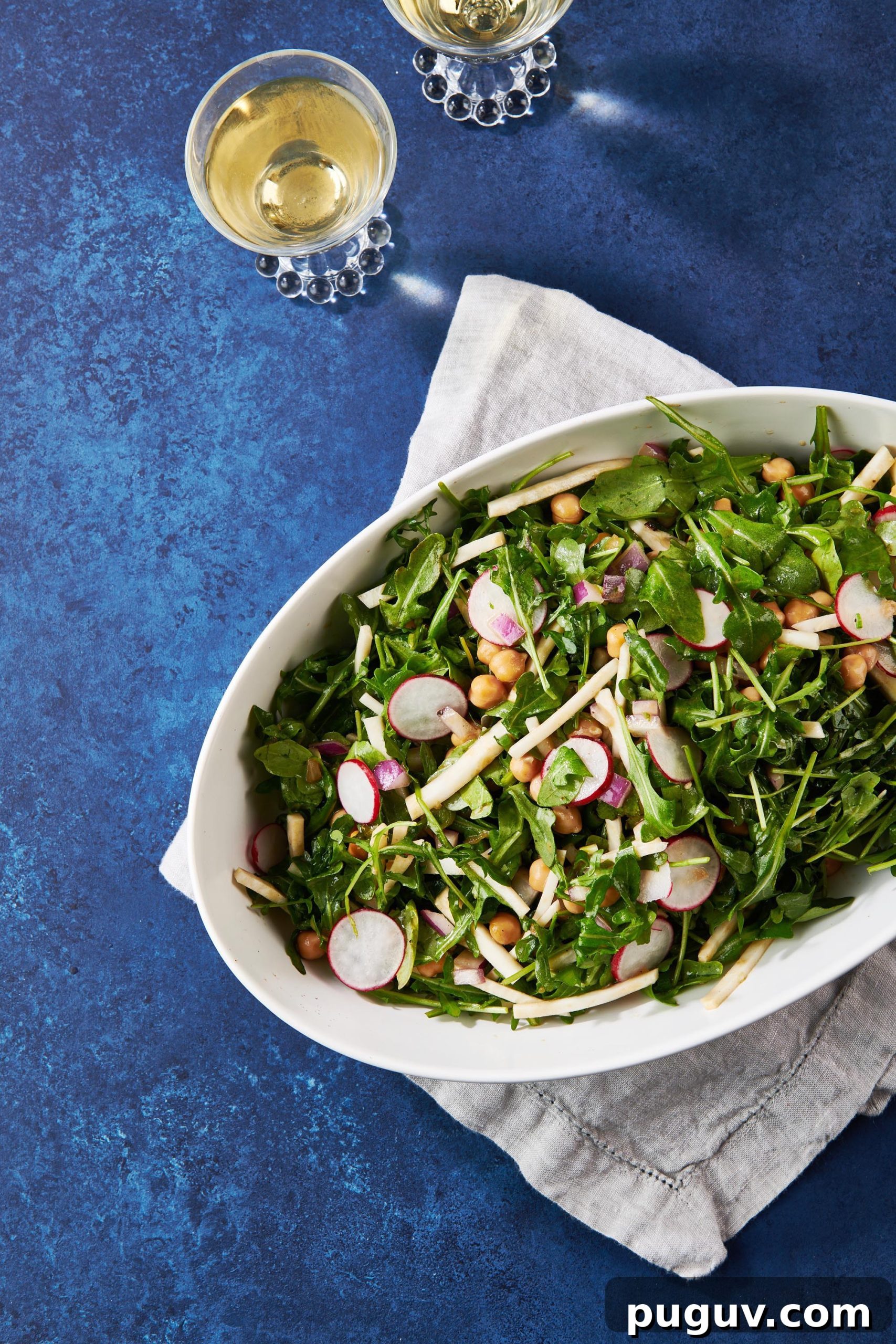
Celeriac can often replace potatoes for a more nutrient-dense option. Parsley root is a good flavor-forward substitute, while jicama or celery can mimic the crunchy texture in raw preparations. Note that celery won’t soften like celeriac when cooked, and jicama has a fruitier taste and won’t become as creamy after boiling.
Where to Find Celeriac
Celeriac is grown in many regions and can be found at farmers markets and in grocery store produce sections, often near other root vegetables. Its peak season runs from fall through early spring, so you’re more likely to spot it during those months.
How to Prepare and Cook With Celeriac
- Remove the ends: Trim the top and bottom of the root with a sharp knife.
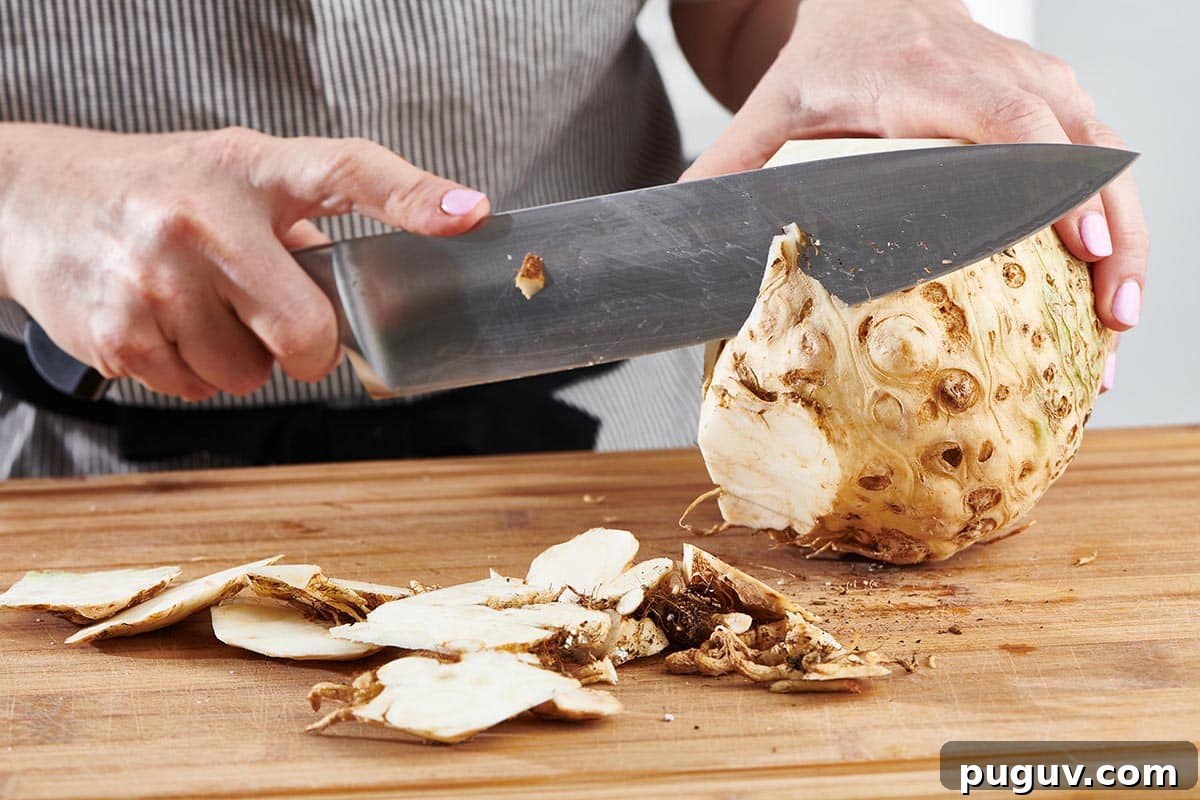
- Peel: Use a sturdy vegetable peeler or a paring knife to remove the rough skin. A peeler may require several passes; a paring knife gives more control around the curves.
- Chop: Slice, dice, or julienne the peeled celeriac according to your recipe.
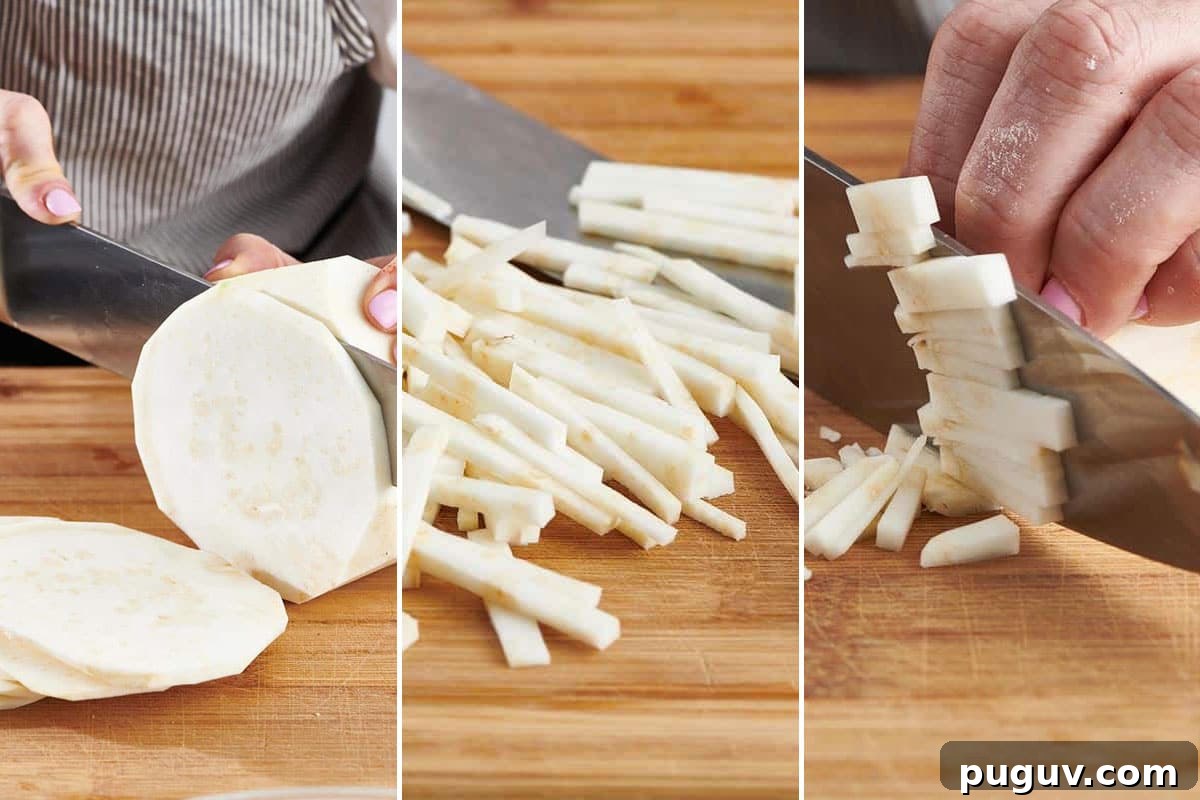
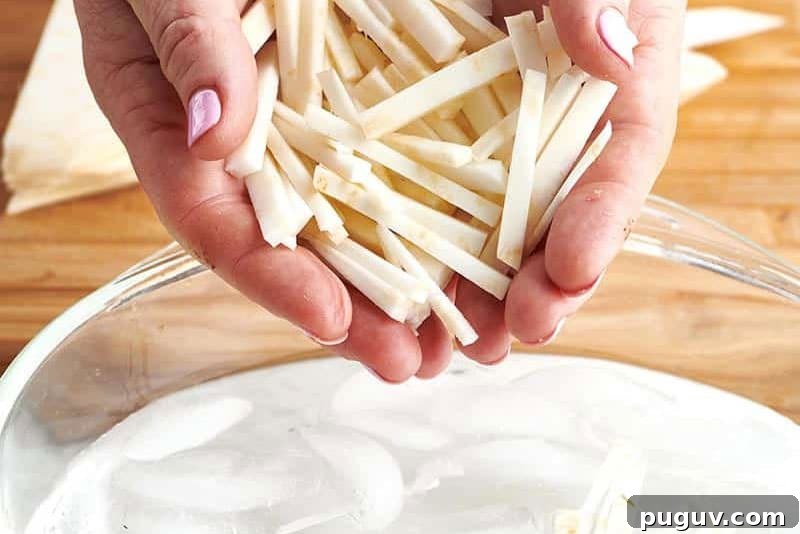
- Prevent oxidizing: Celeriac browns quickly after peeling. If you need to hold it, submerge the cut pieces in cold water with a splash of lemon juice to keep the flesh from discoloring.
How to Store Celeriac
Uncut, celeriac will keep for about three weeks in the refrigerator’s crisper drawer. Store it unwashed in a plastic bag or airtight container. To freeze, blanch peeled and sliced celeriac in salted boiling water for two minutes, then shock in ice water, dry, and freeze in a sealed bag for several months.
FAQs
Cut celeriac into chunks and boil until tender. Drain, then mash with butter, cream or milk, salt and pepper. Add herbs or a bit of garlic for extra flavor. Mixing celeriac with potatoes makes a lighter mash.
Peeling is recommended for texture and appearance, though the skin is technically edible. If you leave it on, scrub thoroughly to remove dirt.
Recipes With Celeriac
What to Cook
The Best No-Mayo Salads for Summer
Cooking Tips
How to Cut a Tomato (Slices and Dice)
What to Cook
15 Easy Rotisserie Chicken Recipes
Carrot Celeriac Remoulade Salad
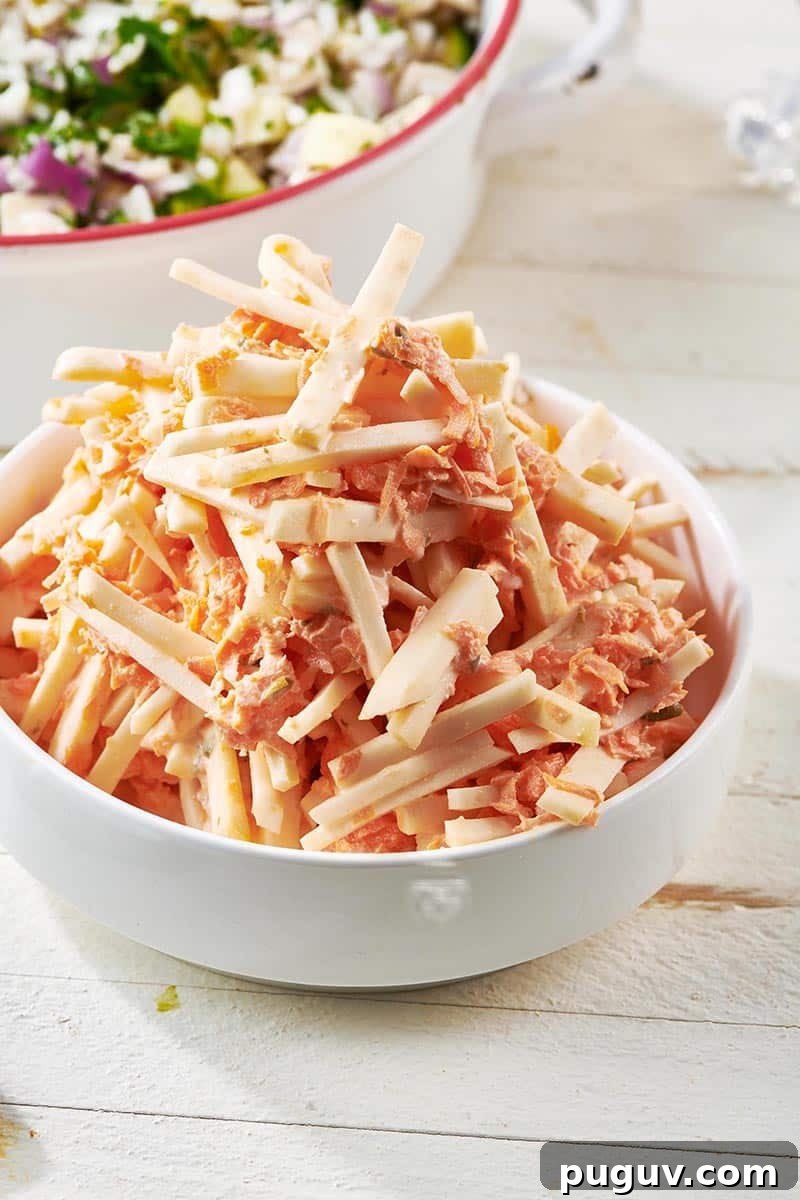
Remoulade is a classic French-style creamy dressing. This version is thinned into a dressing with vinegar and a touch of hot sauce, then brightened with capers, parsley, and scallion. It’s crisp, flavorful, and a lovely side for fish or roasted meats.
Ingredients
For the dressing:
- Mayonnaise — the creamy base.
- Dijon mustard — adds texture and a gentle bite.
- Red wine vinegar — turns the sauce into a dressing.
- Hot sauce — start small and adjust to taste.
- Capers — drained and chopped for briny brightness.
- Parsley — finely chopped flat-leaf parsley for freshness.
- Scallions — white and green parts, minced.
For the salad:
- Celeriac — peeled and julienned or shredded.
- Carrots — peeled and shredded.
- Fresh lemon juice — a splash to brighten and prevent browning.

Carrot Celeriac Remoulade
Ingredients
For the Remoulade Dressing
- 1 cup mayonnaise
- 1 tablespoon coarse Dijon mustard
- 1 teaspoon red wine vinegar
- ¼ teaspoon hot sauce (or more to taste)
- 2 teaspoon capers (drained and chopped)
- ¼ cup finely chopped flat leaf parsley
- 1 scallion (trimmed and minced; white and green parts)
- Kosher salt and freshly ground black pepper (to taste)
For the Salad
- 2 celeriac roots (about 1 pound each)
- 6 large carrots (peeled and shredded)
- 1 tablespoon fresh lemon juice
Instructions
-
Make the dressing: In a medium bowl combine the mayonnaise, Dijon, red wine vinegar, hot sauce, capers, parsley, scallion, salt, and pepper. Taste and adjust seasonings.
-
Prepare the salad: Fill a large bowl with cold water. Peel the celeriac and cut it into thin matchsticks, adding the pieces to the cold water as you work to prevent browning. Toss in the lemon juice.
-
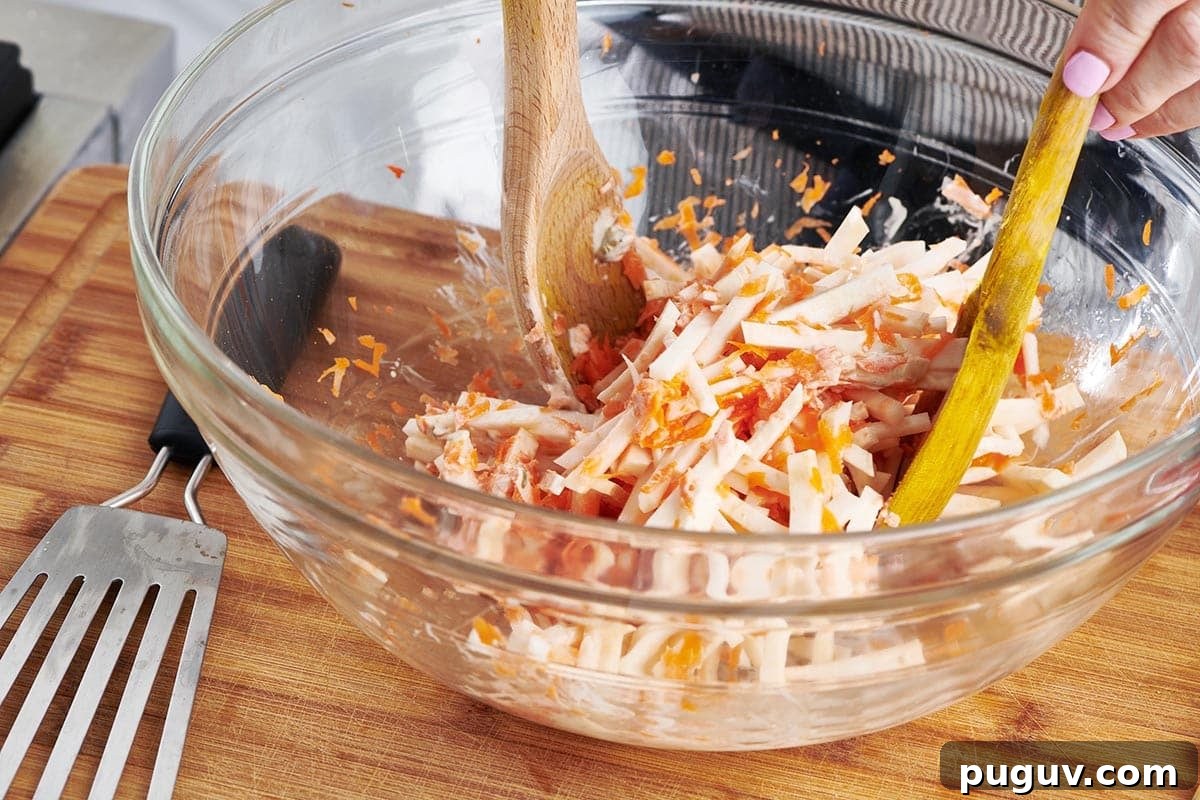
Drain and pat the celeriac dry. In a large bowl combine the celeriac and shredded carrots with the remoulade dressing. Toss to coat, taste, and adjust seasoning. Serve immediately or chill for later.
Notes
Nutrition
Like this recipe? Rate and comment below!