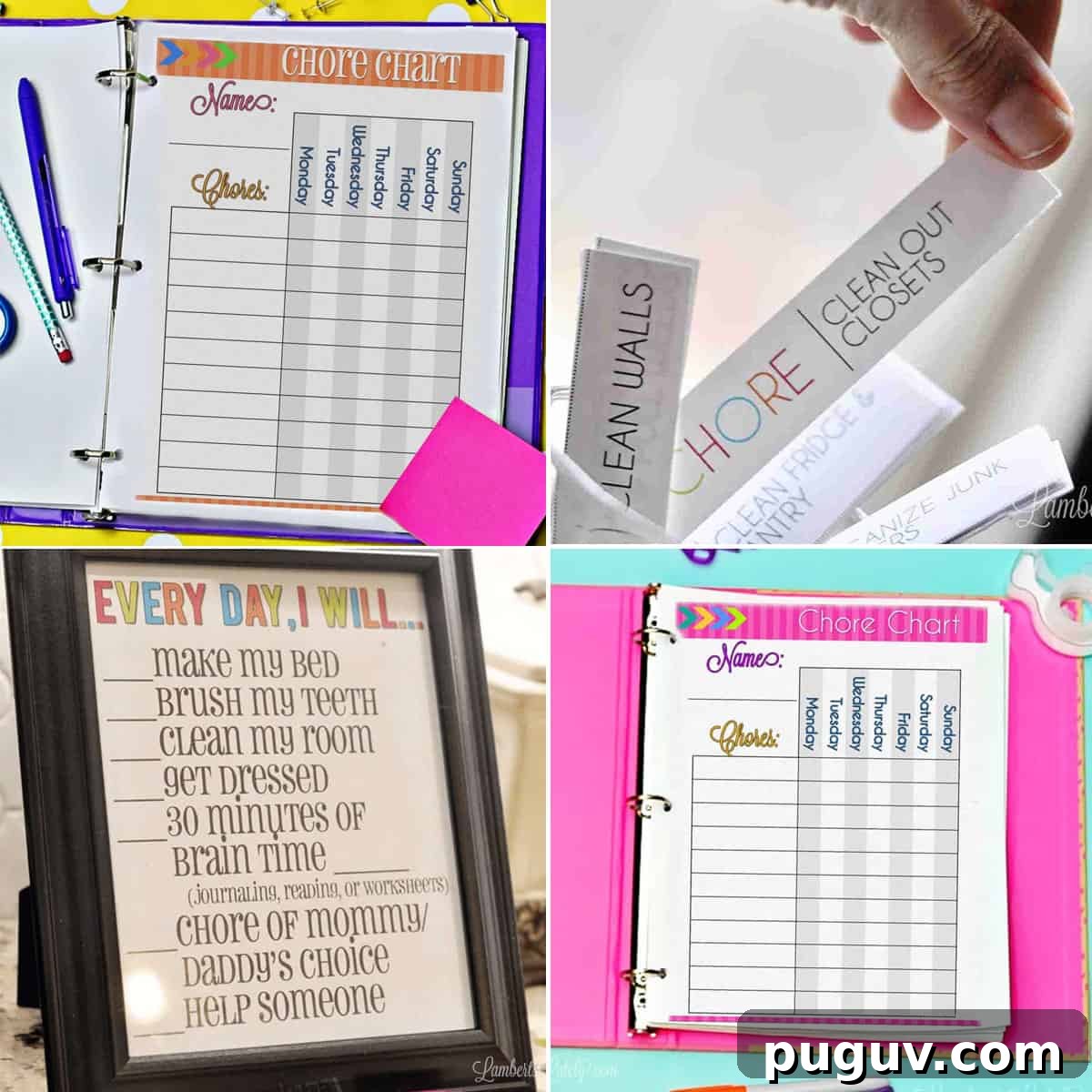
Download four free printable chore charts for kids to build responsibility and structure at home this summer. Each design includes both blank and pre-filled versions so you can choose the best fit for your child’s age and routine.
Paid links used in this post. Read more about my link usage policies.
I love a good chore chart! Here you’ll find several kid-friendly designs and ideas for chore lists in one easy post—perfect for summer break and available as free printables.
Rather than scattered posts, this collection brings all of my chore resources together. In our home, a simple checklist of self-care tasks and age-appropriate chores helps keep daily routines predictable and manageable. If you like printables and practical cleaning tips, these charts should be useful.
How to Print & Use
All printable files are formatted for standard 8.5 x 11″ paper. An at-home printer works fine—regular paper is great for the charts and cardstock is ideal for chore cards. To reuse charts daily, laminate them, slip them in a sheet protector, or place them in an inexpensive picture frame. Then mark tasks with a wet-erase or dry-erase marker and erase each night instead of printing a new page.
Printable Chore Chart for Preschoolers
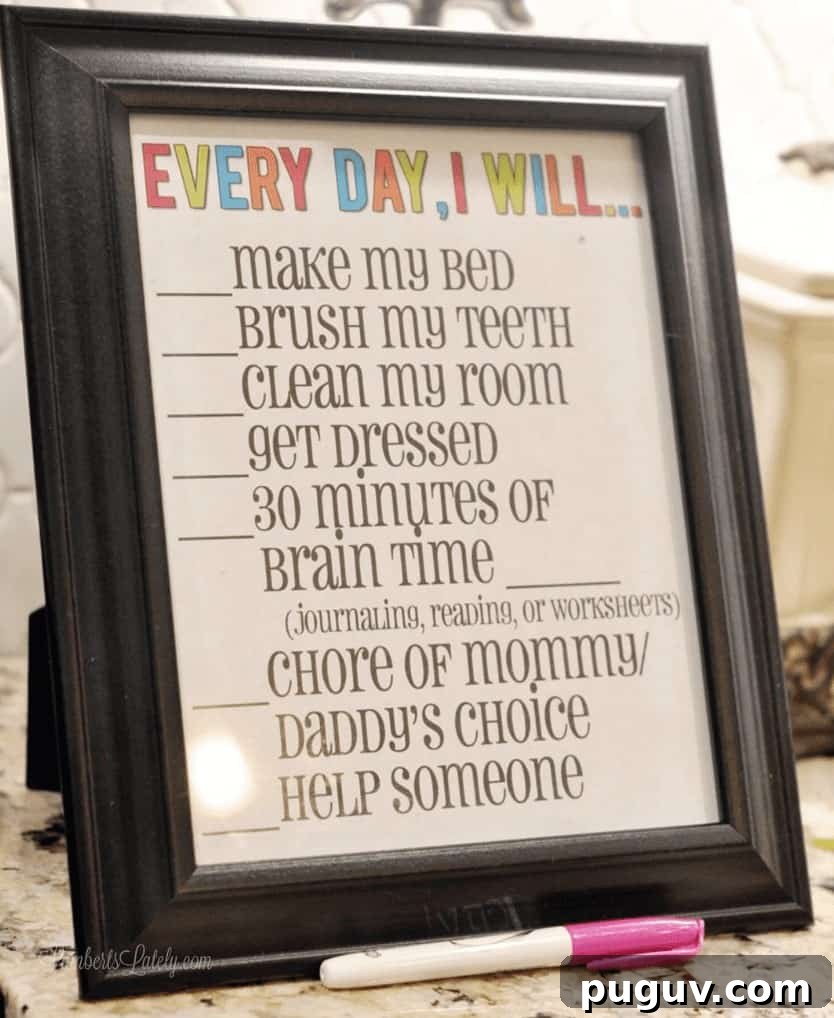
Start simple with a guided chart. This version is pre-filled with age-appropriate tasks and personal care habits for preschoolers (about 3–4 years). It introduces responsibility without overwhelming young children.
The preschool chart blends personal habits—like brushing teeth or washing hands—with basic home tasks. Tracking these small habits early helps them become routine.
Chore Checklist for Younger Kids
A slightly more detailed chart works well for kids ages 5–7. This version expands responsibilities and separates tasks into morning and evening, which helps maintain structure whether kids are at home or in school.
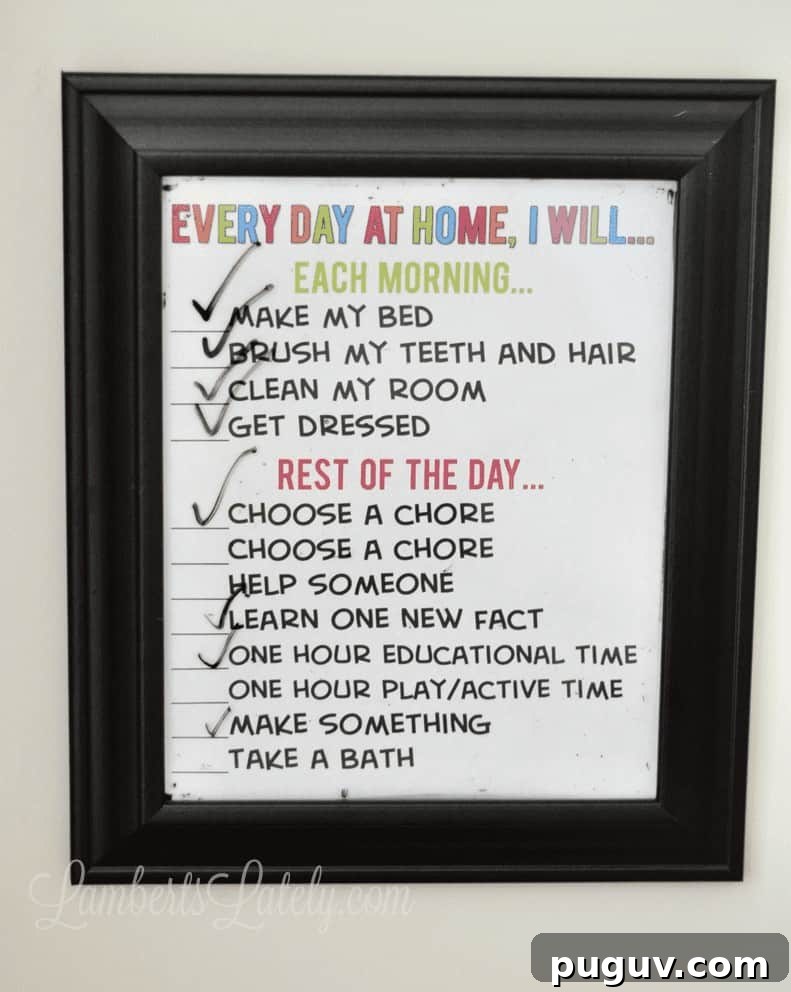
The mix of personal care and household tasks encourages independence while still being age-appropriate.
Chore Charts for Older Kids & Teens
Older children and teens benefit from greater flexibility. Blank checklists let families customize chores to match each child’s schedule and abilities.
Choose a weekly layout that breaks chores down by day for repeating routines, or use a blank weekly chart to assign varied tasks.
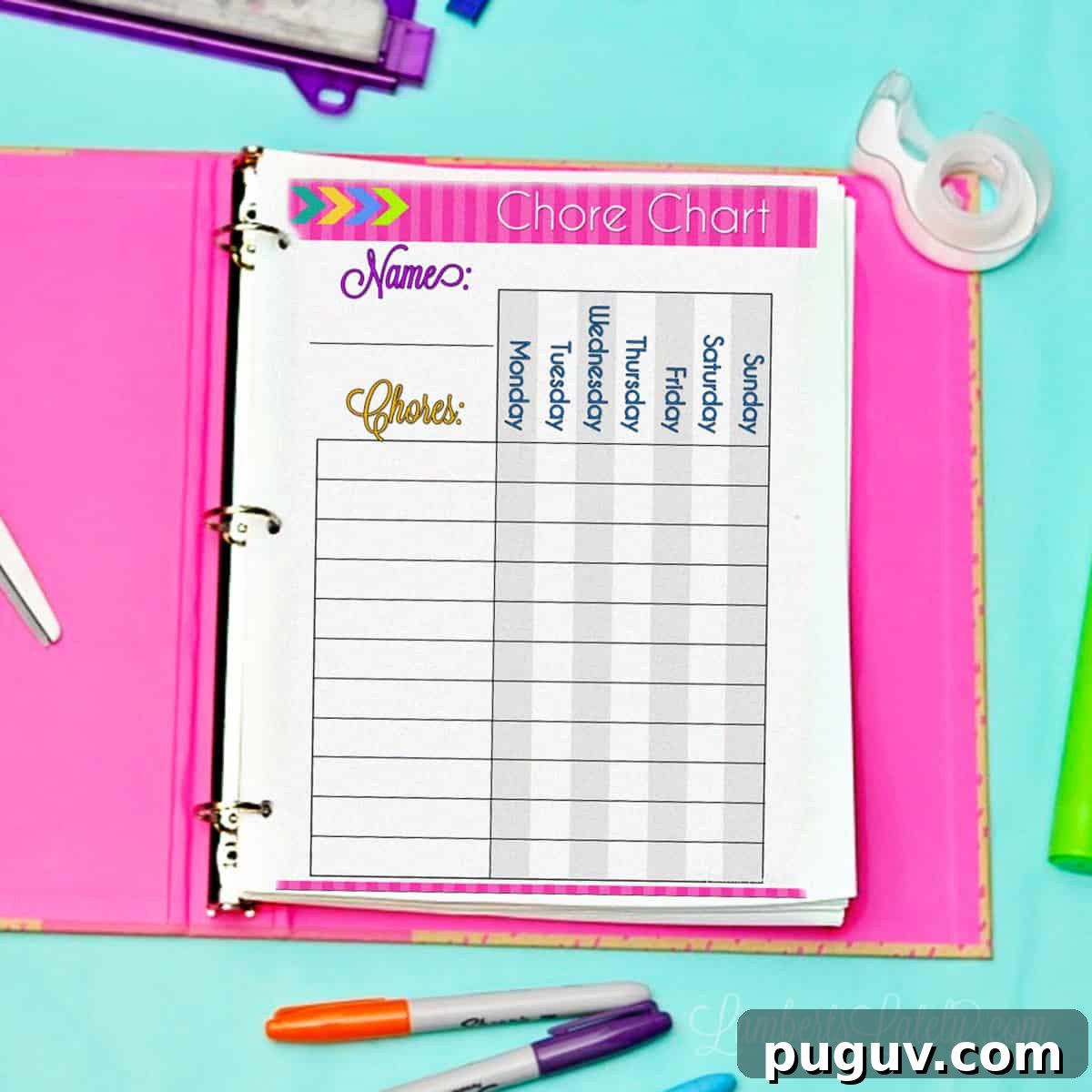
The first option is a daily breakdown that works well for repeating chores.
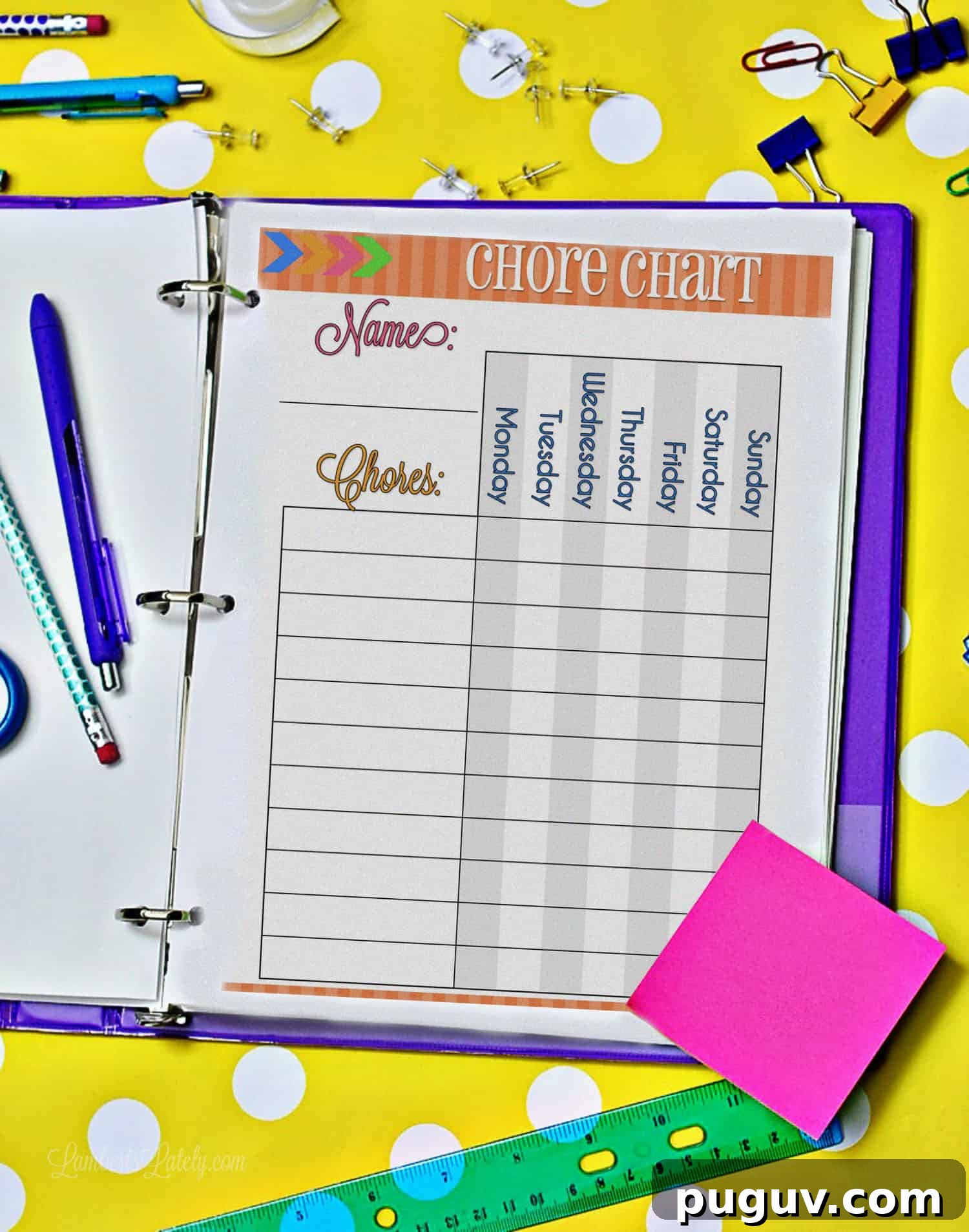
You can also use a different color scheme if you prefer.
I recommend mixing home-care tasks with personal habit goals. Here are examples we use at home.
Example Home Care Chores
- Make bed
- Clean room
- Put 10 things back in their place
- 2 chores (examples: dusting, bathroom cleaning, laundry, wiping counters)
- Empty dishwasher
Example Personal Habit Chores
- Creativity time (paint, build with Legos, Play-Doh)
- Learning time (homework, activity book, educational games)
- Active time (outside play, dance or yoga)
- Short language lesson (10 minutes)
- Read for 20 minutes
Printable Task Cards
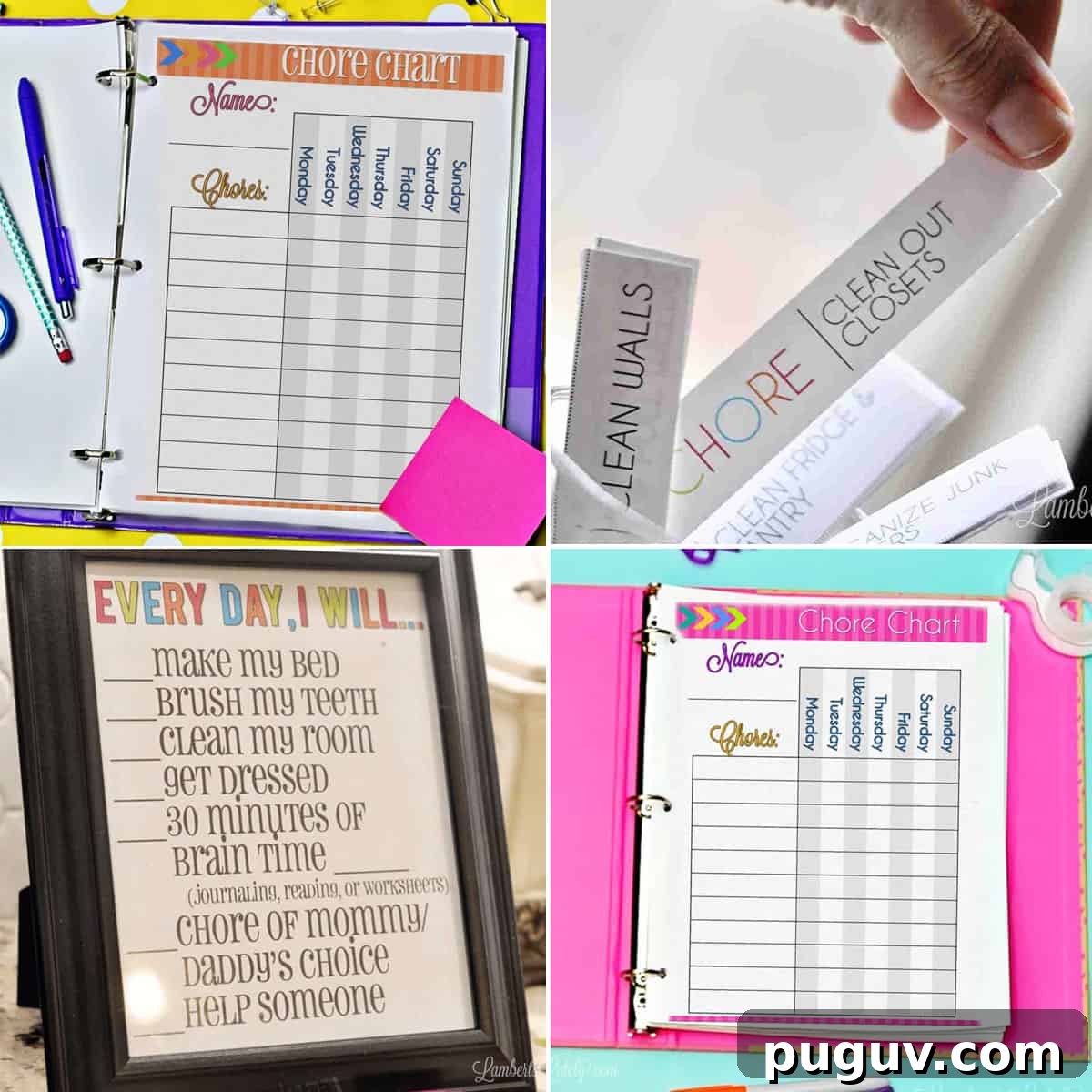
If you prefer less structure, printable chore cards let kids draw a task from a cup and complete it. This adds variety and a bit of fun while still getting necessary jobs done.
A “parent’s choice” card can be tricky when your cleaning focuses on a rotating Room of the Week. Cards let you include tasks you haven’t finished yet and that kids can do with minimal supervision.
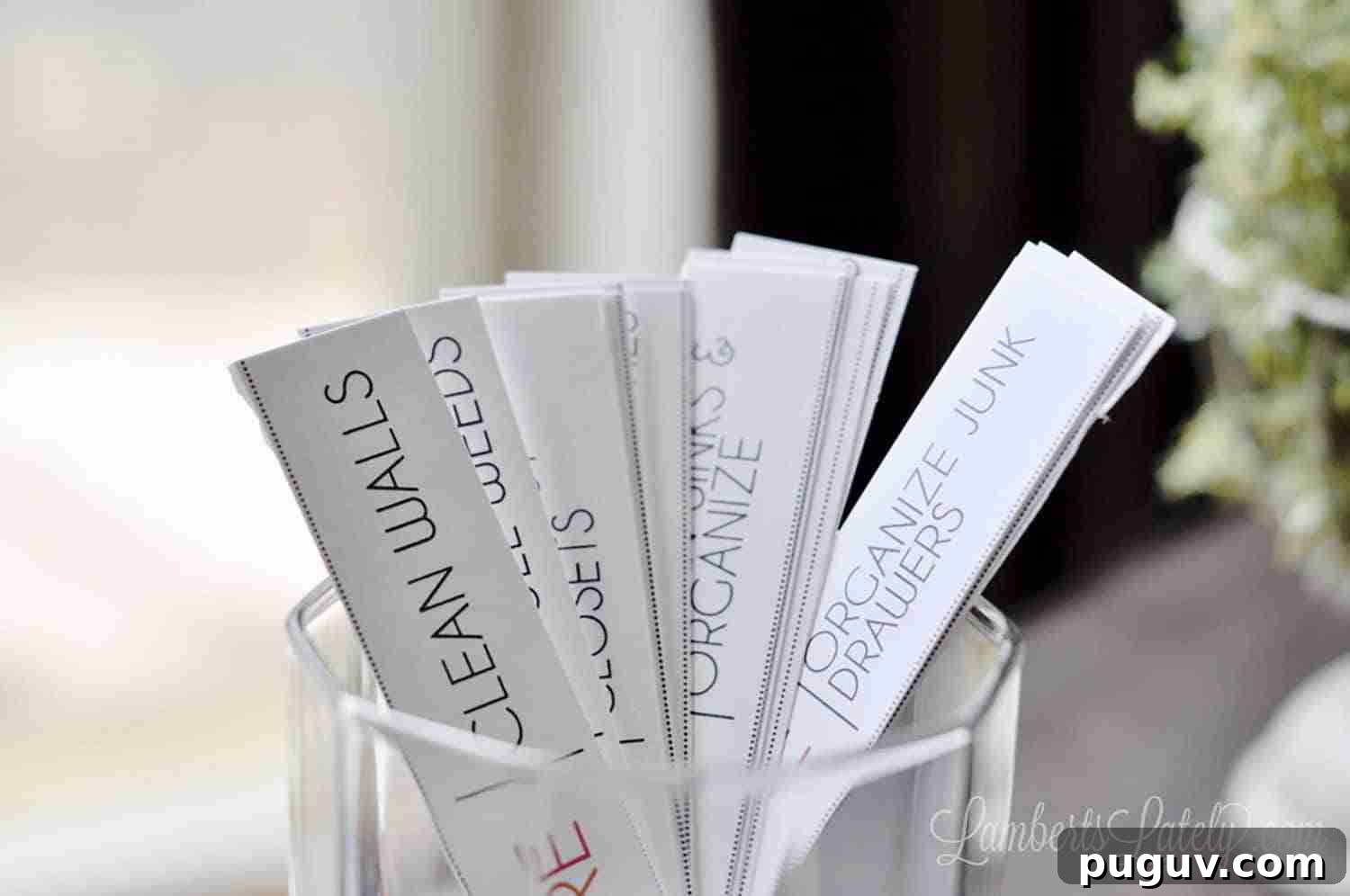
My kids enjoy drawing a random chore, and I appreciate having one less item on my daily to-do list.
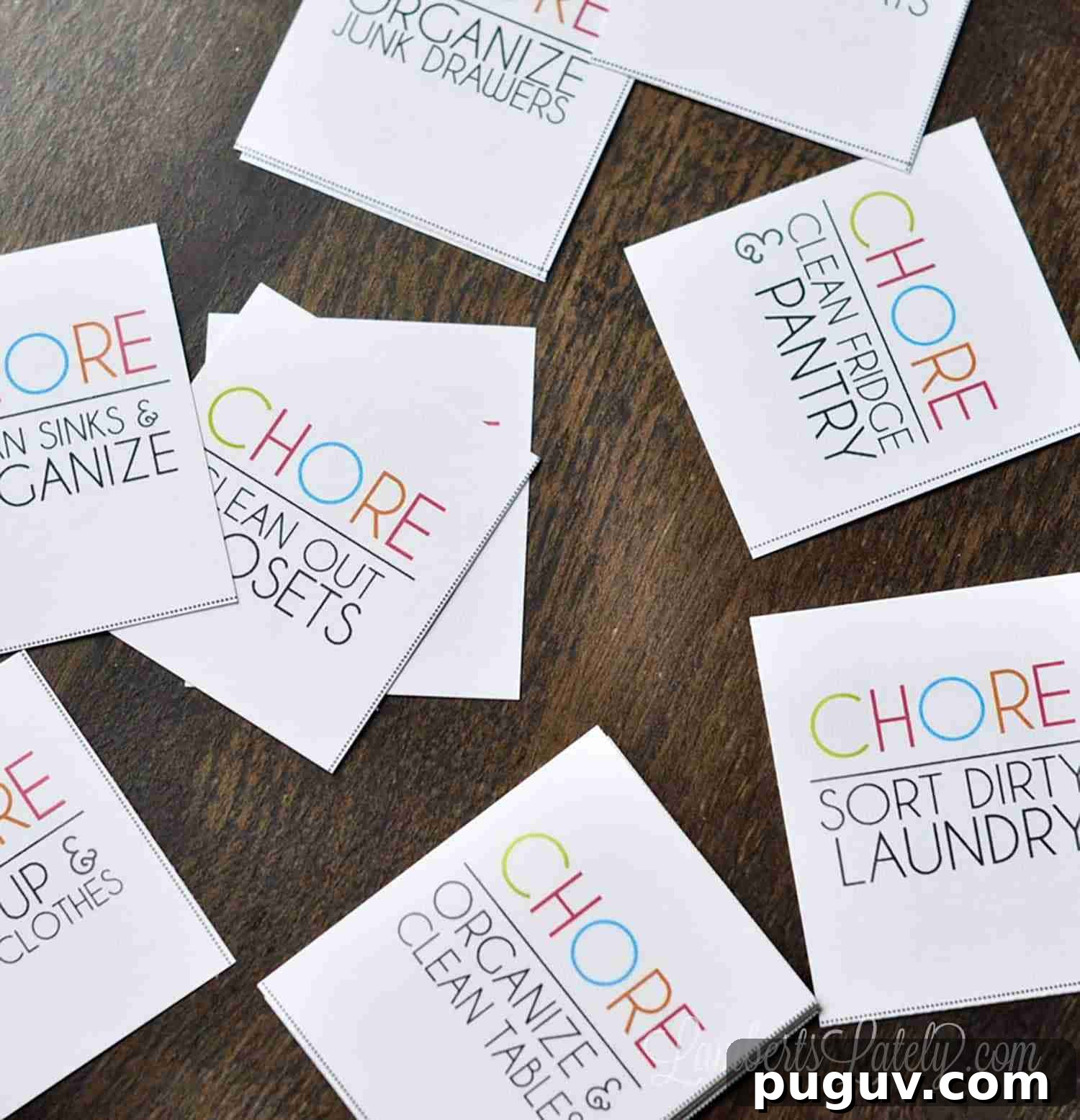
I created both longer and card-sized formats. Print whichever fits your routine.
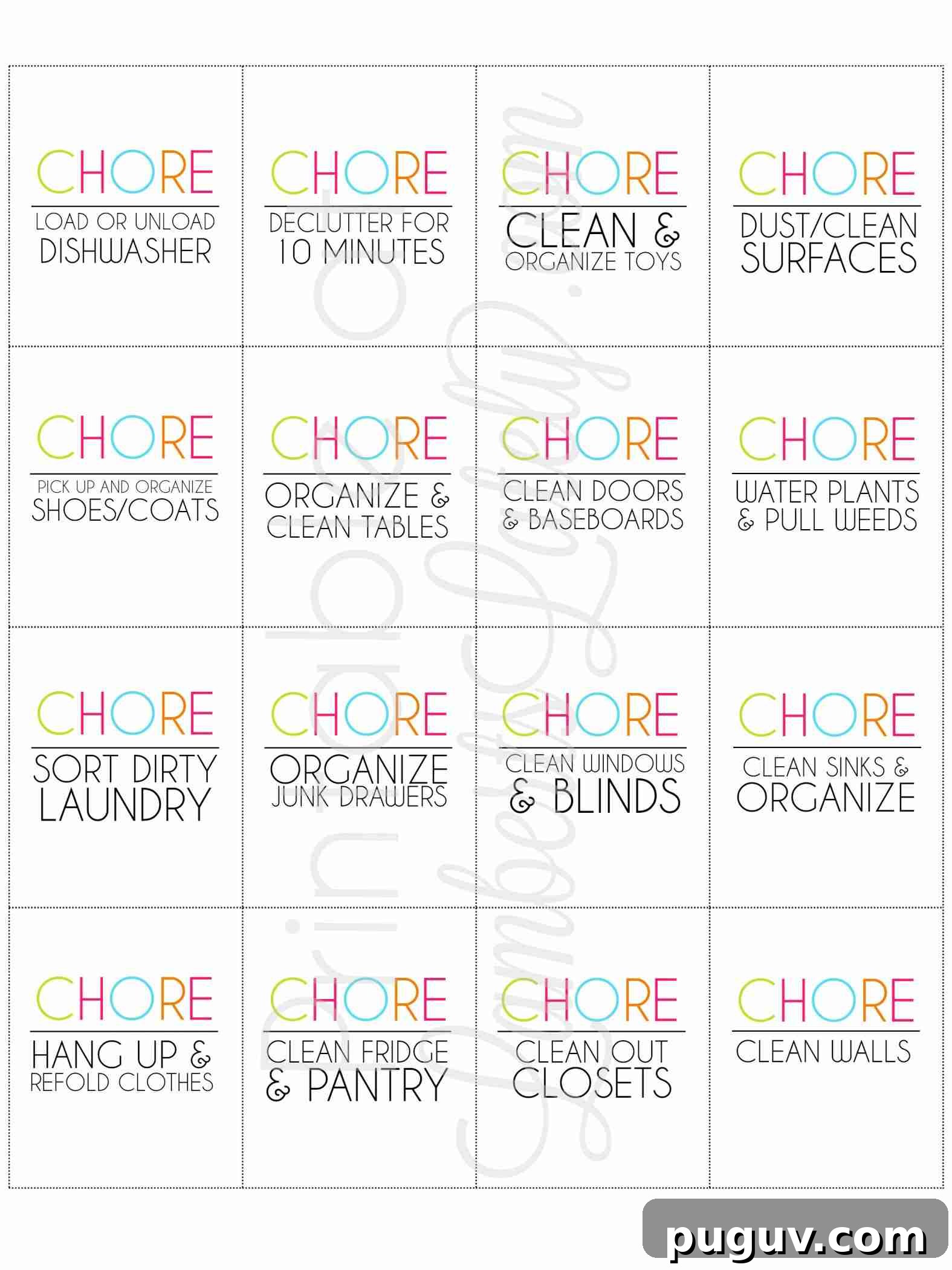
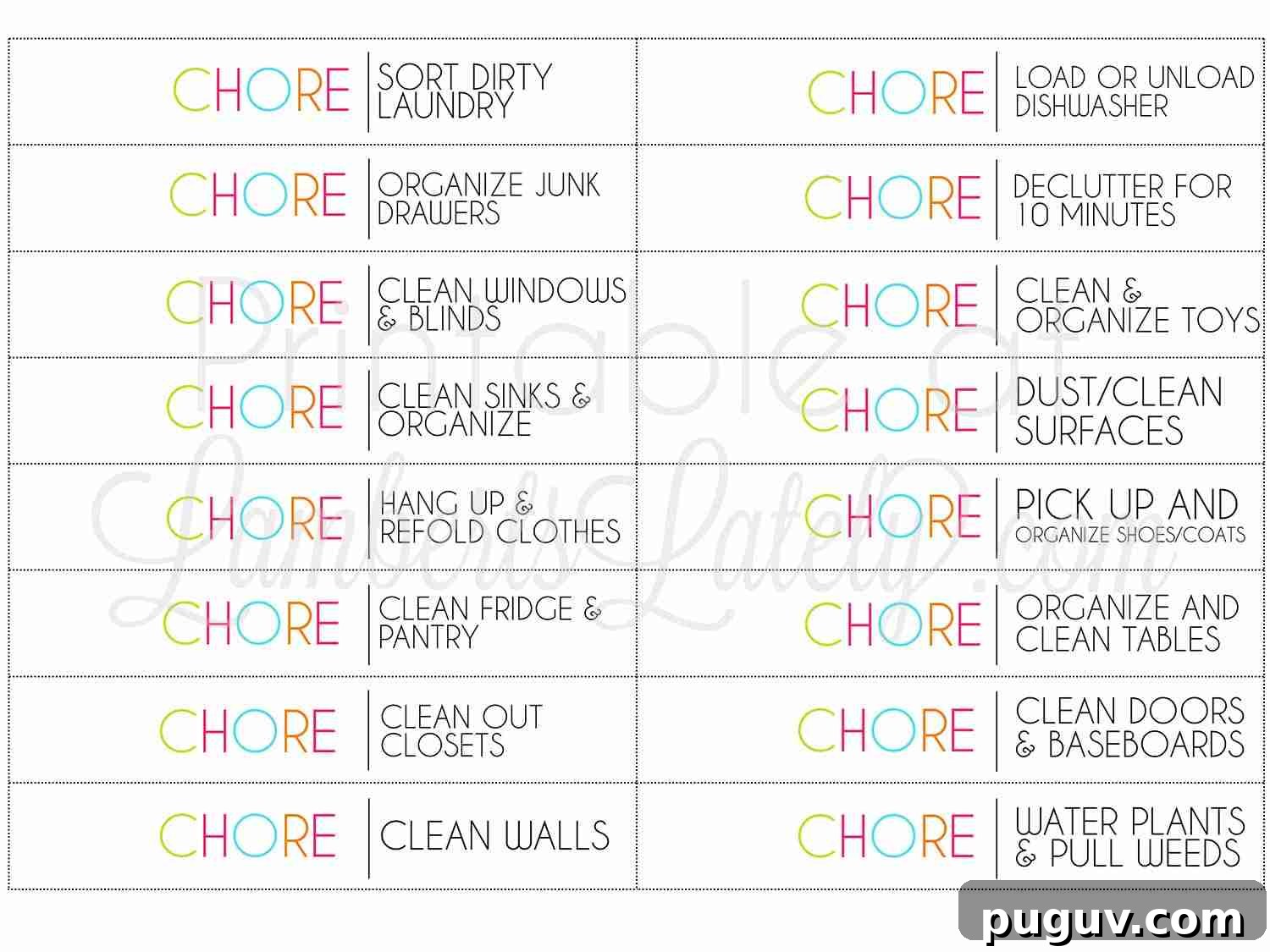
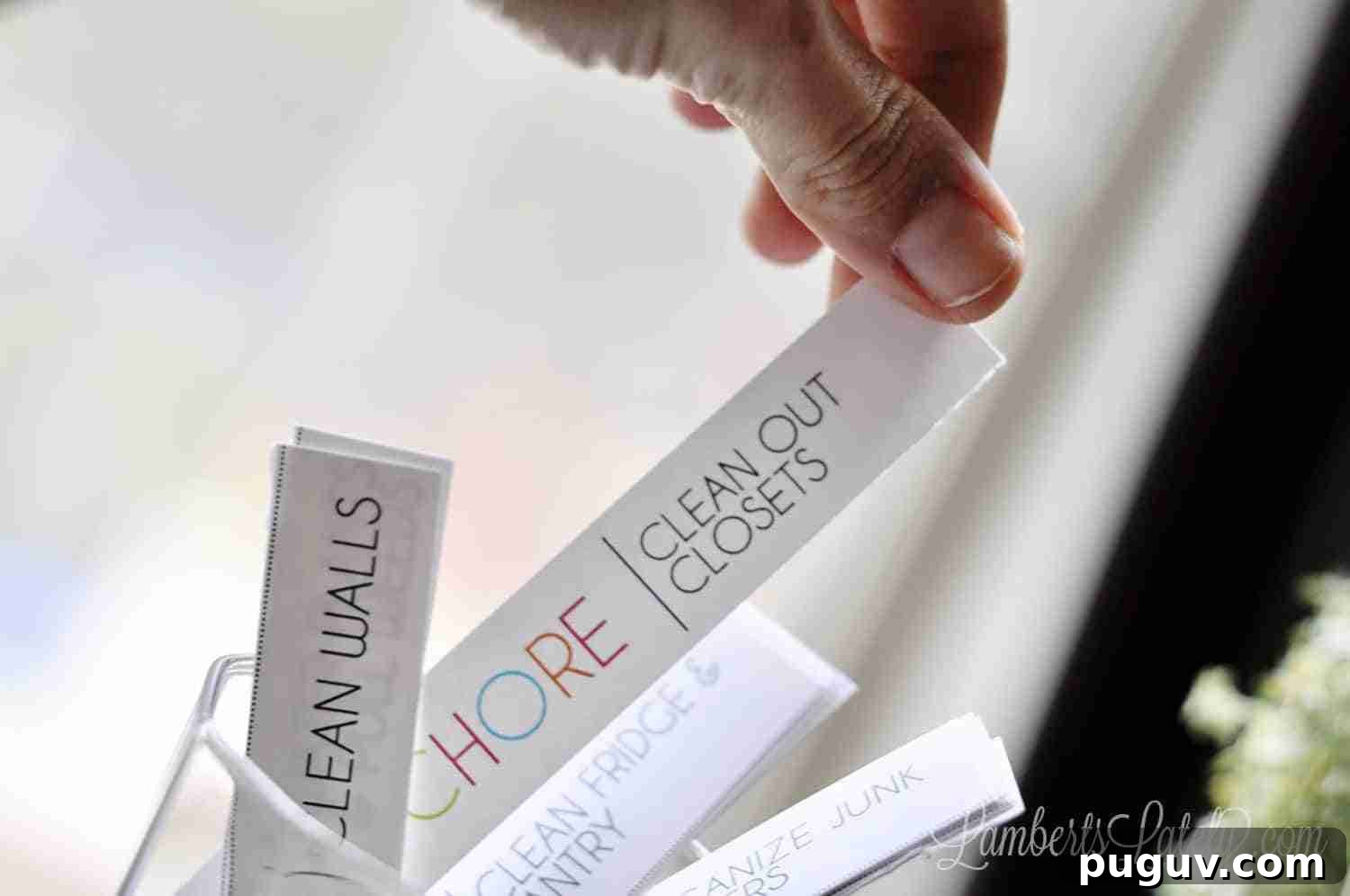
Cut the cards out, place them in a cup, and let your kids draw a chore each day. It’s simple and effective.
Adult Cleaning Cards
For adults, I offer a Journey to Clean product that converts cleaning tasks into color-coded, room-focused cards. Draw a few cards each day to complete your room-of-the-week tasks without repeating the same list every time.
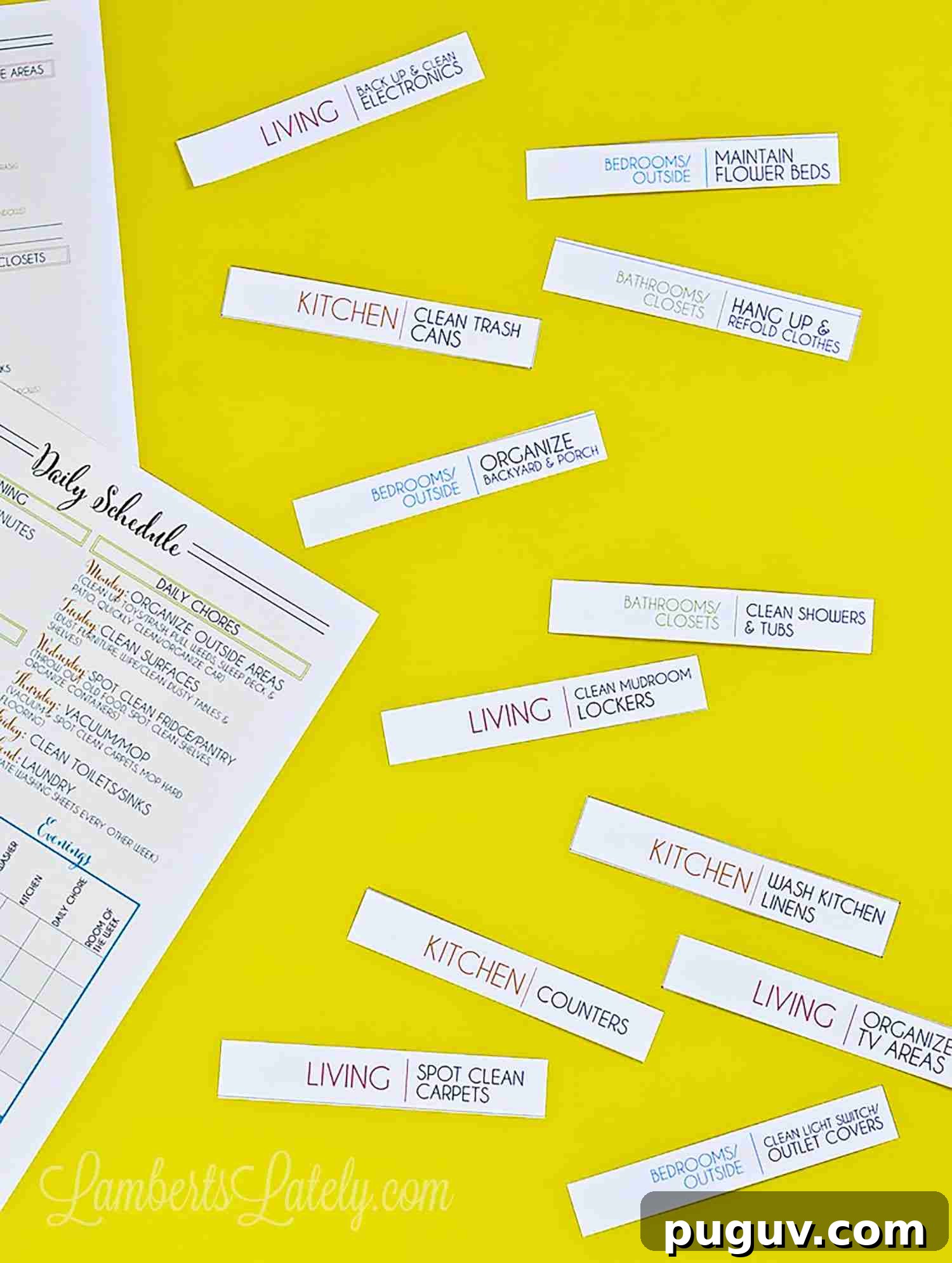
Mix the cards for variety or complete every card once a month to rotate your cleaning routine. The cards let you pace tasks according to your schedule—1–2 items per day works well.
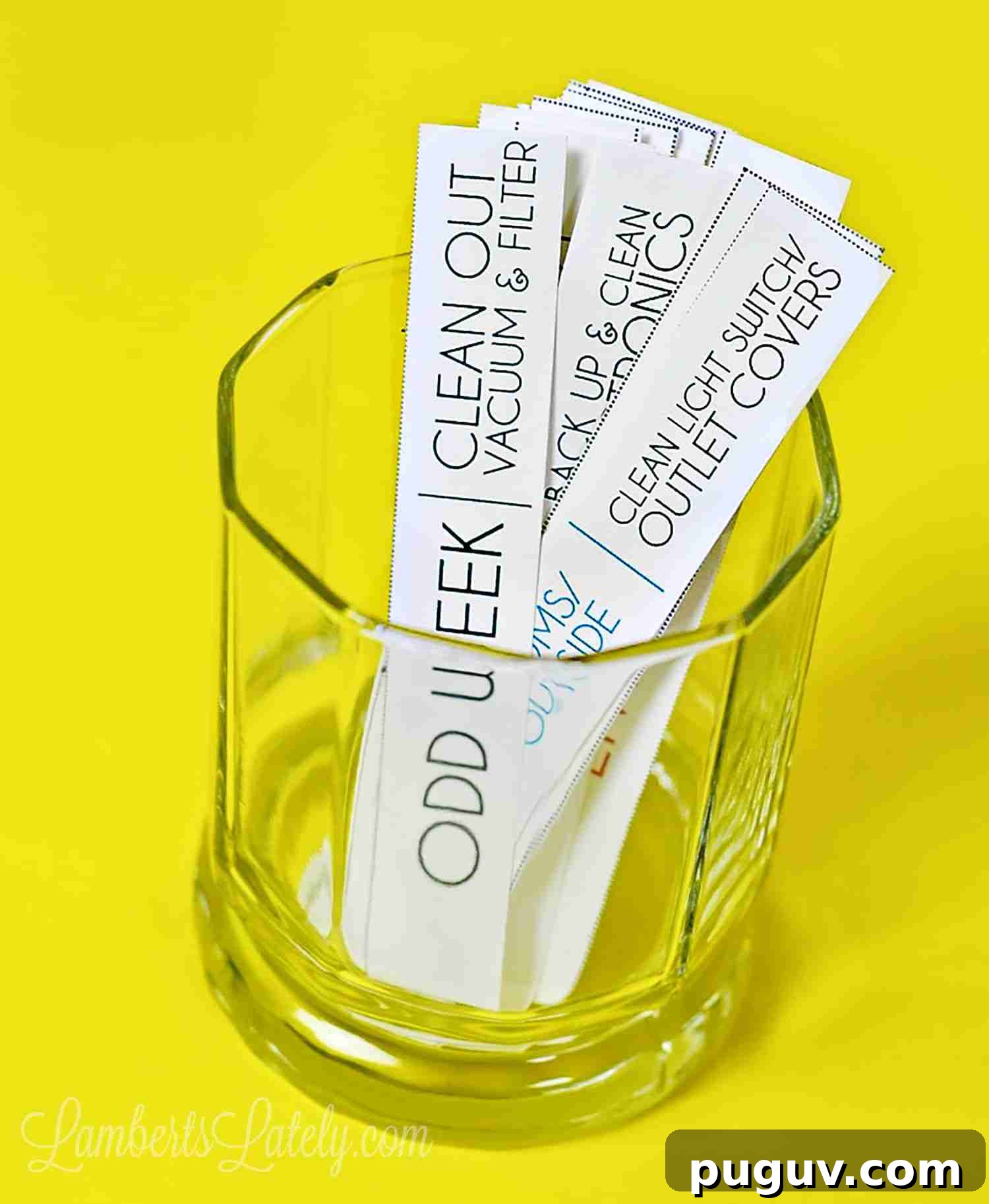
Find more details about the Journey to Clean Room of the Week Cleaning Cards.
What chores can my kids do at their age?
Chores should evolve as children grow. Start with a loose structure for preschoolers and add complexity with age. Below are suggested tasks by age group to help you decide what’s appropriate.
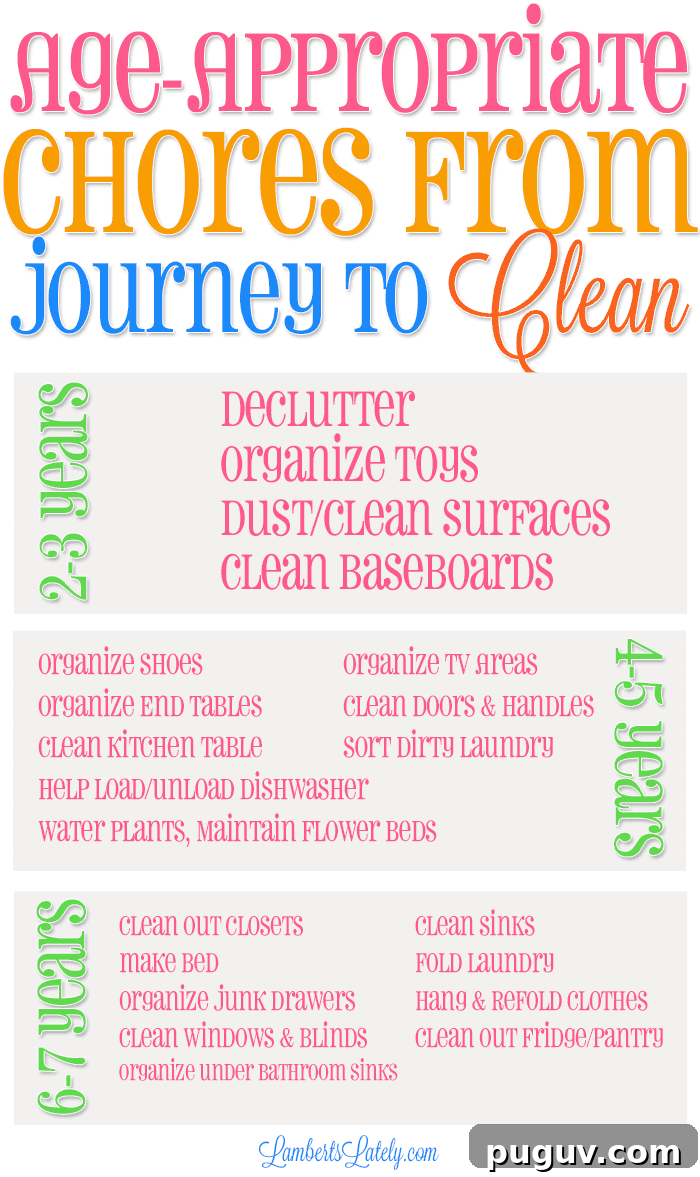
These examples come from my weekly cleaning schedule and reflect realistic, age-appropriate responsibilities.
Chores for Toddlers (2–3 years)
- Declutter play areas
- Put away and organize toys
- Wipe or dust low surfaces
- Help with simple pickup tasks
Chores for Preschoolers (4–5 years)
- Organize shoes
- Tidy end tables and living areas
- Wipe the kitchen table
- Help load or unload the dishwasher
- Water plants
- Sort dirty laundry
- Feed pets with supervision
Chores for Young Children (6–7 years)
- Make their bed
- Organize drawers and small spaces
- Clean sinks and wipe counters
- Fold and put away laundry
- Help clean the fridge and pantry
Chores for Older Kids (8–10 years)
- Vacuum and mop floors
- Clean bathrooms (sinks, toilets, showers)
- Dust higher surfaces and fans
- Manage full laundry routine (sort to put away)
- Yard tasks like sweeping or raking leaves
FAQs
Every child is different, but introducing small responsibilities at 2–3 years old is a good starting point. Simple personal tasks and short checklists teach routine and ownership.
A balanced chart includes personal care habits (brushing teeth, getting dressed) and household tasks (tidying, setting the table). Adjust complexity as children age to help build lasting habits.
Allowance for chores varies by family and age. Small amounts for simple chores and higher amounts for more time-consuming tasks can work well. Tie payments to effort and responsibility rather than every single daily habit.
Thanks for stopping by! I’d love to hear your favorite chore tips. Before you go, check out the Decluttering Organizer for more printable planning tools.