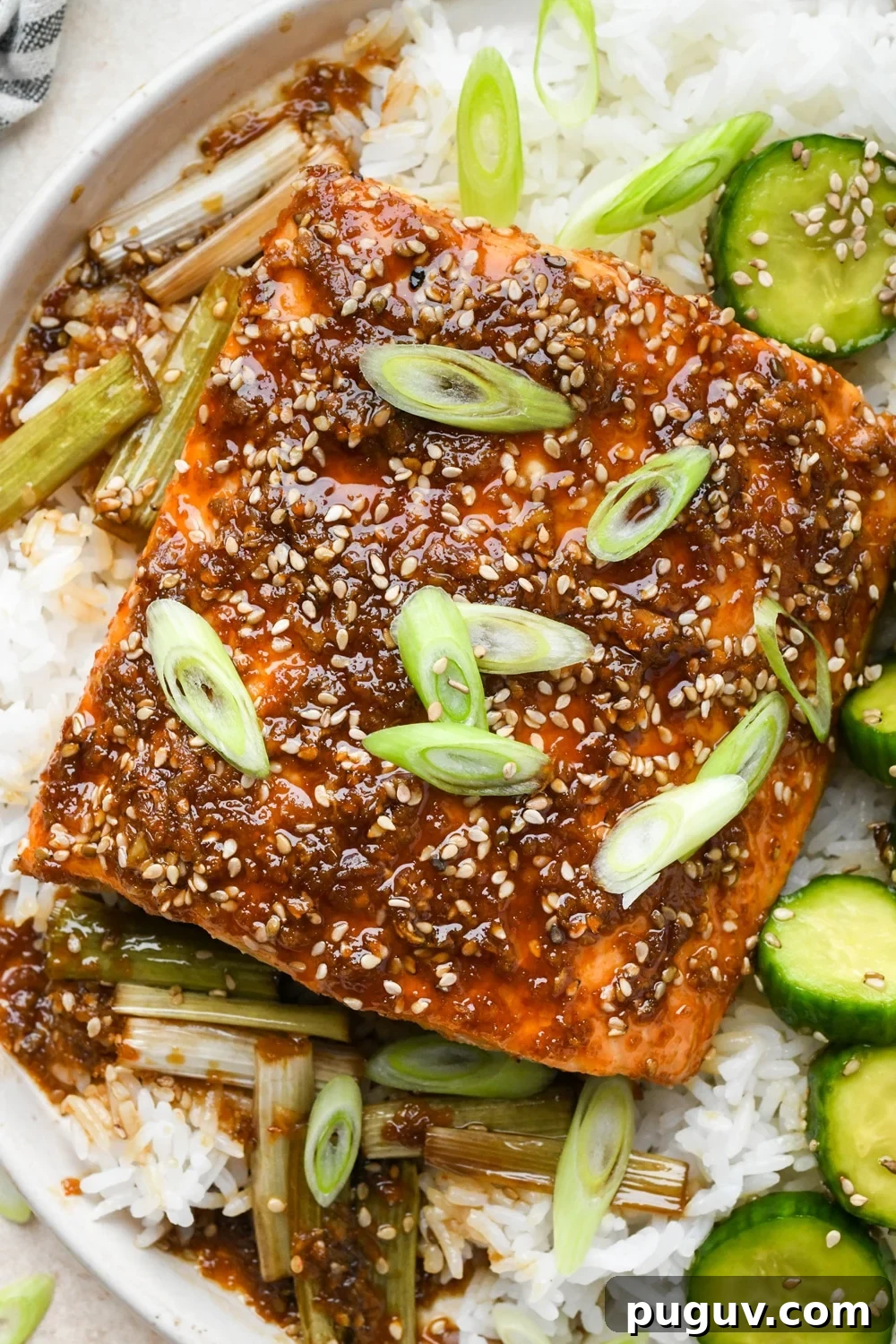
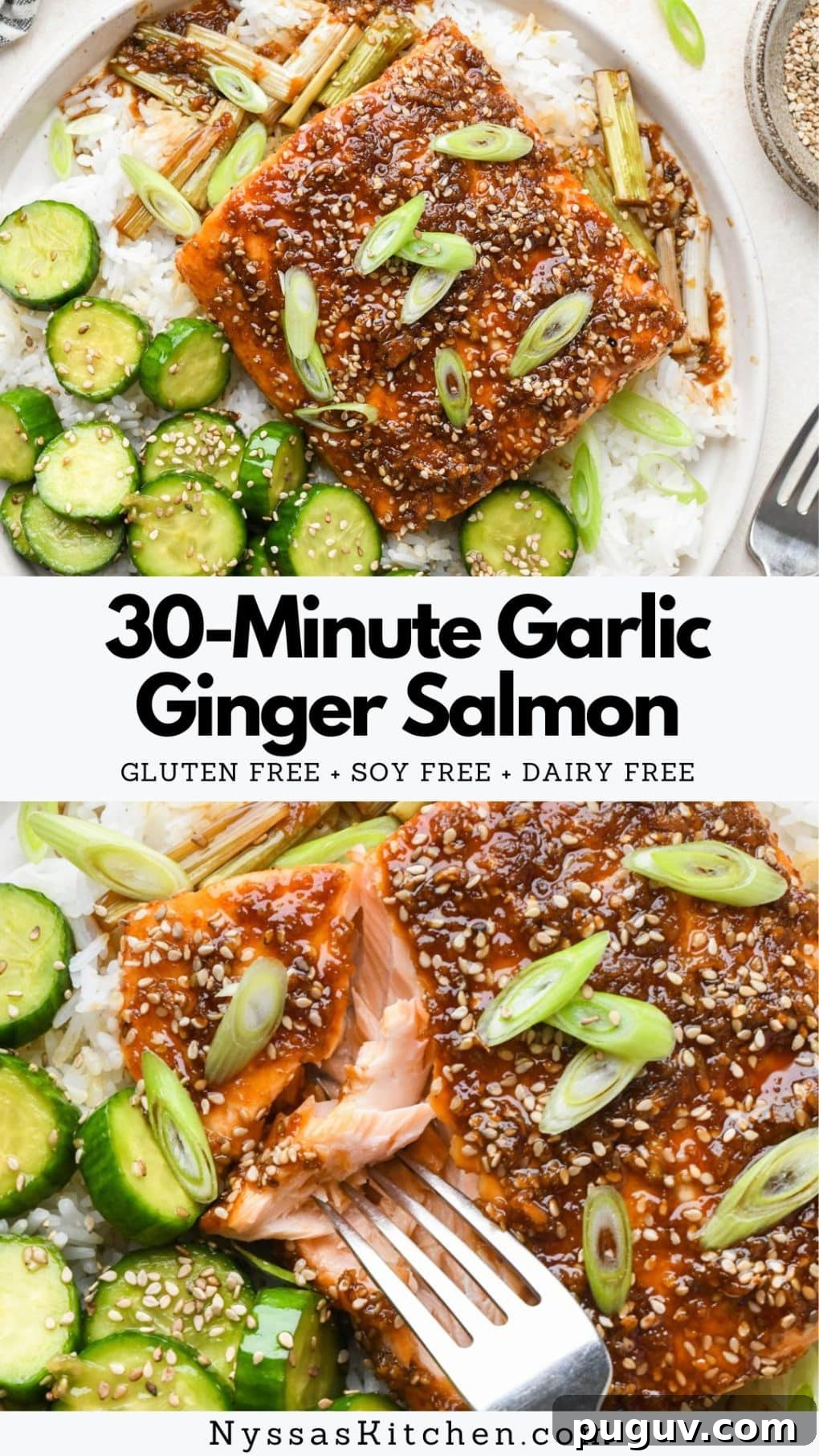
This 30-minute garlic-ginger glazed salmon is an easy, flavorful dish to add to your weekly rotation. It requires no marinating, uses pantry staples, and comes together quickly. The recipe as written serves two but can be doubled to feed more. It’s gluten-free, soy-free (when using coconut aminos), and naturally sweetened with honey.
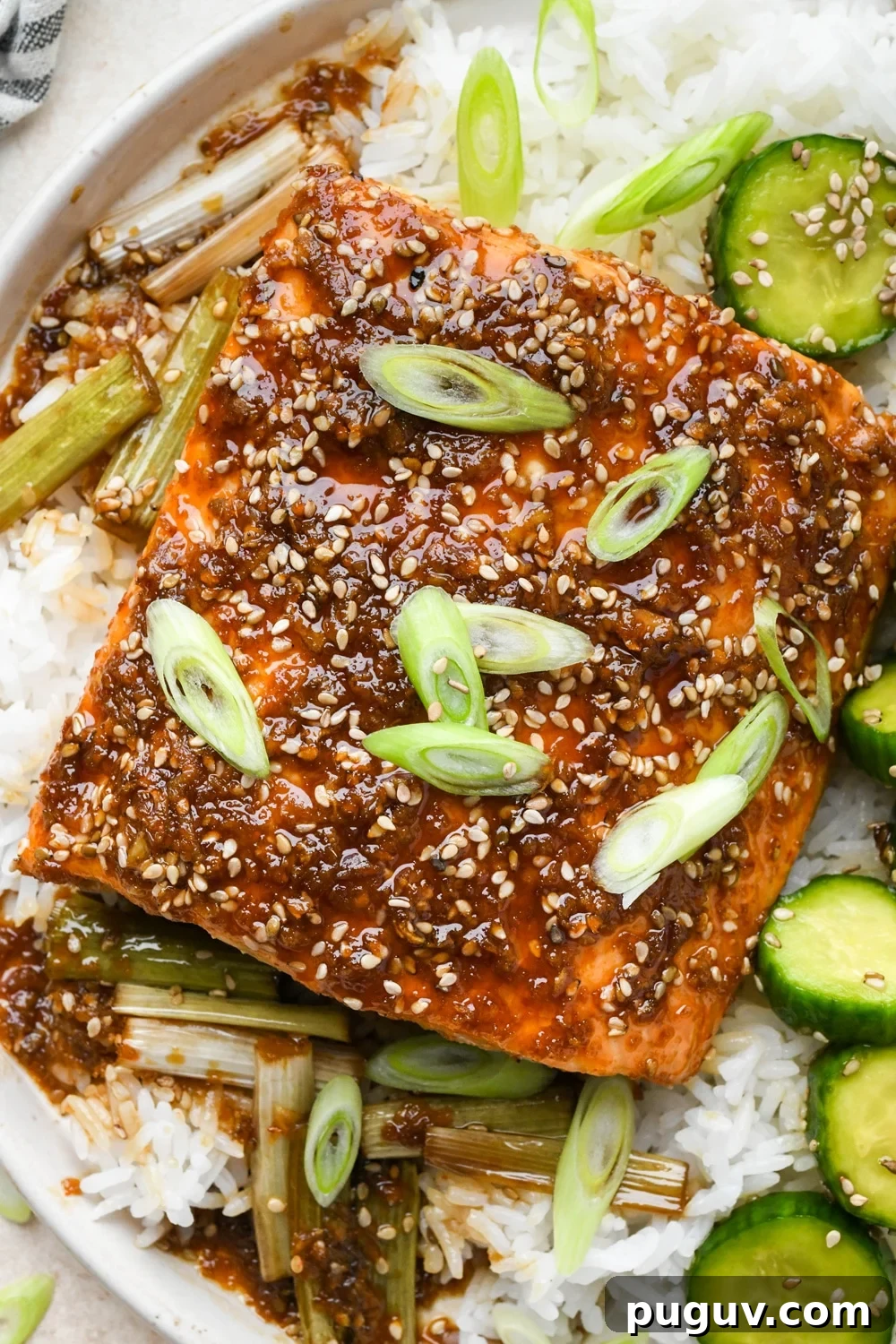
The best glazed garlic-ginger salmon
Baked salmon is one of the easiest and most reliable ways to cook this fish: it’s low fuss, simple to clean up, and produces tender, evenly cooked results every time. This garlic-ginger glazed salmon is a weeknight favorite because it’s fast and full of flavor without any advance marinating.
The glaze is poured over the salmon before baking and spooned over the filet partway through cooking so the sauce concentrates and caramelizes on the surface. While the recipe is written for two servings, you can double it easily (see the notes on scaling below).
Recipe testing notes
Whole filet vs individual filets
This recipe was tested both as a single center-cut filet and as individual filets. Either approach works—center-cut pieces give even thickness, while individual filets may cook a bit faster. If using separate filets, reduce cooking time by 2–3 minutes and check for doneness.
Baking vs searing
Searing before baking can increase caramelization for certain preparations, but for this glaze, the honey in the sauce caramelizes nicely while baking. The method in this recipe skips searing and relies on spooning the glaze over the salmon during baking to build flavor and color.
Why no marinade?
The glaze is bold enough to flavor the salmon while it cooks, so a separate marinating step isn’t necessary. The technique saves time without sacrificing taste.
Skin on or skin off
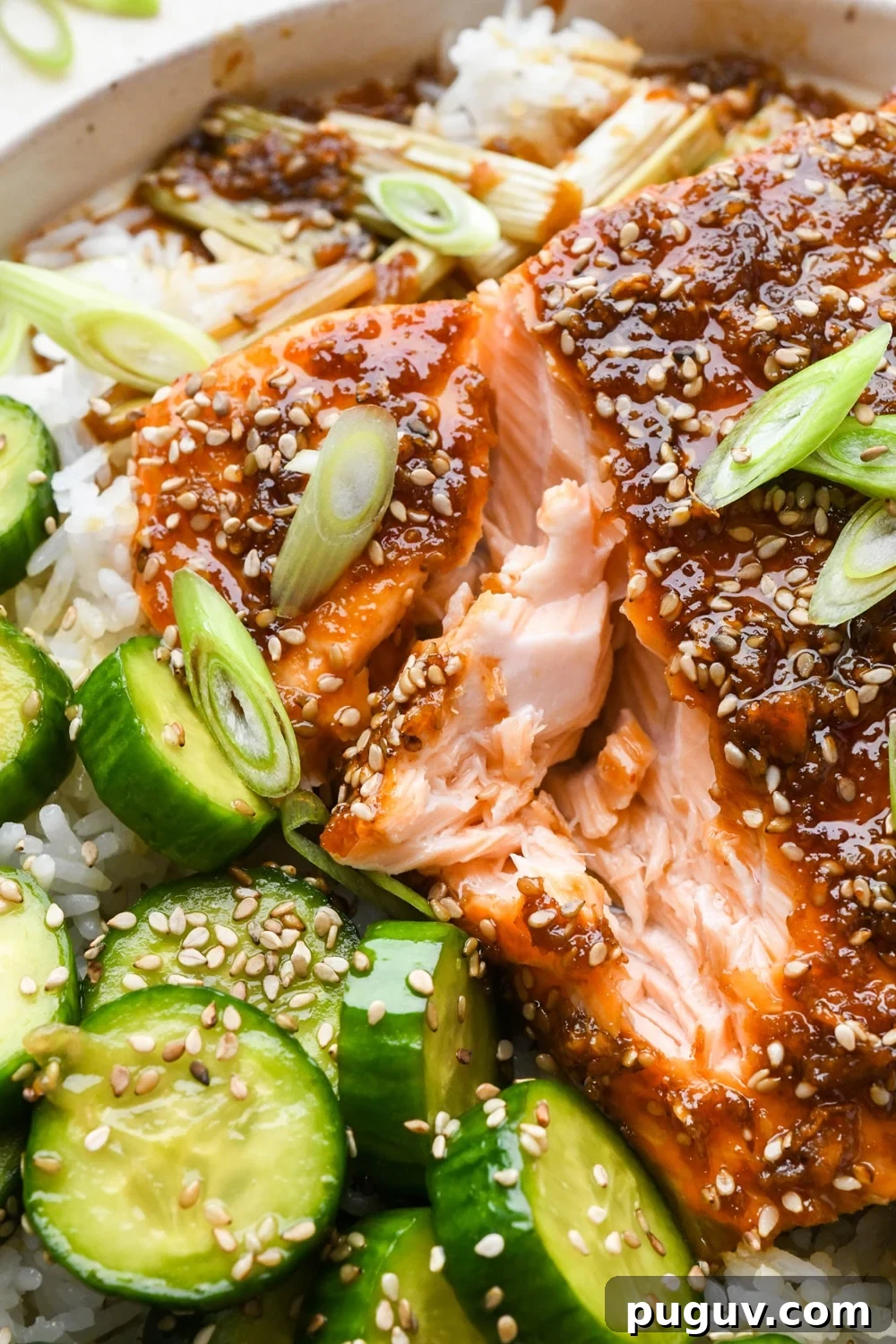
Both skin-on and skinless salmon produced excellent results. Keeping the skin on can help retain moisture while baking, but the glaze keeps skinless fillets moist as well. If baked skin-on, the flesh will typically separate easily from the skin after cooking for simple serving.
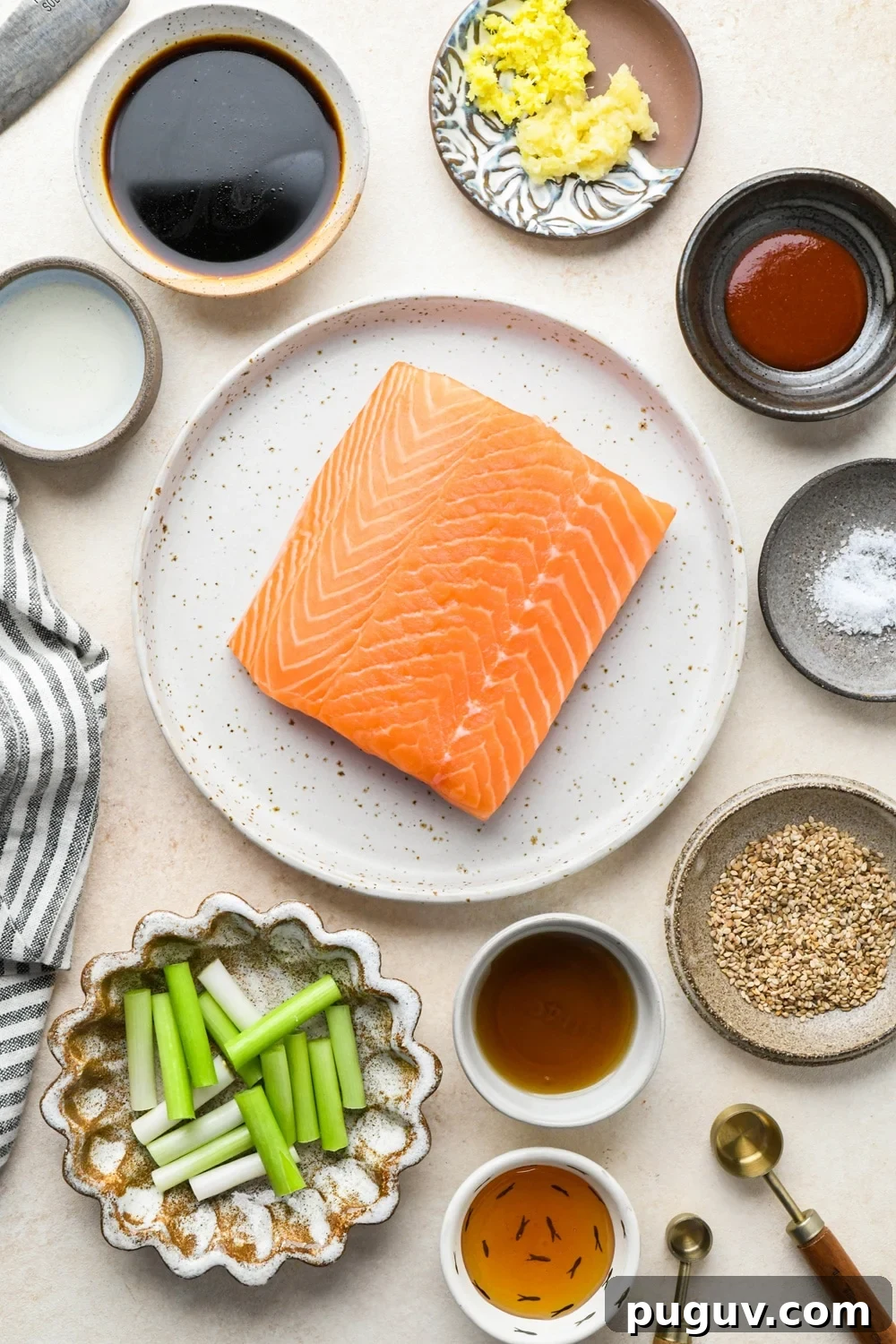
Ingredients
This baked salmon recipe is gluten free, soy free (if using coconut aminos), and naturally sweetened. Below are ingredient notes and recommendations; exact measurements are listed after the notes.
Salmon
Choose a center-cut piece for uniform thickness and even cooking. If you prefer variable-thickness pieces, individual filets work fine too.
Coconut aminos
Coconut aminos replace soy sauce here, offering umami with less sodium and a touch of natural sweetness. If you prefer, use gluten-free tamari instead.
Rice vinegar and honey
Rice vinegar adds bright acidity; lime juice is an acceptable substitute. Honey balances the acid and helps the glaze caramelize into a sticky coating.
Hot sauce and sesame oil
Hot sauce is optional for heat. Sesame oil brings a toasty, nutty richness that complements the ginger and garlic.
Fresh garlic and ginger
Freshly grated garlic and ginger give the best flavor. A microplane grater yields fine texture; you can finely chop them if needed.
Sesame seeds and green onions
Sesame seeds add texture and nuttiness. Green onions (white and light-green parts) are cut into 1-inch pieces and baked with the salmon; they’re optional but add flavor and color.
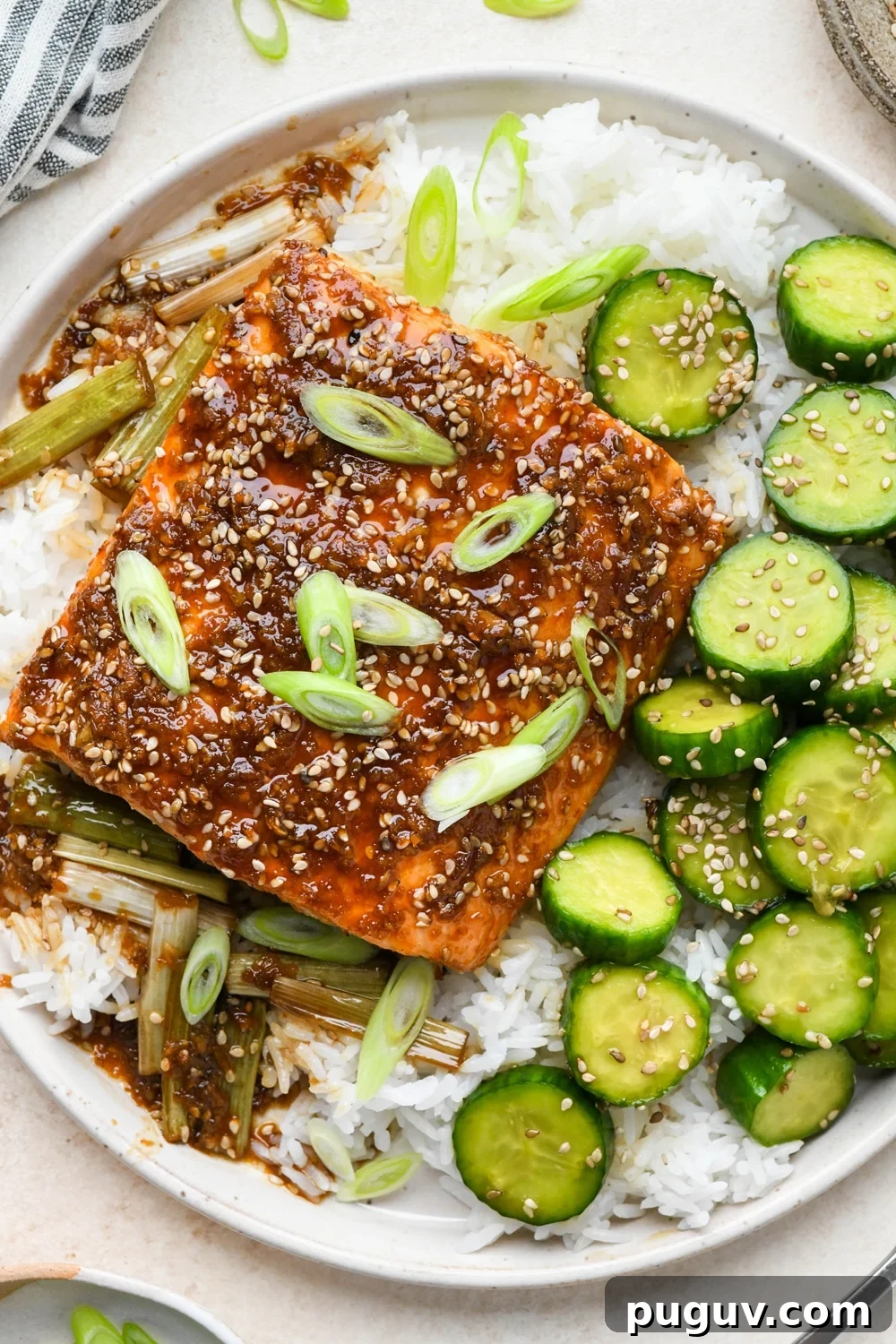
How to make 30-minute garlic-ginger salmon
From start to finish this salmon takes about 30 minutes. Read through the instructions before you begin so everything goes smoothly.
Step 1: Prep salmon
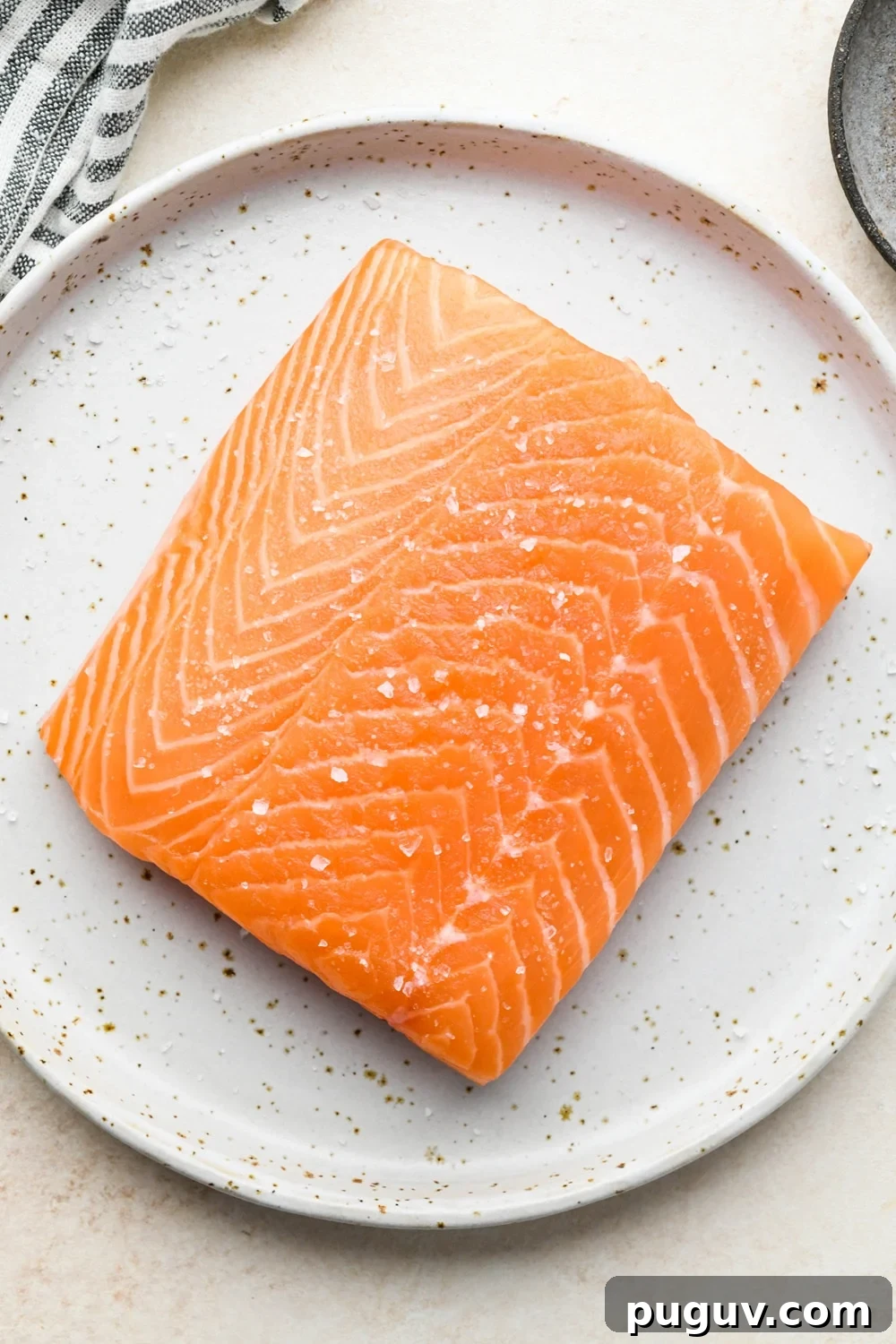
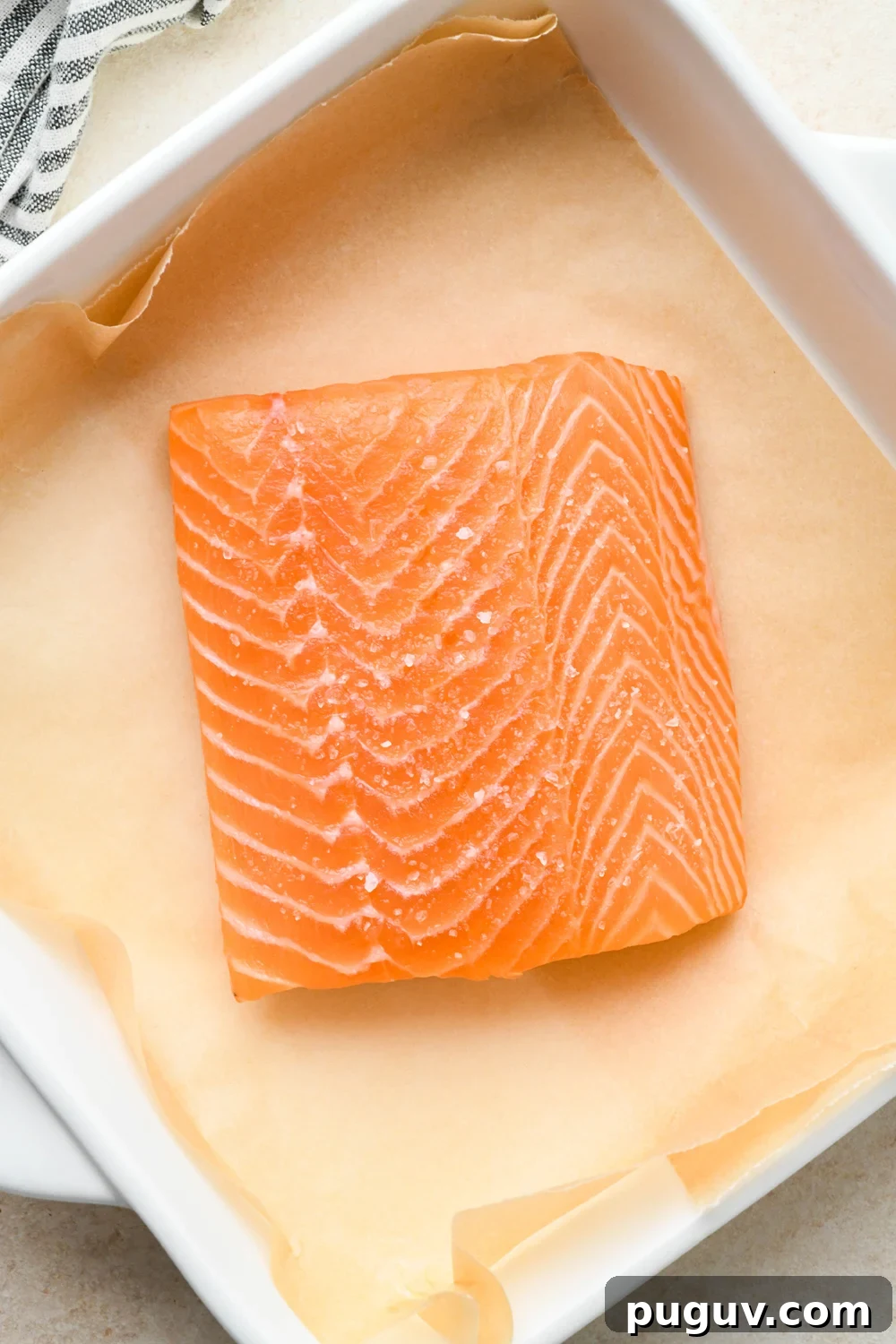
Preheat the oven to 400°F. Pat the salmon dry and season lightly with kosher salt. Line a small baking dish or oven-safe skillet with parchment paper and place the salmon on top.
Step 2: Whisk the sauce
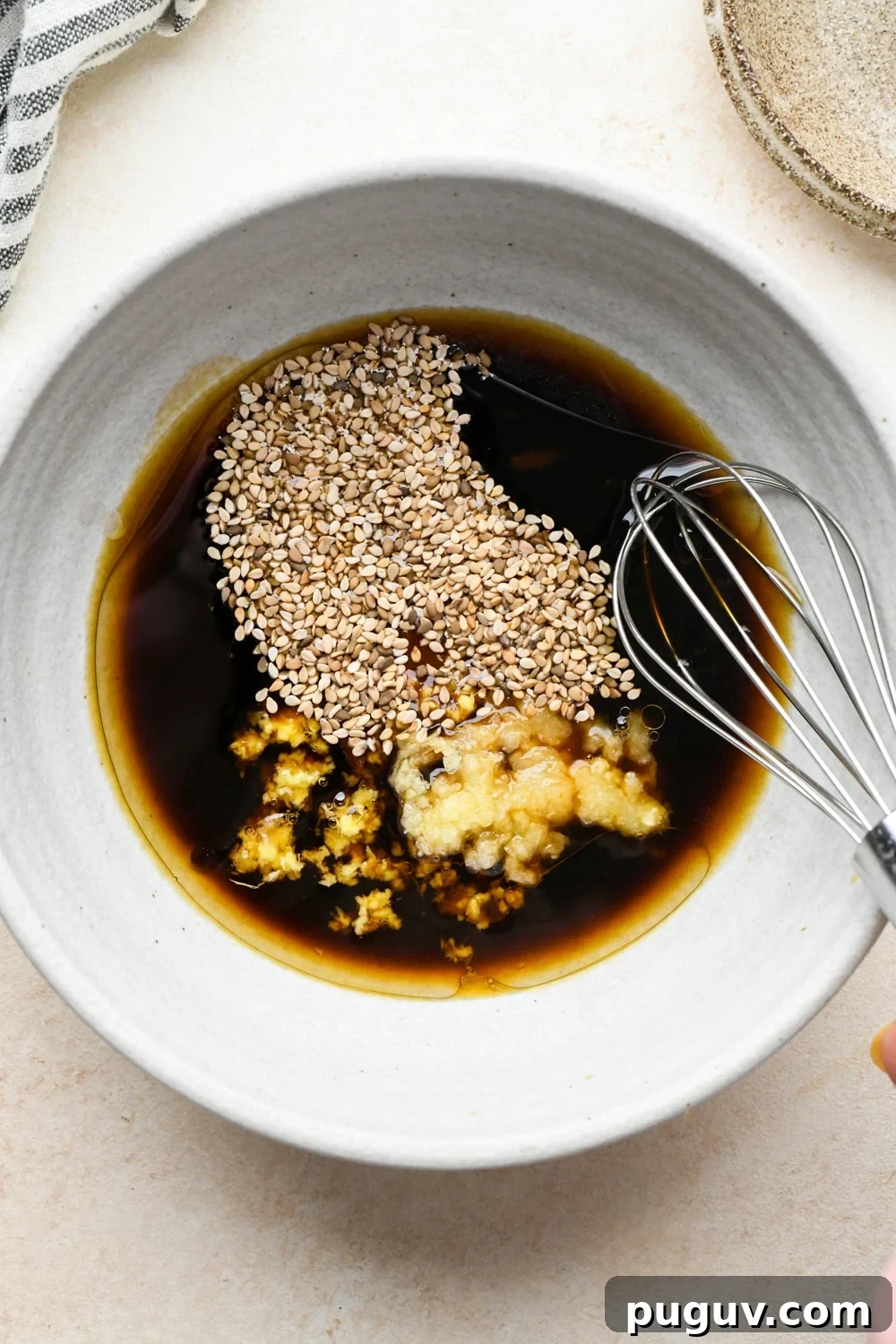
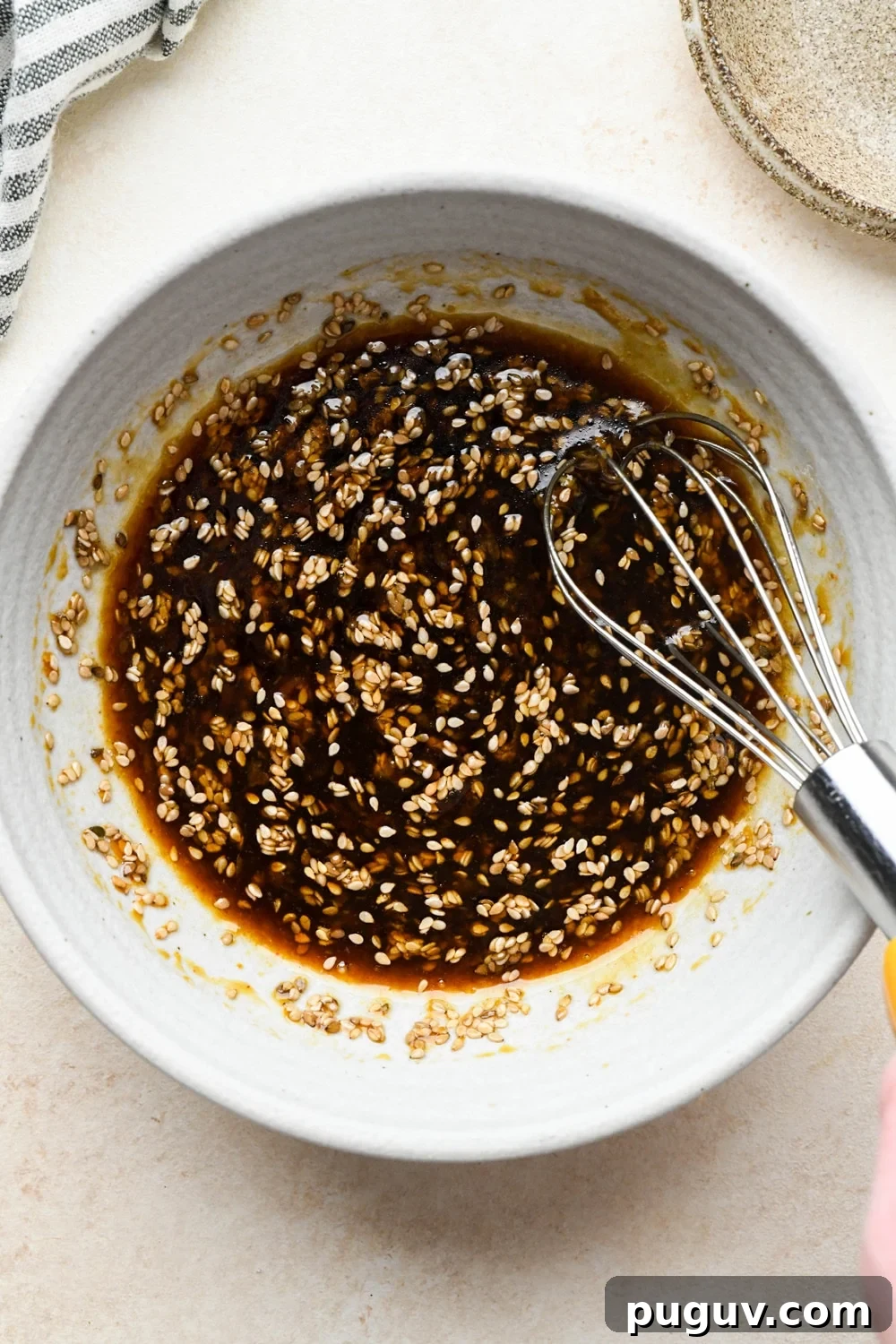
In a small bowl whisk coconut aminos (or tamari), rice vinegar, honey, hot sauce (if using), sesame oil, grated garlic, grated ginger, and sesame seeds until combined. Stir in the cut green onions.
Step 3: Bake the salmon
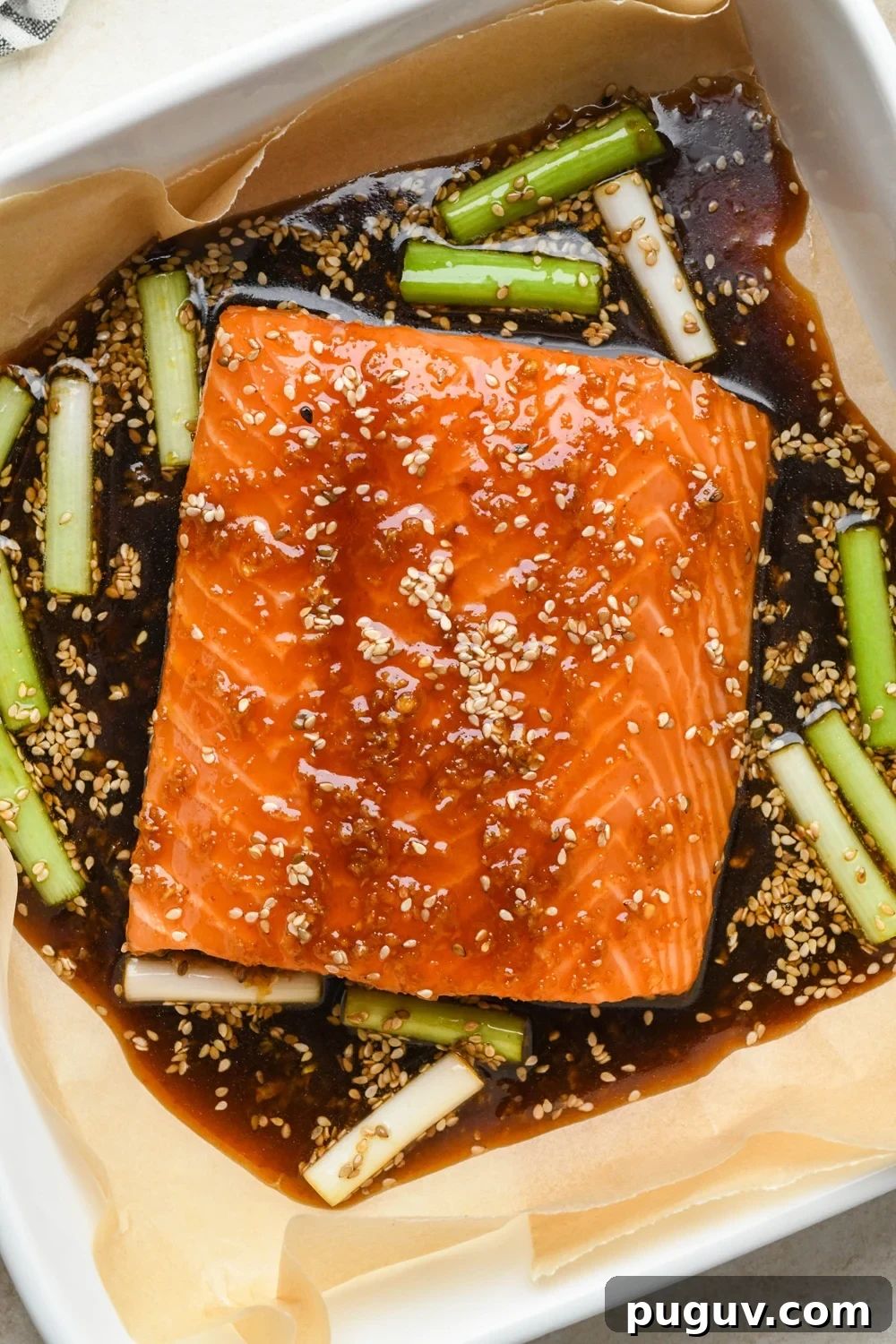
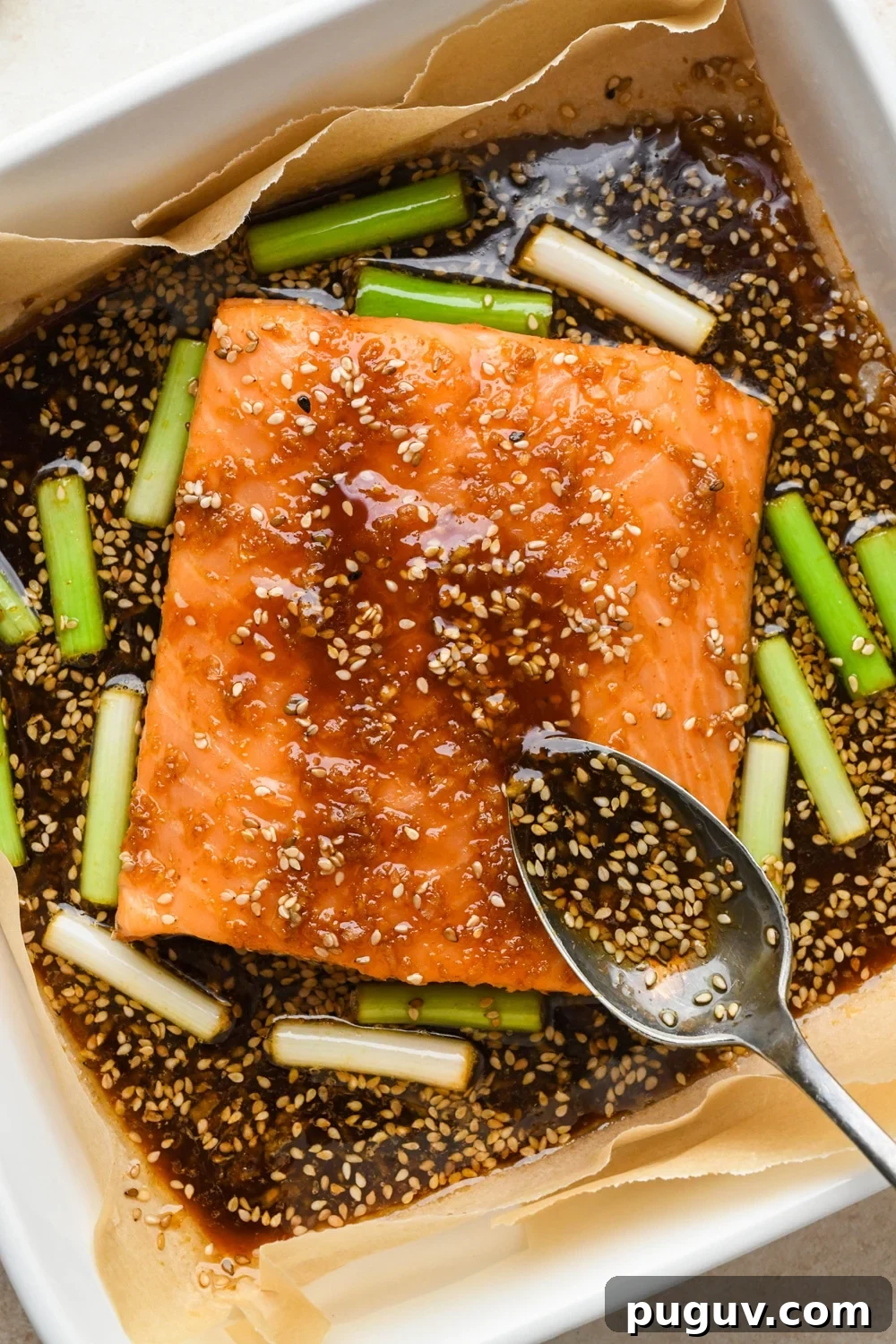
Pour the glaze over the salmon and bake at 400°F for about 15–17 minutes, stopping halfway to spoon the glaze over the top. Remove the dish, increase the oven temperature to 450°F, spoon the glaze over the salmon again, and return it to the oven for another 3–5 minutes until cooked through and beginning to caramelize.
Step 4: Serve
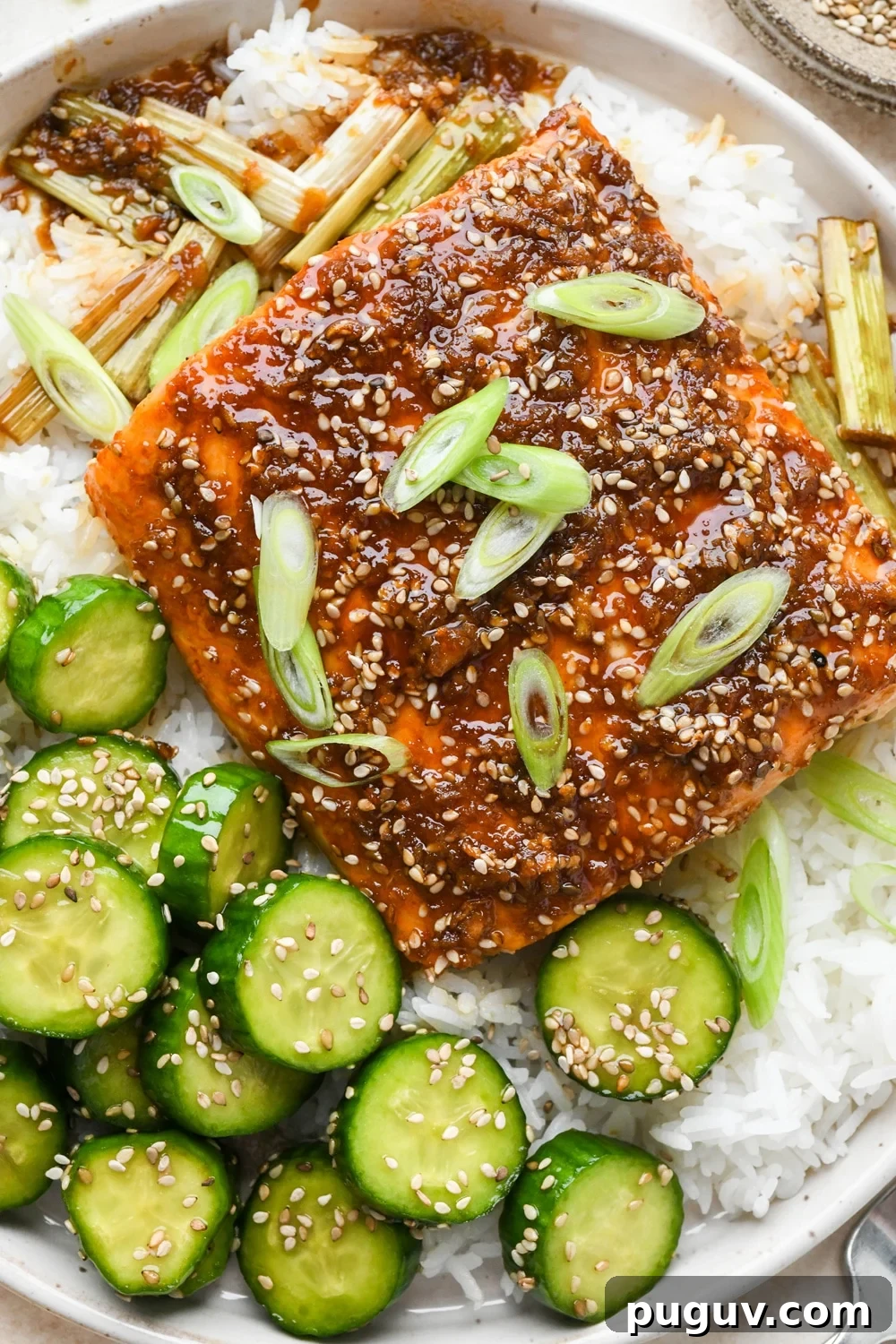
Garnish with extra sesame seeds and thinly sliced green onions if desired. Serve immediately and enjoy.
Adjusting the amount of salmon
The base recipe uses 3/4 pound of salmon for two servings. The same amount of sauce will usually cover up to 1 pound of salmon to serve three (or possibly four). For 1 1/2 pounds to serve 4–5 people, double the entire recipe (both fish and sauce). If doubling and baking one large filet, increase bake time to about 20–25 minutes.
Serving suggestions
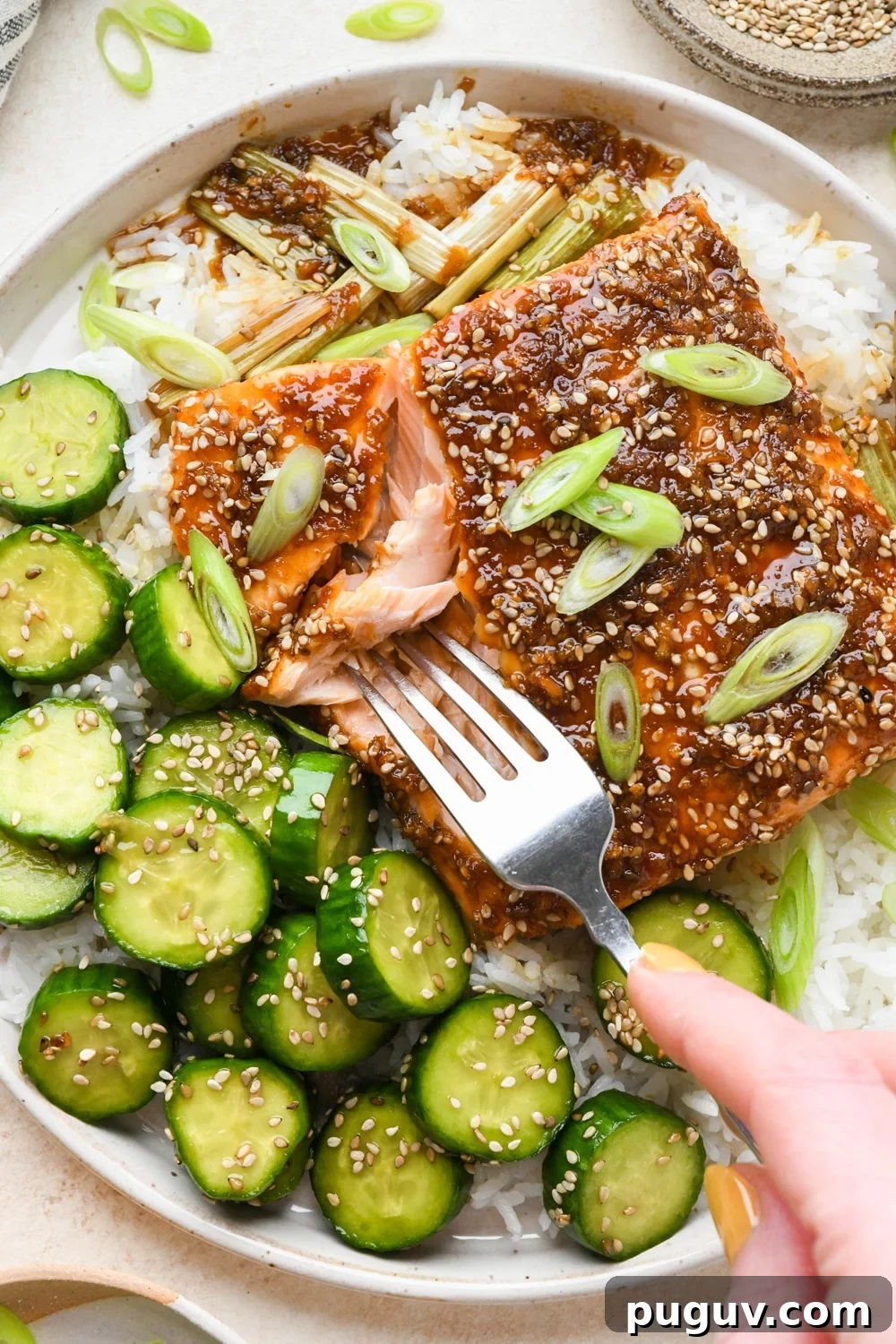
This salmon is lovely over white rice, cauliflower rice, or fried rice, and pairs well with simple vegetable sides such as a sesame cucumber salad, roasted broccolini, roasted asparagus, or a green salad. It also complements noodle stir fries and other Asian-inspired sides.
Storage and reheating
Salmon is best served fresh, but leftovers store well.
Storage
Cool completely, transfer to an airtight container, and refrigerate for 3–4 days.
Reheating
Reheat gently in the oven at 325–350°F for 6–8 minutes until warmed through; a toaster oven works similarly. You can also warm in the microwave for 1–2 minutes.
If you enjoyed this recipe, please rate and review it below and share any changes you made—other readers appreciate your tips.

30-Minute Garlic Ginger Glazed Salmon (Gluten Free)
- Total Time: 30 minutes
- Yield: 2 servings
- Diet: Gluten Free
Ingredients
- 3/4 pound center-cut piece of salmon
- A few pinches kosher salt
- 3 tablespoons coconut aminos or gluten-free tamari
- 2 teaspoons rice vinegar
- 1 tablespoon honey
- 1 teaspoon hot sauce (optional)
- 1 tablespoon sesame oil
- 2 cloves garlic, grated or finely chopped
- 1 teaspoon fresh ginger, grated or finely chopped
- 2 teaspoons sesame seeds
- 3 green onions, white and light-green parts cut into 1-inch pieces
To garnish: extra sesame seeds and thinly sliced green onions
Instructions
- Preheat oven to 400°F.
- Prep salmon. Pat salmon dry and season lightly with kosher salt. Line a small baking dish or oven-safe skillet with parchment and place the salmon on top.
- Whisk sauce. In a small bowl whisk coconut aminos, rice vinegar, honey, hot sauce (if using), sesame oil, grated garlic, grated ginger, and sesame seeds. Stir in the chopped green onions.
- Bake salmon. Pour the glaze over the salmon and bake 15–17 minutes, stopping halfway to spoon the glaze over the top. Remove the dish, increase the oven to 450°F, spoon glaze over again, and return to the oven for 3–5 minutes until the fish is cooked through and glaze begins to caramelize.
- Serve. Garnish with extra sesame seeds and thinly sliced green onions. Serve immediately.
Notes
The base recipe uses 3/4 pound of salmon for two servings. Use the same amount of sauce for up to 1 pound of salmon. For 1 1/2 pounds to serve 4–5, double both the salmon and the sauce. If baking a doubled recipe using one large filet, increase bake time to 20–25 minutes.